


Botswana calls for climate financing
12 Nov 2026
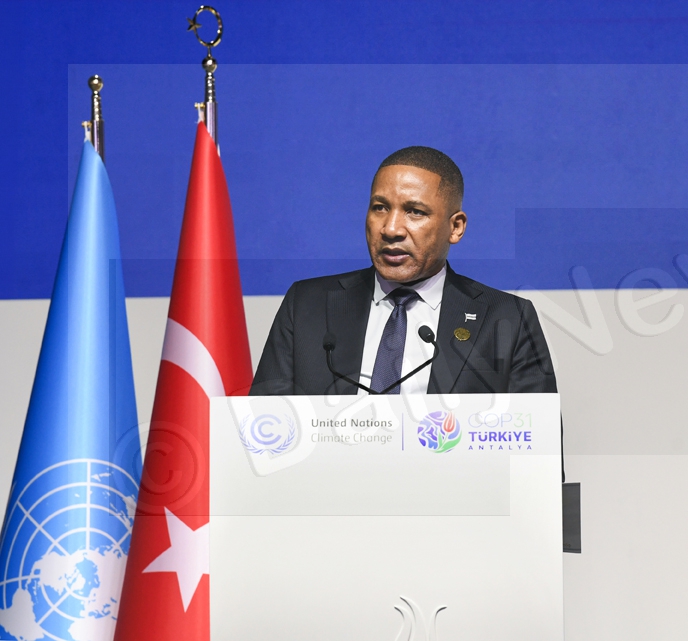
President Advocate Duma Boko has called for a predictable and accessible global climate financing system to help vulnerable developing countries respond to the devastating effects of climate change, warning that domestic resources alone cannot meet the scale of the challenge.
Addressing world leaders at the COP31 Leaders’ Summit in Antalya, Türkiye, on Wednesday, President Boko said Botswana and other developing countries needed increased international support to strengthen their resilience against droughts, floods, rising temperatures and water shortages.
The President said climate change was already threatening agricultural productivity, public health, biodiversity and the livelihoods of communities, particularly those dependent on natural resources.
For Botswana, he said, the situation could deteriorate further with the expected influence of El Niño, making decisive action and adequate resources increasingly important.
“Climate change is a clear and present danger to humanity,” he said, emphasising that the effects were no longer distant threats but realities affecting people’s daily lives.
President Boko said Botswana was strengthening its environmental governance and climate response through its first comprehensive National Environmental, Social and Governance (ESG) Strategy and Implementation Framework, which is scheduled for launch next month.
The strategy, he said, would guide the country’s efforts to mobilise sustainable investments and ensure that economic development took environmental and social considerations into account.
He said its implementation would focus on strengthening data collection, measurement, reporting and verification systems, building institutional capacity and developing sustainable financial products, including a national green taxonomy.
Other priorities include developing credible carbon and biodiversity markets that deliver benefits to local communities, while promoting green trade, sustainable tourism, climate smart agriculture and renewable energy.
On climate mitigation, President Boko said Botswana had adopted measures to promote renewable energy and improve energy efficiency as part of efforts to reduce greenhouse gas emissions.
He said adaptation was equally important, with reliable water supplies, climate smart agriculture and climate resilient infrastructure forming the foundation of the country’s response to recurring droughts, floods and extreme heat.
However, he cautioned that the financial requirements for climate mitigation and adaptation far exceeded the resources available to Botswana.
While acknowledging the importance of mobilising domestic resources, he said such efforts could not match the enormous costs of addressing climate change.
He therefore called for a global climate finance architecture that would make funding more predictable and accessible, expand concessional financing, attract responsible private investment and support the development of bankable climate projects.
President Boko also stressed the importance of ensuring that the Fund for Responding to Loss and Damage provided meaningful support to vulnerable countries through simplified application procedures and timely disbursement of funds.
He reiterated Botswana’s commitment to the United Nations Framework Convention on Climate Change (UNFCCC) and the Paris Agreement, urging world leaders to accelerate financing arrangements that responded to the needs of climate-vulnerable nations.
“COP31 should be remembered as the Conference of Implementation,” he said. His call for urgent action echoed remarks by United Nations Secretary-General. Mr Antonio Guterres, who warned world leaders that the global climate crisis was advancing faster than the world’s response. Addressing the same summit, Mr Guterres said global emissions had reached record levels in 2025, while the last four years had been the hottest on record.
He warned that existing national climate plans were insufficient, saying global emissions needed to fall by approximately six per cent annually to keep climate change within manageable limits.
The UN chief called for a faster and fairer transition from fossil fuels to renewable energy, warning that powerful fossil fuel interests continued to obstruct meaningful climate action.
He also urged developed countries to honour their climate financing commitments and ensure that developing nations could access affordable funding to support adaptation and the transition to cleaner energy.
Mr Guterres further called for a new global Climate Justice Compact based on shared responsibility, shared security and shared benefits, arguing that countries should not be expected to transform their economies without the financial and technological means to do so.
“Climate justice is the defining challenge of the next decade,” he said.
He stressed that climate negotiations must translate into tangible results, with success measured by what happened on the ground rather than commitments made at international conferences. ENDS
Source : BOPA
Author : Ndingililo Gaoswediwe
Location : ANTALYA
Event : COP31 Leaders’ Summit
Date : 12 Nov 2026
Related News

12 Nov 2026
Gaolathe advocates climate-resilient healthcare
12 Nov 2026