Botswana seeks billions in climate funding at COP31
09 Nov 2026
United Nations Climate Change Conference (COP31) in Antalya, Türkiye, to seek US$4.32 billion (P59.5 billion) in climate financing to strengthen its resilience to climate change impacts, including water scarcity, recurrent droughts and extreme weather events.
The country also hopes to attract investment in renewable energy, climate-smart agriculture and sustainable tourism as it seeks to build a climate-resilient economy and reduce its dependence on coal.
Scheduled for November 9 to 20, the conference will provide Botswana with an opportunity to present its Third Nationally Determined Contribution (NDC 3.0), outlining its commitments to reducing greenhouse gas emissions and adapting to climate change.
In an interview ahead of the conference, Ministry of Tourism and Environment Acting Chief Meteorologist, Mr Odisitse Keotsene, said Botswana’s participation was crucial because, despite contributing negligibly to global greenhouse gas emissions, the country remained highly vulnerable to climate change.
He said its semi-arid and landlocked geographical location exposed it to growing climate-related risks, particularly water shortages, prolonged droughts and extreme temperatures.
“While Botswana’s contribution to global emissions is negligible, it is among the most vulnerable to climate impacts. Our participation is a matter of strategic economic security,” he said.
Mr Keotsene noted that declining water security, unpredictable rainfall, diminishing groundwater resources and high evaporation rates continued to threaten water supplies.
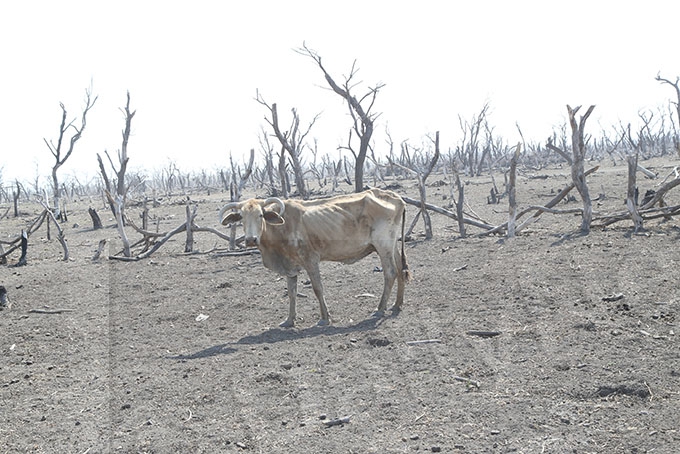
These challenges also affected agriculture, with hotter and drier conditions threatening crop production, livestock productivity and rural livelihoods.
Recurrent droughts put pressure on the national cattle herd, while changing weather patterns contributed to rangeland degradation, biodiversity loss and increasing human-wildlife conflict.
Flash flood, strong winds and hailstorms further exposed communities, infrastructure and agricultural production to damage.
Against this backdrop, Mr Keotsene said Botswana intended to advocate for concrete commitments on climate finance, particularly improved access to adaptation funding and the Loss and Damage Fund.
The country would also push for progress on the Just Transition Work Programme and the operationalisation of the Just Transition Mechanism, which aims to support the shift towards cleaner economies without compromising livelihoods and development.
Mr Keotsene said Botswana would showcase its ambition to achieve 50 per cent renewable energy by 2030 while pursuing universal electricity access.
On adaptation, the country is promoting drought-tolerant seeds, conservation agriculture and improved early warning systems for farmers.
Water security measures include integrated water resources management, water recycling, rainwater harvesting and exploring managed aquifer recharge and desalination.
Botswana is also strengthening disaster preparedness through multi-hazard early warning systems, climate-resilient infrastructure and ecosystem restoration.
The country’s participation in climate negotiations dates back to COP1 in Berlin, Germany, in 1995.
It ratified the United Nations Framework Convention on Climate Change in 1994, acceded to the Kyoto Protocol in 2003 and ratified the Paris Agreement in 2016.
Parliament adopted the Botswana Climate Change Policy in April 2021 to guide mitigation and adaptation efforts across sectors.
Government has also mobilised approximately US$30 million (P413.5 million) from the Green Climate Fund for agricultural adaptation initiatives in Ngamiland, Bobirwa and Kgalagadi. Additionally, 97 small-scale biodigesters have been constructed in southern Botswana and Kgatleng District to promote cleaner energy.
Mr Keotsene said Botswana would use COP31 to present its Long-Term Low Emission Development Strategy and strengthen partnerships for implementing its National Adaptation Plan.
He said conference outcomes would be incorporated into national development priorities, including the Botswana Economic Transformation Programme and National Development Plan 12, in support of Vision 2036. A multi-sectoral delegation comprising government representatives, the private sector, young people and civil society would participate in negotiations and side events.
Following the conference, Government intends to prepare a report and activity plan to translate negotiated commitments into practical projects and funding agreements.
Mr Keotsene urged Batswana to view climate change as a national development and economic security issue, stressing the importance of collective action.
“By actively engaging in COP31, we are not just negotiating, we are securing the finance, technology and partnerships needed to protect our livelihoods, diversify our economy and build a climate-resilient nation in line with our Vision 2036,” he said. ENDS
Source : BOPA
Author : Ndingililo Gaoswediwe
Location : Antalya
Event : Interview
Date : 09 Nov 2026
Related News

09 Nov 2026
09 Nov 2026
Boko announces Lekoko new DIS director general
09 Nov 2026
Khama outlines vision for GaMmangwato

09 Nov 2026