Unite in fight against malaria
06 Nov 2026
Southern African countries have been urged to work together, increase funding and strengthen community involvement as malaria cases continue to rise and threaten progress made toward eliminating the disease.
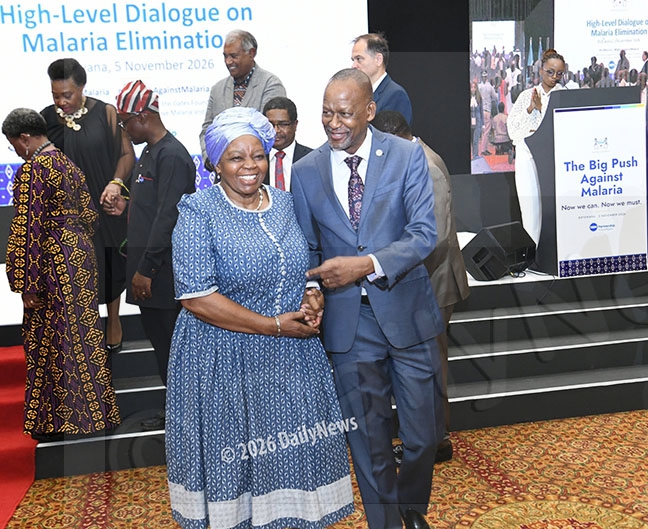
The call was made during a ministerial panel discussion at the High-Level Dialogue on Malaria Elimination in Gaborone on November 5, where Botswana, Namibia, Zambia and the Southern African Development Community (SADC) Secretariat highlighted challenges facing the region.
SADC Executive Secretary Elias Magosi called for stronger cooperation among member states, warning that malaria did not respect national borders.
He said the disease was influenced by population movement, changing weather conditions and growing resistance to malaria medicines.
Mr Magosi revealed that nearly half of the money required by SADC member states to fight malaria was still unavailable, calling for governments to increase their own funding and involve the private sector in supporting the fight.
He also emphasised the importance of sharing information, strengthening disease monitoring and ensuring that money allocated to malaria programmes produced measurable results.
For his part, Minister of Health Dr Stephen Modise also called for closer cooperation with neighbouring countries, explaining that people moving across borders could contribute to the spread of malaria and undermine progress made by individual countries.
Already, he said Botswana recorded an increase in malaria cases from 290 in 2024 to 2 451 in 2025, while deaths rose from two to 16.
He said the increase showed that malaria could return quickly if countries relaxed their efforts to prevent and control the disease.
Therefore, he said malaria control should be a continuous programme rather than something that only receives attention during the malaria season.
Namibia’s Minister of Health, Dr Esperance Luvindao, said the country recorded more than 100 000 malaria cases in 2025 despite previously making good progress toward eliminating the disease.
She identified resistance to indoor spraying as one of the major challenges, particularly in rural communities where some residents were reluctant to allow health workers to spray their homes.
Dr Luvindao said Namibia had taken its campaign directly to villages, working with traditional leaders to explain the importance of spraying and address residents’ concerns.
She said new technologies alone could not solve the problem unless communities understood and accepted the interventions.
Zambia’s Minister of Health called for malaria elimination to be treated as a development priority, saying governments must address poverty and improve living conditions alongside medical interventions.
He said countries needed stronger systems to identify areas where malaria continued to spread and direct resources to those communities.
He further noted that countries, which had eliminated malaria could provide valuable lessons, particularly on how development could help reduce the conditions that allow the disease to persist. ENDS
Source : BOPA
Author : Bakang Wren
Location : Gaborone
Event : Malaria elimination regional dialogue
Date : 06 Nov 2026
Related News