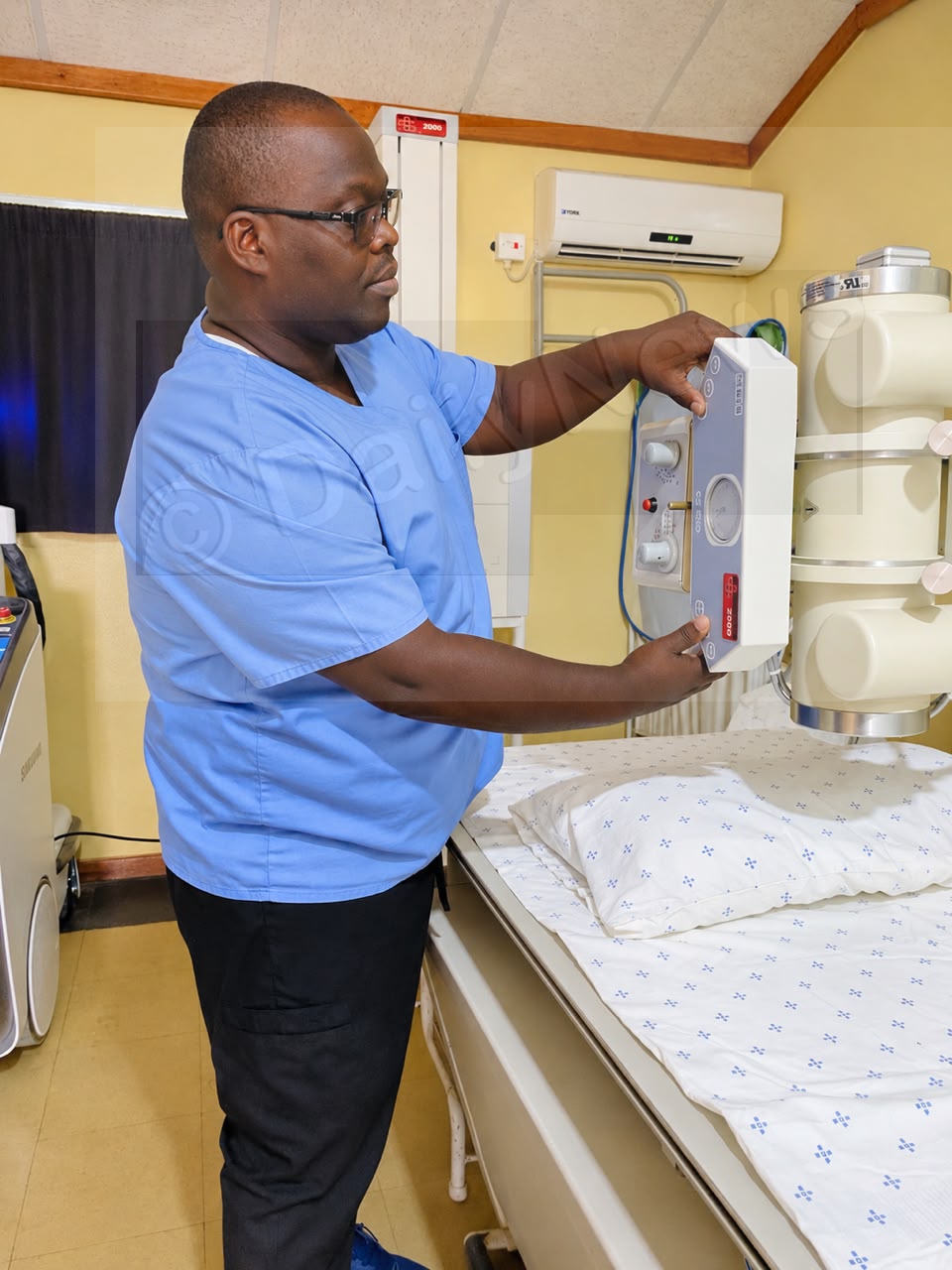
Radiographers bring invisible into view
05 Nov 2026
As the world prepares to commemorate World Radiography Day on November 8, a healthcare specialist is calling for greater recognition of radiographers, whose expertise helps doctors uncover illnesses, guide treatment and save lives.
In the busy corridors of hospitals, where patients arrive with different ailments and doctors work around the clock to establish diagnoses, there is a group of healthcare professionals whose contribution often happens away from the public spotlight.
They work behind sophisticated imaging equipment, producing pictures that reveal what the naked eye cannot see and providing medical practitioners with vital information to make informed decisions about patient care.hey are radiographers, the professionals who help make the invisible visible. Although modern hospitals proudly showcase their latest X-ray machines, CT scanners and MRI equipment as symbols of medical advancement, the people whose expertise brings these machines to life do not always receive the recognition they deserve.
For healthcare leadership and medical imaging specialist, Mr Tito Nyachienga, this is a situation that needs to change. In an interview ahead of World Radiography Day on November 8, 2026, Mr Nyachienga called for greater appreciation of radiographers, emphasizing that medical imaging was much more than operating sophisticated machines.
He describes radiography as the eye of medicine, an indispensable pillar of healthcare that supports diagnosis, treatment planning, emergency interventions and the ongoing management of patients. His message is simple but significant: behind every medical image is a trained professional whose knowledge, judgement and dedication contribute to a patient’s care.
While an X-ray examination may appear to be a straightforward process to the patient, the work behind producing a clinically useful image requires specialized knowledge and considerable professional skill. Radiographers must understand human anatomy, imaging physics, pathology, radiation protection and clinical protocols. They are responsible for correctly identifying patients, preparing them for examinations, positioning them appropriately, optimizing image quality and ensuring that radiation safety measures were observed.
They must also demonstrate patience and compassion, particularly when attending to patients who are frightened, critically ill, injured or experiencing physical discomfort. Mr Nyachienga said the profession extended far beyond conventional X-ray examinations. It encompasses specialised fields such as computed tomography (CT), magnetic resonance imaging (MRI), mammography, fluoroscopy, angiography, ultrasonography and bone densitometry.
Radiographers also contribute to specialised areas of medical imaging, while therapeutic radiographers play an important role in delivering radiation treatment to cancer patients. The diversity of these specialisations demonstrates the depth of knowledge and technical competence required in the profession.
In emergency departments, for instance, radiographers help produce images that assist doctors in assessing trauma injuries and investigating conditions such as strokes. In cancer care, imaging supports diagnosis, treatment planning and patient monitoring. Their work can therefore influence critical clinical decisions and in some circumstances, determine the course of a patient’s life.
However, Mr Nyachienga believes that the contribution of these professionals was sometimes overshadowed by the very technology that makes their work possible. He observed that during hospital visits and official commissioning ceremonies, it was common to see leaders and dignitaries posing beside newly acquired CT scanners, MRI systems and modern X-ray machines.
While such investments were important and deserve celebration, he said that equal attention should be given to the qualified professionals responsible for operating the equipment and ensuring that it delivered meaningful results. A hospital’s diagnostic capacity, he stressed, couldnot be measured by the sophistication of its machines alone. It also dependsed on qualified personnel, adequate staffing, functional equipment, essential supplies and a supportive working environment.
The challenge, however, goes beyond recognition. Like other healthcare professionals, radiographers in many settings face increasing workloads, staff shortages, equipment challenges and competing clinical demands. Despite these pressures, they are expected to maintain high diagnostic standards, protect patients, meet service targets and uphold professional ethics.
Mr Nyachienga argues that this imbalance was neither sustainable nor fair, calling for appropriate staffing levels, continuous professional development, functional equipment, fair career progression and improved working conditions. He said radiographers should be recognized as important contributors to healthcare planning, quality improvement and clinical leadership rather than being confined to the technical aspects of their work.
For him, the wellbeing of healthcare workers was directly connected to the quality of services delivered to patients. A healthcare system could not consistently demand excellence while overlooking the people responsible for providing it. Mr Nyachienga sees radiography as a profession with significant opportunities, particularly as medical technology continues to advance.
Beyond clinical practice, radiographers pursue careers in specialist imaging, education, research, quality assurance and healthcare management.
As the world commemorates World Radiography Day on November 8, his initiative is intended to shine a light on a profession that deserves greater appreciation. It is a reminder that celebrating medical technology without recognising the people behind it tells only part of the healthcare story.
For patients, every examination represented a search for answers, reassurance and ultimately, appropriate treatment. For radiographers, it is an opportunity to apply years of training, professional judgement and compassion in support of that journey.
Mr Nyachienga’s message is therefore a call to governments, healthcare leaders, hospital managers and professional associations to move beyond symbolic appreciation and invest in the people who make medical imaging possible.
This Sunday, as attention turns to the science and technology of medical imaging, the spotlight should also fall on the men and women behind the machines. Because while machines produce images, it takes professional expertise to make those images meaningful. ENDS
Source : BOPA
Author : Lindi Morwaeng
Location : Molepolole
Event : Interview
Date : 05 Nov 2026
Related News
06 Nov 2026