



TANA to transform public transport service
04 Nov 2026
Government is banking on an electric public transport system to address persistent challenges in the sector, including unreliable services, rising commuting costs, inadequate transport infrastructure and pollution caused by vehicle emissions.
The initiative, known as TANA, comprises a metro bus and metro rail project being introduced in phases. The first phase focuses on electric buses, while the second will introduce public train services.
In an interview, Minister of Transport and Infrastructure, Mr Keoagile Atamelang, said the five-month pilot project was intended to establish public acceptance of the new transport model while allowing government to assess passenger demand, infrastructure requirements and operational needs before expanding the service.
Of the 10 electric buses procured, only four are currently deployed along the Phakalane-Game City and Tlokweng-Metsimotlhabe routes as part of the initial pilot.
Mr Atamelang said the initiative was informed by challenges experienced by commuters, some of whom arrive late for work due to long waiting times and limited availability of public transport, particularly in urban areas.
He also cited unsustainable daily payment arrangements affecting some drivers, unpermitted kombis, inadequate infrastructure and traffic lights that do not recognise public transport vehicles when approaching intersections.
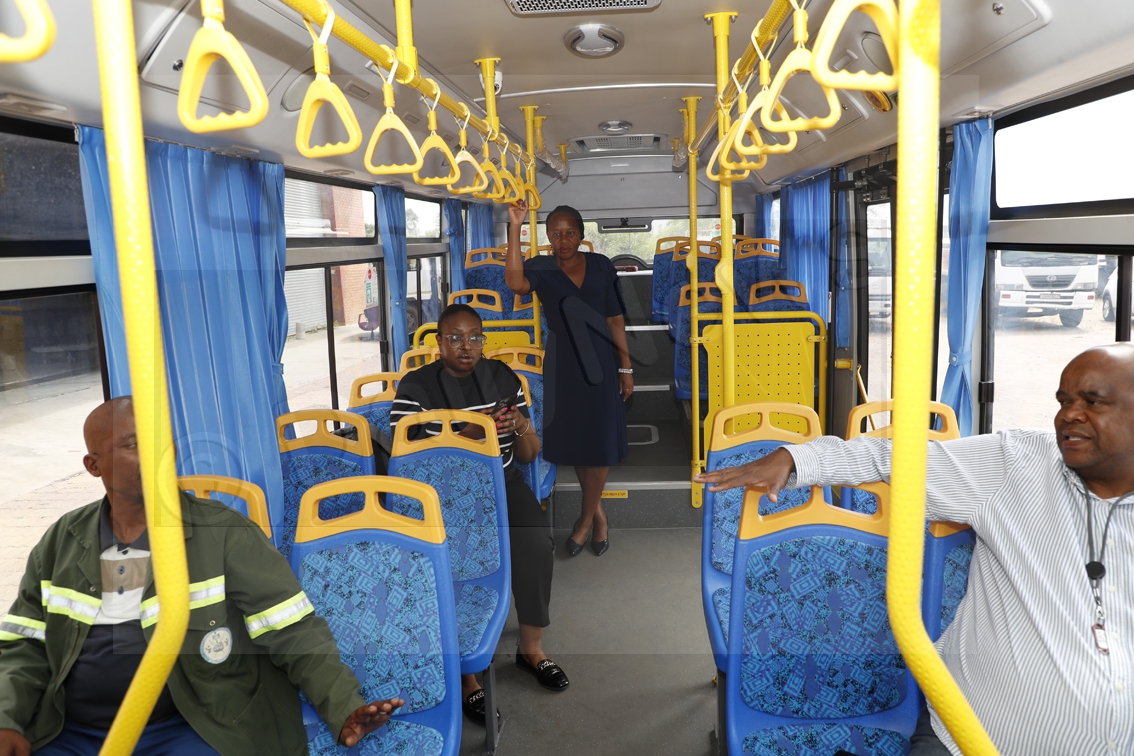
He said government wanted to introduce a reliable, convenient and comfortable transport system that caters for all passengers, including people living with disabilities.
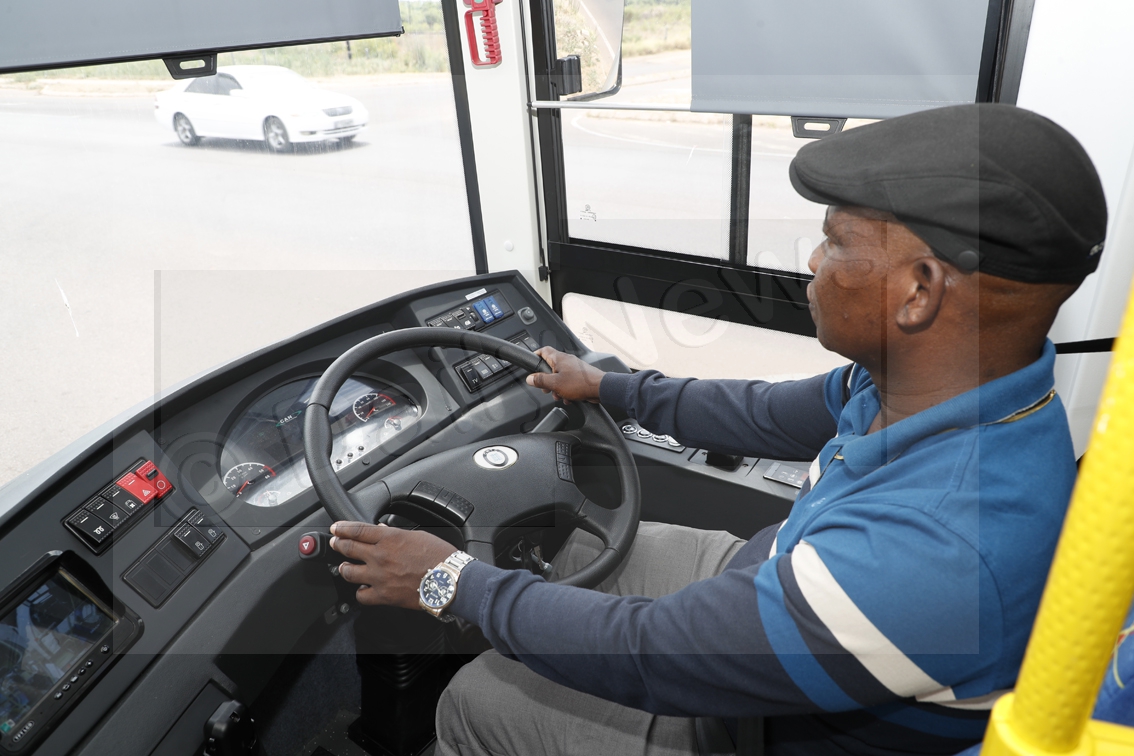
To achieve this, the buses are fitted with air conditioners, Wi-Fi, GPS tracking and CCTV cameras to enhance passenger comfort, safety and operational efficiency.
Each bus has a seating capacity of 24 passengers and can accommodate an additional 16 standing passengers. However, standing will not be permitted during the pilot phase because existing legislation does not provide for it.
The minister said the buses could travel approximately 250 kilometres on a full charge, with charging taking less than an hour and electricity costs amounting to less than P100 per charging session.
He explained that the adoption of electric mobility was also a deliberate move towards reducing carbon emissions and minimising air pollution associated with conventional vehicles.
Meanwhile, the pilot initially operated without a fixed timetable, with buses making random pickups to avoid disrupting existing kombi operators.
However, following two weeks of free service, which ended on November 1, the ministry will introduce a schedule while continuing to gather information on passenger demand and route requirements.
Mr Atamelang said the information would guide the finalisation of routes and help determine the appropriate operational model as the project progresses.
Government is also working on a cashless payment system, known as the Payless system, which is expected to incorporate various mobile money service providers to make fare payments more accessible and convenient.
The system is scheduled for piloting on November 14 and 15, while simulations are underway to determine affordable fares.
Mr Atamelang said government was considering fares lower than prevailing transport prices while ensuring that the service remained financially sustainable.
The project is being implemented in partnership with the Citizen Entrepreneurial Development Agency (CEDA), which assisted with the procurement of the buses and will oversee its commercial aspects, including plans for an Independent Power Producer (IPP) to list shares.
He said the ministry had engaged relevant stakeholders from the outset, including various transport associations, to ensure that the introduction of the new system did not disregard the interests of existing operators.
Once the pilot is completed and the necessary arrangements are in place, government intends to increase the number of buses and create opportunities for workers already in the transport industry, including drivers, conductors and personnel responsible for managing schedules.
The initiative is also expected to generate employment in other areas, such as cleaning, mechanics, facility management and trainee programmes, extending its benefits beyond the provision of transport services.
Mr Atamelang said government would continue engaging stakeholders and drawing lessons from countries such as Brazil and South Africa, which have experience in public transport systems.
He added that following the pilot, relevant laws would be considered for amendment to accommodate the new transport model, while infrastructure development would also be undertaken.
The Gaborone pilot will serve as a basis for expansion to other towns, particularly Francistown, once the ministry has assessed its performance and addressed the necessary operational requirements.
To familiarise the public with the new transport system, exhibition rides will also be organised, with the minister encouraging Batswana to follow the TANA Botswana Facebook page for updates.
Meanwhile, one of the bus drivers, Mr Bathusi Lere, has welcomed the initiative, saying its full implementation and expansion could help address unemployment through the creation of more job opportunities.
Mr Lere, who holds a P4 licence and a specialised driving licence, said he underwent two days of training to familiarise himself with the buses and their features before taking up his duties.
Although uncertain about the initiative’s eventual impact on private transport operators, he described it as a positive development, noting that commuters had already been using the buses along the Tlokweng-Metsimotlhabe route to travel to the bus rank.
He said expanding the fleet would not only provide commuters with an alternative mode of transport but also open up employment opportunities for more people. ENDS
Source : BOPA
Author : Ndingililo Gaoswediwe
Location : Gaborone
Event : Interview
Date : 04 Nov 2026
Related News
05 Nov 2026
05 Nov 2026
Tsheko decries wealth and land inequality
05 Nov 2026
Fujian medical mission marks 45 years of legacy
05 Nov 2026
Radiographers bring invisible into view
05 Nov 2026