


Government pursues fiscal discipline for future investment
03 Nov 2026
Government is pursuing fiscal discipline not as an end in itself, but to restore the country’s capacity to invest in the future, says Vice President Ndaba Gaolathe.
Mr Gaolathe, who is also Minister of Finance, underscored the need to spend more wisely, mobilise resources more effectively, eliminate waste and protect investments that generate lasting economic and social returns.
Mr Gaolathe said fiscal resilience and economic transformation were not competing objectives but rather mutually reinforcing foundations of national prosperity.
Botswana cannot continue to build national prosperity on economic foundations where government exercises limited control, has said.
He said Botswana would not become a high-income economy driven solely by a rise in national Gross Domestic Product (GDP).
He said a prosperous nation would be achieved when economic opportunities extended to villages, towns and districts and when households were in a position to build secure, dignified and sustainable livelihoods.
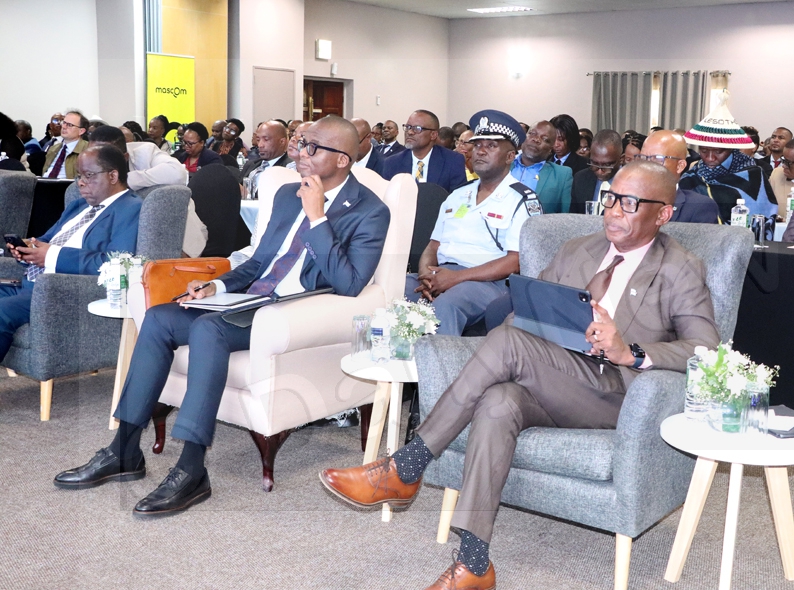
Delivering a keynote address at the Budget Pitso for Local Authorities in Maun on November 2, Mr Gaolathe emphasised that government must build an economy that was more diversified, productive, resilient and capable of generating sustainable livelihoods.
He said national transformation must therefore be anchored in local economic development, hence a deliberate shift in how local authorities think about development was a necessity.
Mr Gaolathe said the central purpose of the 2027/28 budgetary strategy was, ‘we must move beyond an approach that measures progress primarily through the infrastructure we construct or the assistance we distribute toward one that also measures the productive capacity we create in our communities.’
The Budget Pitso was held under the theme: Accelerating Economic Transformation and Building Fiscal Resilience for Sustainable Growth.
He also noted that consultations must influence policy, inform decisions and ultimately change lives.
Mr Gaolathe cited that in previous engagements, participants raised a wide range of important issues affecting local governance and development.
Among the key concerns raised were those relating to infrastructure financing, decentralisation, procurement inefficiencies and the financial sustainability of local authorities.
He said government was advancing the exploration of road tolling through Public-Private Partnerships, acknowledging that Cabinet approved the National Decentralisation Policy in September 2026, which was scheduled to be tabled before Parliament during the November 2026 sitting.
Mr Gaolathe said the policy would mark an important step in bringing decision-making and service delivery closer to communities.
Additionally, he said the review of the Public Procurement Act had commenced, aimed at improving efficiency, transparency and opportunities for local enterprises.
“These reforms are not yet complete, and I would not wish to suggest otherwise. But they demonstrate that the country is moving, institutions are responding and the foundations for a different economic future are being laid.
We must now accelerate implementation and ensure that progress is measured not merely by policies approved, but by results experienced by our citizens,” he said.
Mr Gaolathe also appreciated that the introduction of the Botswana Economic Transformation Programme (BETP), largely as a vision and a plan, had established a portfolio for prioritising projects and reforms across agriculture, manufacturing, tourism, energy, infrastructure, financial services and digitalisation.
He said the projects carried significant investment and employment potential, although much remained to be done to translate their potential into completed investments, productive enterprises and jobs.
Mr Gaolathe said BETP was now moving through the difficult but essential work of execution, mobilisation of investment, resolution of regulatory and infrastructure constraints, strengthening of institutional coordination and facilitation of projects toward implementation.
However, Mr Gaolathe stated that progress was not without challenges, yet appreciated that the public service was increasingly getting orientated toward delivery, problem-solving and measurable results.
“Our direction is clear, our reform agenda is taking shape, and our responsibility now is to translate this momentum into outcomes that our people can see and feel,” said Mr Gaolathe. ENDS
Source : BOPA
Author : Esther Mmolai
Location : MAUN
Event : Keynote address
Date : 03 Nov 2026
Related News

03 Nov 2026
Botswana steps up fight against breast cancer

03 Nov 2026
BUAN-Sowa partnership put communities first
03 Nov 2026