


Enforce compliance to protect workers
29 Oct 2026
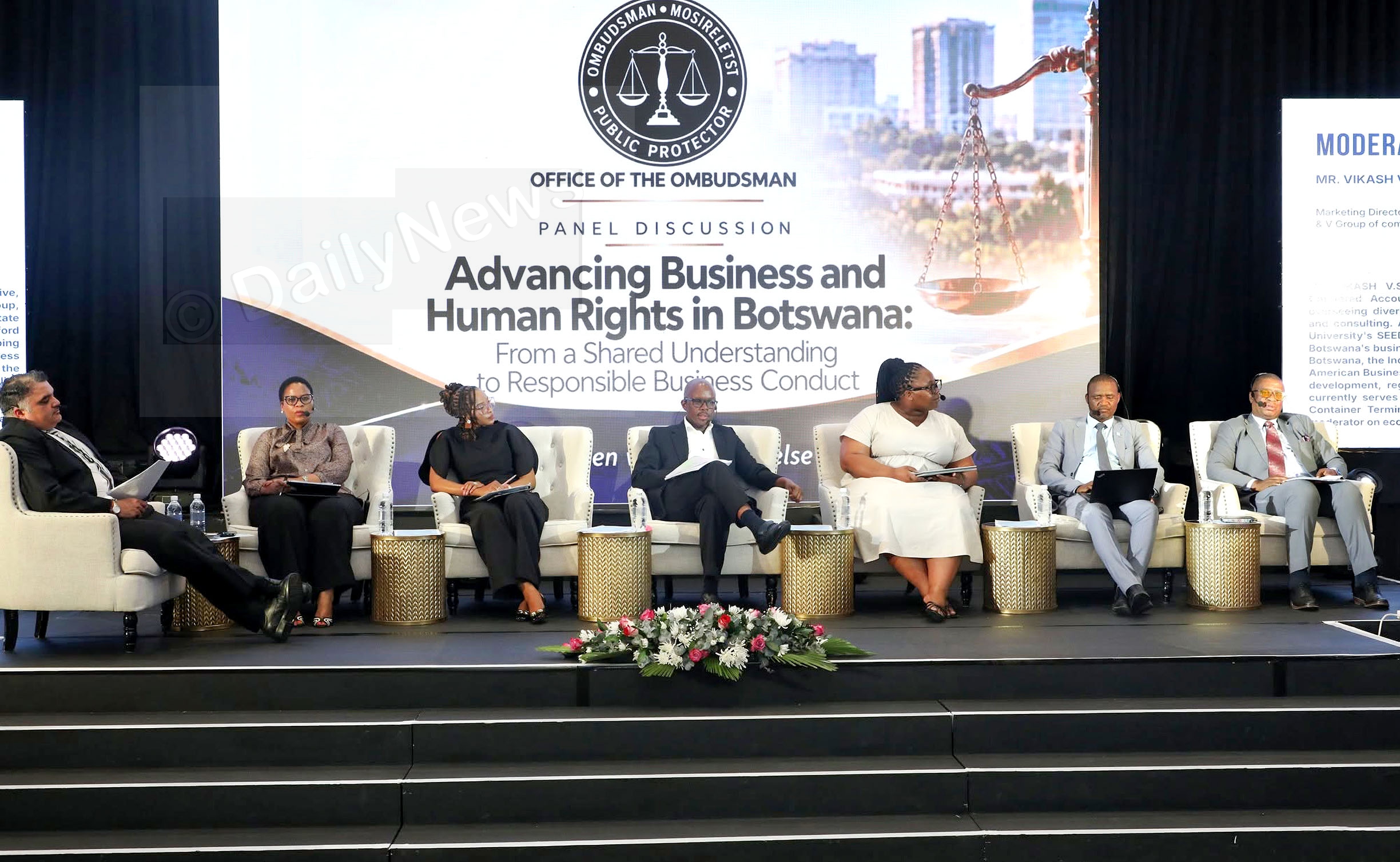
Prominent human rights lawyer, Mr Tshiamo Rantao has called on the Office of the Ombudsman to utilise provisions in the new Employment and Labour Relations Act to enforce compliance and protect workers whose rights are violated by businesses.
He said this during a panel discussion on Advancing Business and Human Rights in Botswana organised by the Office of the Ombudsman.
He said the new Act empowered the Ombudsman to approach courts of law to enforce its decisions, noting that many people whose rights were violated by businesses approached the Office of the Ombudsman for recourse.
“The Ombudsman is expected to go to court to enforce its recommendations,” he said, adding that this would enable the office to enforce its decisions and protect communities from business violations.
Mr Rantao said the approach would make it possible for people to access justice freely through the Ombudsman.
He stated that internal complaints mechanisms in businesses, especially small businesses, were often ineffective due to fear of victimisation.
“Issues of victimisation are very real and are hard to prove,” he added.
He also said there were barriers to access to justice due to expensive litigation, adding that while Legal Aid exists, its criteria excluded some people on the assumption that they can afford litigation fees, while in fact they cannot.
He further decried the long periods that cases took before conclusion, noting that some could take up to three years, despite justice being best when delivered quickly.
For his part, the Ombudsman, Advocate Stephen Tiroyakgosi said the office provided less strict redress and lower litigation costs, offering an alternative to conflict resolution that helps avert human rights violations.
“When you consider costs and rigidity, the Ombudsman comes in handy. It is an impartial arbiter who provides a fair and impartial platform,” he said.
Furthermore, he said the Office of the Ombudsman was not toothless as some perceived it to be.
Acting Deputy Permanent Secretary in the Ministry of Labour and Home Affairs, Mr Bonnie Jim, said implementation of laws came with challenges, as systems had to be in place.
He said without systems, implementation became inadequate, which created room for violations of rights by businesses.
“If you set up a legal framework and do not have implementation structures, you are set up for failure,” he said. ENDS
Source : BOPA
Author : Bonang Masolotate
Location : Gaborone
Event : Panel discussion
Date : 29 Oct 2026
Related News

29 Oct 2026
29 Oct 2026