


Mareetsane Turns Tradition into a Livelihood
21 Aug 2026
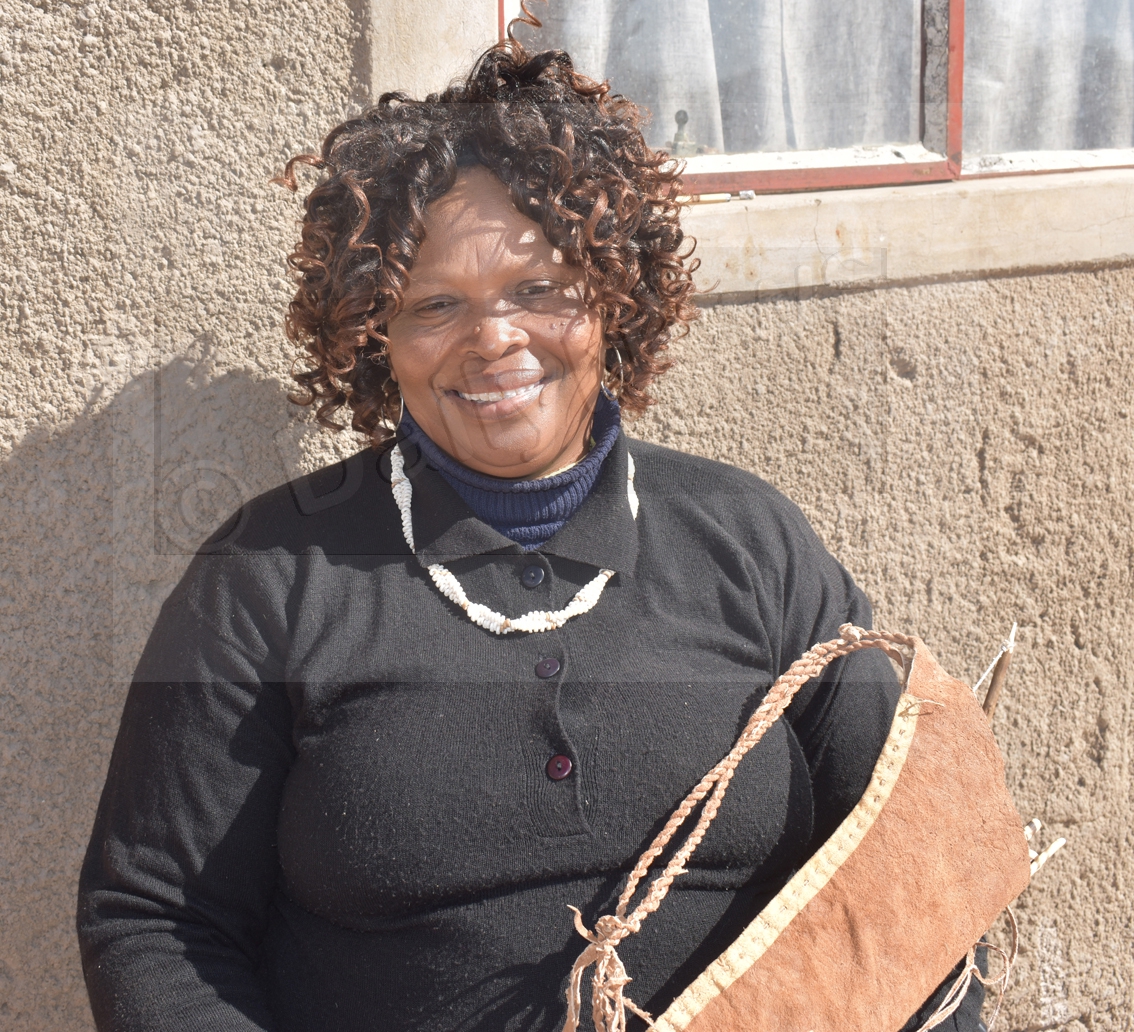
The tiny white beads scattered across Beauty Mareetsane’s hands may appear insignificant to an unfamiliar eye.
But to the 49-year-old Maake native, each bead carries a piece of a tradition passed down through generations of the Basarwa community.
Seated among her beadwork, Mareetsane carefully threads moraka beads together, her fingers moving with the ease of someone who has spent years mastering the craft.
For Mareetsane, the beads are more than ornaments. They are a connection to her heritage and a skill through which she earns a living while helping to keep her community’s traditions alive.
Her connection to moraka beadwork began long before she started making it herself.
In an interview, Mareetsane said she grew up watching her mother make moraka beadwork and saw how the skill could become a source of income.
Her mother would travel to the Ghanzi Craft Centre to sell her beadwork, where she made good sales over the years.
When age eventually caught up with her mother and she could no longer continue with the craft, Mareetsane stepped in, taking over the skill she had spent her childhood watching and learning.
What began as childhood memories of watching her mother work has since become Mareetsane’s livelihood and a continuation of a tradition that might otherwise have faded with the generation before her.
Mareetsane began making moraka beadwork in 2009, driven partly by a lack of employment opportunities and a desire to create a livelihood for herself.
She said the President’s Day Competitions also encouraged her to venture into traditional crafts by providing an opportunity for people to develop and showcase their skills.
What had once been a skill she watched her mother practise gradually became an opportunity to earn an income at a time when formal employment was difficult to find.
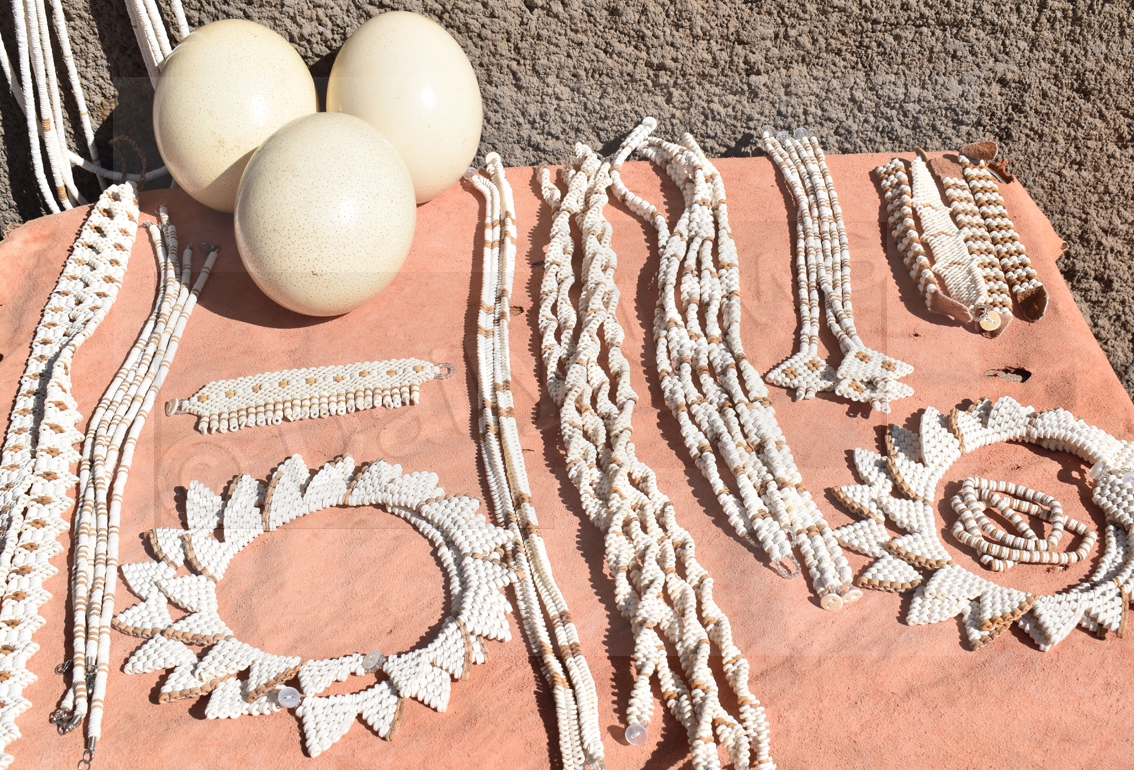
Today Mareetsane makes necklaces, wristbands and earrings, blending traditional moraka beads with modern shiny beads for a contemporary touch.
The process starts with eggshells. She crushes and mixes them, then shapes and stirs the mixture for one to two weeks before forming beads and threading them by hand.
“It takes time and patience,” she said. “From preparing the eggshells to threading the final piece, every ornament has a story.”
Beyond aesthetics, moraka beads hold cultural meaning. Traditionally worn on the neck, waist and wrists, they were believed to promote wellbeing. They also marked life stages for newborns and for girls transitioning into womanhood.
The beads also formed part of important stages in a person’s life.
Mareetsane said they were traditionally used for newborn babies after birth and for young girls during the transition into womanhood following their first menstruation.
For her, these practices give moraka beadwork a deeper meaning, connecting the craft not only to adornment but also to cultural practices and knowledge passed down through generations.
Mareetsane’s skill has also earned her recognition beyond her village.
She said she once participated in the President’s Day Competitions, where she scooped first position with a necklace she specially crafted for the competition.
She named the piece “Qhadorm”, a traditional necklace that holds particular significance in her culture.
Mareetsane explained that the necklace is traditionally worn by women when they get married, making it more than an ornament but a piece associated with an important milestone in a woman’s life.
For her, winning with Qhadorm was therefore not only recognition of her craftsmanship, but also an opportunity to showcase a piece of cultural heritage through her art.
The achievement affirmed that the tradition she inherited from her mother could provide a livelihood while also earning recognition for the cultural knowledge and craftsmanship embedded in each piece.
Mareetsane’s beadwork has found a market among traditional groups, schools and individuals, providing her with an income from a craft rooted in her heritage.
She recalled that she also benefited from opportunities facilitated by the former Department of Gender Affairs, which assisted local artisans by taking their crafts to exhibitions and markets in Gaborone, where they could reach tourists and other potential buyers.
According to Mareetsane, such opportunities gave her access to a wider market beyond her village and enabled her to earn more from her beadwork while reaching customers she would otherwise have struggled to access.
Despite the recognition her beadwork has received, Mareetsane said sustaining the craft has become increasingly difficult, with limited markets affecting her ability to purchase the materials she needs.
She said obtaining eggshells, which are central to making her moraka beads, has become a challenge, as she sometimes has to travel as far as Dibete to source them.
With sales declining, she said she often does not have enough money to make such trips or purchase other materials required for her work.
Mareetsane recalled that things were easier in the past, particularly when she participated in exhibitions in Gaborone.
She explained that she would travel to the capital knowing that she would not only have an opportunity to sell her beadwork, but could also use the proceeds to source other raw materials needed to continue producing her crafts.
Pointing towards her house, Mareetsane reflected on how the decline in income has affected her plans beyond beadwork.
She said she could have completed the house a long time ago had her craft business remained as viable as it once was, but the lack of a reliable market has made it difficult to generate enough income.
“Since COVID-19, a lot of things have been mixed up,” she said, explaining that the disruption caused by the pandemic had affected the progress she had made in her business.
Mareetsane said she had hoped to expand her work to the point of employing two people to assist her, but financial difficulties had made that impossible.
For now, she continues to do every stage of the work herself, from sourcing raw materials and preparing the eggshells to shaping the beads and creating the finished pieces, as she tries to keep both the tradition and her livelihood alive.
With the challenges threatening the sustainability of her craft, Mareetsane appealed to government and other stakeholders to help create markets for traditional crafts, saying access to customers would make a greater difference than assistance with raw materials.
She said she was capable of sourcing the materials needed for her beadwork herself, but what she needed most was a reliable market where she could sell her products and earn enough to sustain and grow the business.
Mareetsane also called for business management training to help artisans develop the skills needed to run their crafts as sustainable enterprises.
She believes creating markets for Basarwa crafts would go beyond improving livelihoods, as it would also help safeguard a rich cultural heritage that risks being lost if younger generations are not given opportunities to learn and practise traditional skills.
Mareetsane said the Basarwa community possesses numerous traditional skills and crafts that could be transformed into sources of income if artisans were given access to viable markets.
For her, supporting such crafts is therefore not simply about helping people make money, but about giving tradition a future.
She hopes that the next generation will not only hear about moraka beadwork as something their ancestors once made, but will see it, learn it and have the opportunity to earn a living from it.
As her fingers continue to shape each tiny bead, Mareetsane is doing more than creating necklaces and ornaments.
She is carrying forward a tradition inherited from her mother, turning it into a livelihood and, one bead at a time, ensuring that a piece of Basarwa heritage continues to live on. ENDS
Source : BOPA
Author : Samantha Gabaeme
Location : MAAKE
Event : Feature
Date : 21 Aug 2026
Related News
08 Oct 2026
08 Oct 2026
Kgolo-Lotshwao keeps Setswana alive
08 Oct 2026
Anafiki premiers ahead of official release

06 Oct 2026
Serurubele turns poetry into cultural legacy
06 Oct 2026
Khama declares ploughing season

06 Oct 2026