


Concourt debate reveals need for delicate balance
14 Aug 2026
As Botswana navigates a critical moment in its judicial evolution, a recent public panel discussion held in Tonota on the establishment of a Constitutional Court has irradiated a societal divide between the need for institutional modernism and economic survival.
The forum, designed to educate and gauge public sentiment regarding government’s plan to establish a dedicated Constitutional Court, brought together community leaders, youth advocates, journalists and clergy. What emerged was a microcosm of a broader national debate, one that pits long-term constitutional safeguards against short-term socio-economic priorities and civic awareness.
A primary pillar of skepticism toward the establishment of the court centred on civic readiness and economic timing.
Opponents contended that government risked putting the institutional cart before the educational horse, thus urged that widespread public education must precede high-level judicial restructuring.
Trade unionist, Mr Ishmael William underscored that legal reforms lost their democratic utility if the public did not understand how to leverage them.
“Batswana are not well informed about what a Constitutional Court really is. It will be better if leaders spread the message well to educate them about the matter,” Mr William said, emphasising that because the institution would serve the general public rather than specific elites, no citizen should be left behind.
Such skepticism was further compounded by pragmatic economic concerns. Representing the youth demographic, Mr Oteng Themba questioned the allocation of scarce national resources towards new administrative structures while everyday citizens grappled with baseline crises.
“As the country is grappling with economic crises such as youth unemployment and shortage of medicine and drugs, government should first attend to these matters than spending a lot of money on the establishment of a Constitutional Court,” Mr Themba stated.
While acknowledging that the youth recognised the intrinsic value of a Constitutional Court, Mr Themba maintained that the timing was not right, noting that the existing High Court and Court of Appeal already possessed the constitutional mandate to preside over human rights and legal grievances.
Conversely, proponents argued that delaying judicial specialisation left fundamental rights vulnerable and risks administrative overreach.
Former Sunday Standard journalist, Mr Spencer Mogapi framed the court as an indispensable check on government authority, pointing to past legal struggles to illustrate how the absence of a specialist bench complicated litigation against state bodies.
“It is very dangerous to citizens to have a government with so much power, it is therefore important to have a specialist court which will focus on whether citizens’ rights are violated or not, if government is governing well or not. So the Constitutional Court is much needed,” Mr Mogapi argued, calling for the establishment of the institution.
Adding a social and ethical dimension to the discourse, the religious community voiced strong support for rapid implementation, viewing the court as a vital mechanism for interpreting rights within moral boundaries.
Speaking on behalf of faith leaders, Mr Mpho Motlhasedi argued that a specialised court was urgently needed to align civil rights with divine law and prevent statutory ambiguity.
“Sometimes people might think some things are their right yet they are doing against the will of God or committing sin. As religious leaders, it is our duty to ensure that people abide by the law of God,” Mr Motlhasedi said.
He cited scenarios such as bestiality and cautioned that without explicit constitutional interpretation, harmful behaviours could be misconstrued as protected freedoms, adding that a Constitutional Court would help to intervene.
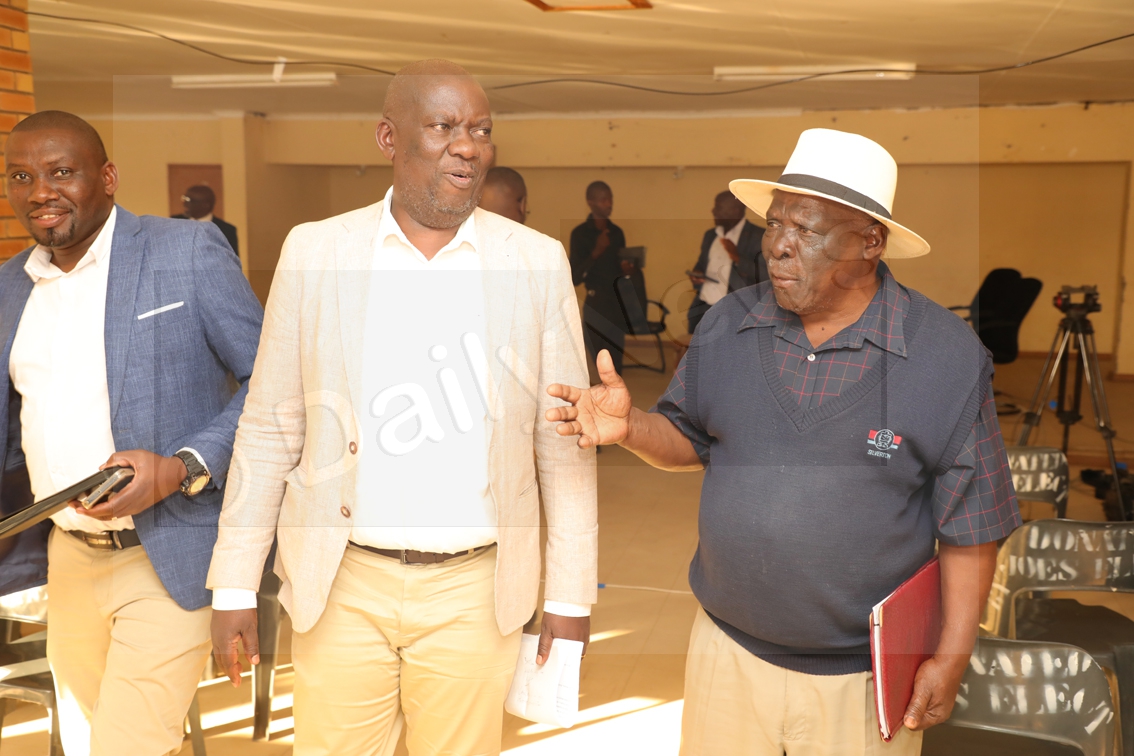
The dialogue in Tonota, attended by key dignitaries including Member of Parliament, Mr Gaefele Sedombo, council chairperson, Mr Neo Sefhume and local Dikgosi, highlighted the delicate balance required in democratic reform.
While institutional architects see the Constitutional Court as an essential evolution for governance and rights protection, the grassroots response shows that structural legal reform cannot be detached from civic education and the prevailing economic climate.
Whether government chooses to pause for widespread civic campaigns or forge ahead with institutional development will likely determine not just the speed of the court’s rollout, but its ultimate legitimacy in the eyes of the public. ends
Source : BOPA
Author : Kelebogile Taolo
Location : Tonota
Event : Kgotla meeting
Date : 14 Aug 2026
Related News

06 Oct 2026

06 Oct 2026
Access to sign language critical
06 Oct 2026
Boko hails Royal visit


06 Oct 2026