


Process to preserves judicial independence
30 Jul 2026
The proposed appointment process for Constitutional Court judges will not compromise judicial independence as the President will act purely on the advice of the Judicial Service Commission (JSC), Parliament has heard.
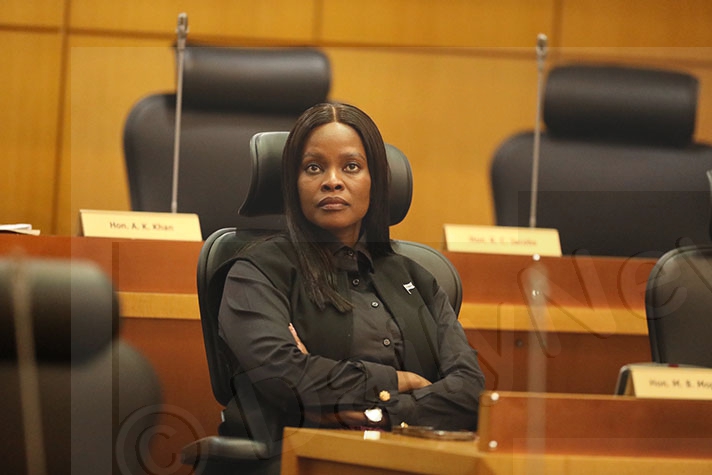
Answering a question in Parliament on July 29, Assistant Minister for State President, Defence and Security, Ms Maipelo Mophuting-Dikoloti, explained that Clause 11 of the Constitution (Amendment) Bill, 2025 inserts Section 102(c) into the Constitution to establish the new court.
Ms Mophuting-Dikoloti explained that under Section 102(c)(1), judges of the Constitutional Court would consist of the Chief Justice, Deputy Chief Justice, number of Justices of the Constitutional Court as may be prescribed by Parliament and other judges as the President may appoint, acting with the advice of the JSC, for a limited period as required.
The assistant minister said accordingly, the Chief Justice would continue to be appointed by the President as currently provided by Section 96(1) of the Constitution.
However, she said the amendment conferring the power to appoint the Deputy Chief Justice and other judges of the Constitutional Court required the President to act strictly on the advice of the JSC, as stipulated by Clause 102(c) read alongside the Constitutional Court Bill.
Ms Mophuting-Dikoloti emphasised that while the Constitution of Botswana established the independence of the judiciary and ensured that judges were impartial across all courts, the Bill did not divert from or water down those principles.
“Instead, it contains several constitutional safeguards designed to preserve the independence, impartiality and integrity of the Constitutional Court in line with current practice,” she explained.
She indicated that appointments would be made with the advice of the JSC to ensure that the process benefitted from the independent advice of the constitutional body established for judicial appointments.
“As was stated by the Court of Appeal in the Law Society of Botswana and Another v The President of Botswana and Others (2018 (1) BLR 478), also known as the Motumise case, the members of the Judicial Service Commission each bring the interests and perspectives of their constituents in any evaluation of a candidate for appointment while at the same time exercising an open mind and deliberate judgment thereafter to consider all factors and reach an informed and unbiased evaluation of the suitability of a candidate,” she added.
Also, she said each JSC member represented a different sector to ensure that the necessary checks and balances under the separation of powers doctrine were observed and ultimately led to the President having to appoint as per the advice of the JSC.
“As was said in the Motumise case, the Head of State is acting purely formally in the appointment process and excludes the President from the substantive power to appoint,” she noted.
She also explained that the constitutional provisions demonstrated that while the President formally appointed judges of the Constitutional Court, the substantive appointment process was bestowed on the JSC to safeguard judicial independence, impartiality and separation of powers.
Ms Mophuting-Dikoloti further explained that the proposed Clause 102(d) guaranteed security of tenure.
“A judge may only be removed from office for inability to perform the functions of office or for misbehaviour, following an investigation by an independent tribunal appointed in accordance with the Constitution. This mirrors the standard set for removing High Court judges under Section 97(2) and Justices of Appeal under Section 101(2), aligning with international best practice,” she said.
Again, she said, Clause 6 inserted Section 94(c), which recognised the Chief Justice as the Head of the Judiciary and vested in them the responsibility for the administration of the courts.
“This includes establishing standards for judicial independence, impartiality, dignity, accessibility and effectiveness, as well as monitoring compliance with those standards,” she added.
MP for Okavango East, Mr Gabatsholwe Disho, had asked the minister to brief Parliament on who would be vested with the authority to appoint judges upon the establishment of the Constitutional Court.
Mr Disho also sought clarity on the constitutional procedures, institutional safeguards and consultative mechanisms that would govern such appointments to ensure independence, impartiality and the separation of powers. ENDS
Source : BOPA
Author : BOPA
Location : Gaborone
Event : Parliament
Date : 30 Jul 2026
Related News

06 Oct 2026

06 Oct 2026
Access to sign language critical

06 Oct 2026
Boko hails Royal visit


06 Oct 2026