



Fodder production powers KOINAPHU Trust
30 Jul 2026
In the heart of the Kgalagadi, where livestock farming remains the backbone of many households, a community-led initiative is transforming indigenous plants into a valuable resource that could reshape animal feed production while creating economic opportunities for residents.
The KOINAPHU Trust, which represents the villages of Kokotsha, Inalegolo and Phuduhudu, is spearheading a fodder production project that combines traditional knowledge with modern agricultural practices to produce affordable, locally made livestock feed.
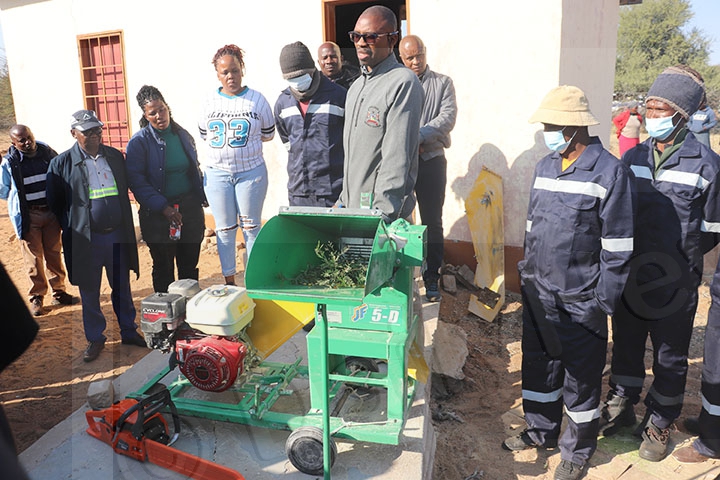
Addressing councillors during the ongoing Tsabong District Council project site visits, KOINAPHU Trust chairperson, Mr Meleko Thumpe, explained that the project was inspired by the rich indigenous knowledge passed down through generations.
At the centre of the initiative is the condensed Prosopis plant (Sexanana), which is blended with other locally available plants such as Motlopi and Mogonono to produce nutritious fodder for livestock.
The project, established with funding from Forest Conservation Botswana in 2019, was designed to tackle recurring fodder shortages in KOINAPHU villages while creating employment and generating income for the communities.
Equipped with machinery such as a hammer mill and chainsaw, the project has also engaged five workers through the Ikageng Public Works Programme to support its day-to-day operations.
Although still developing, the initiative is already showing promising signs of becoming a viable business venture.
According to Mr Thumpe, a survey conducted among farmers revealed a ready market for the product, with many expressing willingness to purchase locally produced fodder despite having different preferences regarding the type of feed required for their livestock such fat retaining feed and small stock feed.
Mr Thumpe acknowledged that such would broaden their production spec in terms of catering for a wide rage of product.
Recognising the importance of quality assurance, the trust has partnered with stakeholders such as the Department of Forestry and Range Resources (DFRR) and Botswana University of Agriculture and Natural Resources to ensure that the product meets the required nutritional standards before reaching the market and in producing such, the environment is conserved.
When asked about the project’s sustainability by Tsabong Deputy Council Chairperson, Mr Mooketsi Rakose, Mr Thumpe underscored that sustainability remained central to the trust’s vision.
Beyond producing fodder, the trust intends to invest in the skills of its workforce by sending project employees for specialised training on the nutritional value of indigenous plants used in production and the nutritional composition of the finished product.
He said building technical expertise would improve product quality, strengthen consumer confidence and position the enterprise to compete effectively in the livestock feed industry.
Mr Mooketsi Rakose further challenged the trust to embrace value addition by diversifying its products.
He observed that Kokotsha was renowned for horse rearing and encouraged the project to develop specialised fodder formulations that would also cater for horses, thereby expanding its market reach.
Furthermore, Councillor for Kokotsha, Mr Kabo Medupe, encouraged the Trust Committee to actively seek technical and operational support from the Tsabong District Council whenever the need arose.
He said the committee should not hesitate to approach the council for assistance, as collaboration would help strengthen the project, improve its operations and ultimately boost its income-generating potential for the benefit of the community.
As Tsabong District Council continues to promote community-based economic development and climate-resilient agricultural practices, the Kokotsha fodder production project demonstrates how indigenous knowledge, innovation and strategic partnerships can be harnessed to unlock opportunities in rural communities.
If successfully expanded, the initiative has the potential not only to reduce dependence on imported livestock feed but also to create jobs, improve household incomes and strengthen the resilience of livestock farmers across the Kgalagadi. ENDS
Source : BOPA
Author : Letticia Nnokotema
Location : Tsabong
Event : Interview
Date : 30 Jul 2026
Related News

22 Sep 2026




22 Sep 2026
Government records budget surplus
22 Sep 2026