Moringa farming to be a game changer
27 Jul 2026
Today, diamonds have no value in the market, but trees can take over and this is according to Farmer’s Pride International (FPI) director, Mr Hunter Zadzagomo.
In an interview, Mr Zadzagomo captures the spirit of a quiet and green revolution taking root in the soils of Botswana, saying while global markets fret over volatile, fluctuating diamond prices, a botanical powerhouse, Moringa oleifera, is emerging as the country’s ultimate economic lifeline.
He says Botswana has a golden opportunity to position itself as Africa’s premier moringa production, processing and export hub and also believes that agriculture is the only sector in Africa capable of completely sustaining itself on its own ecosystem.
He argues that finite minerals can no longer guarantee national stability.
“Moringa has the potential to grow family economies. It is not just a crop but a livelihood enterprise capable of creating income, improving household nutrition, generating employment, supporting small businesses and contributing to national economic development through value addition and exports. When organised under Agriculture-Based Clusters, Moringa becomes a catalyst for rural industrialisation and community wealth creation,” he explains.
Rather than repeating the historic mistake of exporting cheap, raw materials, he says FPI’s strategy centres on local value addition, adding that processing the harvest into premium products yields significantly higher returns for local farmers and keeps wealth within the country.
Currently, he says FPI is operating from Uphopia Farms in Gakuto.
“Where we are implementing our pilot production and demonstrating the Agriculture-Based Cluster model,” he says, adding that as demand scales, the plan is to expand this cluster model nationwide.
To understand the sheer magnitude of this potential, one only has to look at how visionary nations have historically turned native flora into national fortune.
China spun bamboo into a multi-billion-dollar empire spanning construction, textiles, food and paper.
Zimbabwe rode tobacco, Africa’s ‘golden leaf’, to huge export earnings.
Kenya and Ethiopia branded tea as green gold and brewed coffee into national economic growth, while Ghana claimed the crown as the world’s cocoa king.
The Netherlands, Brazil and India dominated global markets in flowers, coffee and spices respectively.
Botswana is equally rich in high-value and indigenous flora. The majestic baobab offers deep nutrition, wild rooibos steeps into soothing tea, buchu carries medicinal power, aloe vera heals, morula transforms into rich juices and jams and local wild honey holds an unforgettable flavour.
Yet, none of these quite matches the sheer versatility and commercial dominance of the moringa tree.
Capable of producing more than 100 distinct products, moringa stands entirely apart as Botswana’s true green gold. The plant’s diverse commercial portfolio spans cosmetics and skincare like handmade soaps and high-grade ben oil, health and nutrition products like dietary capsules, specialty teas and targeted nutritional supplements and agricultural goods such as high-nutrient livestock feed and water purification solutions. Its health benefits are equally extraordinary.
The leaves are packed with vital vitamins and minerals, the seeds possess the natural ability to purify and sweeten drinking water and women who consume moringa daily report significantly improved fertility.
Because of these benefits, global demand continues to skyrocket.
Mr Zadzagomo says FPI is already serving both local and international consumers, but the ultimate goal is exponential growth.
“On markets, we are currently supplying both the domestic and export markets. Our primary focus is the export of Moringa leaf powder and other value-added products to international buyers, particularly in Europe, while also developing regional markets within Southern Africa,” he says.
He says this export programme is being scaled in phases and while initial commercial shipments are measured in tonnes, FPI’s long-term vision is highly ambitious.
“Our long-term vision is to establish approximately 10 000 hectares of Moringa and other high-value crops throughout the country. Employment creation is one of the most significant impacts of this initiative. Based on our production model, we estimate an average of 10 jobs per hectare across farming, nursery management, harvesting, processing, packaging, logistics, quality assurance and administration,” Mr Zadzagomo adds.
At full implementation, he says the 10 000-hectare programme has the potential to support approximately 100 000 direct jobs, while generating countless indirect opportunities throughout the broader agricultural value chain.
Again, he says the hardy Moringa oleifera serves as a vital anchor crop due to its climate resilience and soil-restoring properties.
“Revenue from moringa leaves, seed oil, powder, tea, animal feed and carbon sequestration are designed to finance 46 other high-value crops within each cluster,” he says.
However, he says unlocking this potential, requires confronting systemic hurdles, adding that while agriculture has the unique therapeutic power to suppress personal and economic stress, conflicting policies often hold the sector back.
He cites Botswana’s current immigration rule that limits foreign agricultural workers to 90-day stays, a regulation that directly clashes with existing agricultural development laws and disrupts long-term farm management.
His advice to the nation is to commercialise agriculture, because, at its core, agriculture is a business. He urges Batswana to fully utilise their natural talents and resources instead of holding back.
Armed with these gifts and an abundance of fertile land, he believes the country should be much further along in its wealth-creation journey.
Meanwhile, he says FPI champions smallholder farmers by providing direct training, capacity building, solid market linkages and crucial access to finance.
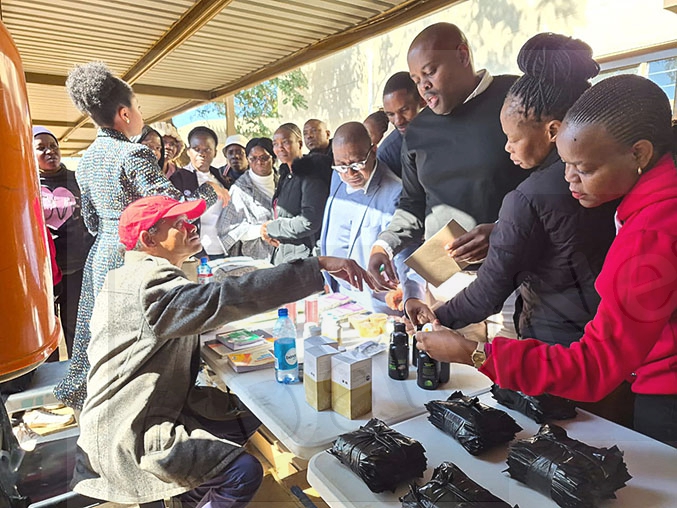
He adds that such commitment was recently demonstrated in Tonota village, where FPI hosted a hands-on moringa training and production workshop for over 100 local residents.
Also, he says by promoting community-based processing units for moringa oil, powder and tea, FPI ensures that the highest profit margins remain in the hands of the farmers, while deliberately integrating women and youth into key production and leadership roles.
He further says FPI’s grassroots efforts align seamlessly with the Botswana Economic Transformation Programme (BETP), Africa Agenda 2063, the UN Sustainable Development Goals and national climate commitments.
“Its impact to date includes training thousands of farmers, establishing agriculture-based clusters in rural and urban areas, improving household incomes, expanding moringa plantations, restoring degraded land, creating jobs, strengthening food security and supporting export strategies,” Mr Zadzagomo adds.
He explains that FPI operates as an agricultural subsidiary of Hunter’s Global Network, functioning as a proud Pan-African agri-food production company dedicated to climate-smart farming, agroforestry, sustainable land management and inclusive economic empowerment.
Meanwhile, the organisation’s journey began in the year 2000 as a small, youth-led farming collective under the agricultural department of the New Hope Foundation in Zimbabwe.
From those humble beginnings, it has matured into an international institution headquartered in Botswana, supported by a specialised research and development centre in the United States.
FPI now operates in more than 41 countries across seven continents, with satellite trade offices driving commerce in South Africa, Tanzania, Zambia and Namibia.
At the heart of FPI’s global success is the Rural and Urban Agriculture Innovative Production Programme and its signature Agriculture-Based Clusters model, which organises individual farmers into highly coordinated, efficient hubs for training, production, processing and market integration. ENDS
Source : BOPA
Author : Thamani Shabani
Location : Francistown
Event : Interview
Date : 27 Jul 2026
Related News

06 Oct 2026
Envoy pledges continued support for Botswana

06 Oct 2026
Access to sign language critical
06 Oct 2026
Boko hails Royal visit