Hemp production proves viable
16 Jul 2026
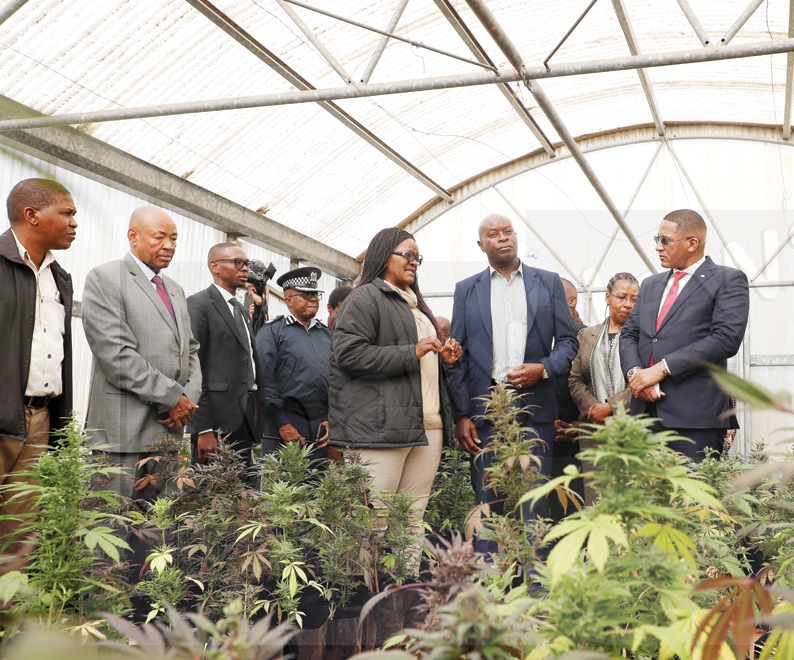
Industrial hemp, a plant that can be used to develop a wide range of products including clothing, paper, biodegradable plastics, biofuel, paint and animal feed, has passed the initial proof of concept test that it is viable to be cultivated in Botswana, President Advocate Duma Boko has said.
Speaking during a tour of the hemp pilot project at the National Agricultural Research and Development Institute (NARDI) at Sebele in Gaborone yesterday, President Boko said this was the beginning of a process that would ultimately see cannabis contributing to the diversification of agricultural produce in the country.
“We took a bold but somewhat unpopular decision at the time that when we take over the leadership of the country we would grow hemp, legalise its cultivation and open up opportunities in that space and enable our people to benefit,” he said. “The time came, we now had to operationalise that. We first had to do the proof of concept, seeds were procured from abroad; in Bulgaria, Europe.
We had to be certain that these seeds would germinate in our climatic conditions and we had to bring in experts to conduct the experiment,” President Boko explained.
He said the experiment had proved to perform better than anticipated as the seeds had responded well to Botswana soil with different shades and hues, including a purple hue germinating locally that is unknown in Europe.
“We have a unique contribution to make now in terms of the research and development of hemp, and we are grateful to the scientists - the experts who dealt with this experiment.
They say the plant can give, at the lowest, P50 per gram and each plant gives upwards of 30 to 50 grams.
So, this is a reasonable amount to be made; a lot of value in the production of hemp,” President Boko said.
He said it was pleasing that the country now had proof that the seeds could grow and added that they would be availed to farmers at affordable rates.
He further said research had demonstrated that hemp was viable in different soils across Botswana and that interested citizens who wish to partake in its production would be permitted to apply, provided they comply with the regulations of the Drug Enforcement Agency (DEA).
He said DEA was actively involved in monitoring the hemp business to gauge the levels of Tetrahydrocannabinol (THC), the principal psychoactive element found in hemp and cannabis plant, primarily responsible for the intoxicating factors associated with marijuana.
The President said in addition to industrial hemp, the country would also cultivate medicinal cannabis, which would also require close regulation by DEA because of its high THC component, but had to be pursued for its medicinal properties and high value and could generate good returns.
He said industrial hemp and medicinal cannabis would generate jobs and income streams through value chain development, with farmers who grow the plant, transporters and industrialists among those who would benefit, while the country would enjoy the opportunity to interact with the broader pharmaceutical sector internationally.
For his part, Assistant Minister of Lands and Agriculture, Mr Motsamai Motsamai said the work of creating the industry had started and that jobs would be created and livelihoods improved as its result.
He said Batswana should understand that agriculture could be diversified beyond regular crop production, livestock and smallstock, and that a variety of agro-produce could be developed as well as value addition industries.
Mr Motsamai said this could help the country’s economy become more resilient and less susceptible to external shocks as has been the case when heavily reliant on the natural diamond commodity. ENDS
Source : BOPA
Author : Pako Lebanna
Location : GABORONE
Event : TOUR
Date : 16 Jul 2026
Related News

06 Oct 2026

06 Oct 2026
Envoy pledges continued support for Botswana

06 Oct 2026
Access to sign language critical
06 Oct 2026