Ostrich To Spur Economic Gains
14 Jul 2026
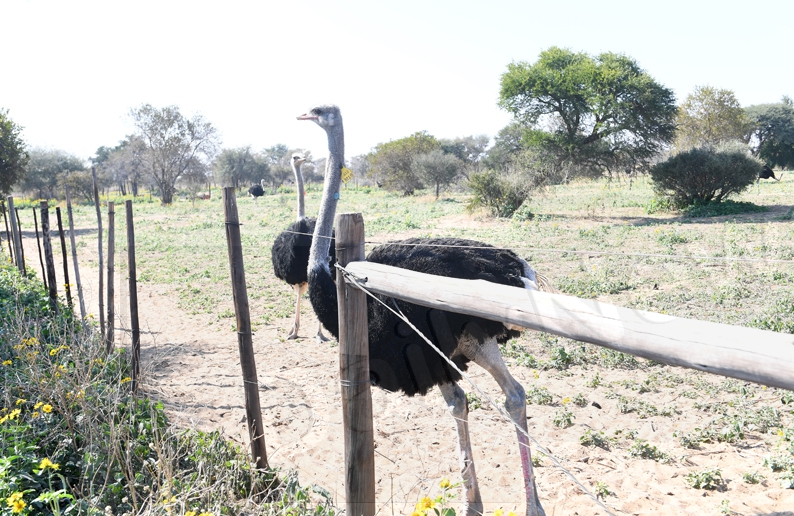
About 100 kilometres northeast of Gaborone, nestled in the semi-arid brush of the Central District, lies Dibete. It is quiet here, save for the dry wind and the low, resonant booming of the world’s largest birds.
This is the home of the Dibete Ostrich Multiplication Unit (DOMU), a state-owned facility established in 2006 to act as the breeding heart of Botswana’s commercial ostrich dreams. For years, the facility stood as a monument to unrealised potential, a quiet and stagnant outpost in a nation whose economic heartbeat has long been dictated by the steady tick of diamond mining.
But yesterday’s high-profile visit by President Advocate Duma Boko has injected fresh political momentum into this dusty sanctuary.
The tour represents far more than a routine photo opportunity. It was a calculated opening salvo in a coordinated government campaign to revive a lucrative and multi-million-Pula industry.
Faced with volatile global diamond markets, Botswana is aggressively searching for structural pivots and the ostrich, with its high-value feathers, lean meat and premium leather, is stepping back into the spotlight.
President Boko views the revival of the ostrich sector not as an isolated agricultural programme, but as a catalyst for a broader economic domino effect.
The greatest hurdle currently holding the industry back is not lack of global demand, but that of local feed.
Ostriches require highly specific nutrition to thrive and the absence of a reliable feed value chain has historically kept population growth stagnant. By addressing this bottleneck, government hopes to catalyse a parallel agricultural boom in crop farming, particularly for sunflower and wheat growers whose produce forms the baseline of commercial ostrich feed.
“The market for sunflower growers is already available through the ostrich industry. We need to attract more entrepreneurs into this business because our ostrich population is not growing due to insufficient feed,”
President Boko said. Significantly, the success of this economic pivot relies heavily on changing the culinary habits of the nation.
For generations, beef has reigned supreme on the plates of Batswana, hence President Boko is calling for a cultural shift and urging the public to embrace ostrich meat.
Highly nutritious, exceptionally low in cholesterol and packed with protein, it is being pitched as a weapon against the rising tide of lifestyle diseases that place immense financial strain on the country’s public healthcare system.
“We must normalise the consumption of ostrich meat. Through intensive public awareness campaigns, we can grow the local market while promoting healthier eating habits,” President Boko added.Yet, vision without land is merely a fantasy. To ground these ambitious goals in reality, government is tackling the historically difficult issue of agricultural land allocation.
Out of the 561 hectares surrounding the Dibete facility, the state has already earmarked 250 hectares for immediate lease to private ostrich farmers.
To ensure this expansion is felt nationwide, landboards across Botswana are encouraged to identify and clear suitable parcels of land specifically for ostrich husbandry.
It is a streamlined and fast-tracked effort designed to give young entrepreneurs and seasoned farmers alike the space they need to build their flocks.
The gears of this recovery plan are already in motion under the stewardship of Minister of Lands and Agriculture, Dr Edwin Dikoloti.
The sector is rebounding from a severe market collapse that previously left many local farmers in debt and the initial indicators are promising. Last year, DOMU successfully hatched 269 ostrich chicks from its primary breeding stock, representing a vital baseline for future growth.
For his part, Minister Dikoloti, said the roadmap was to scale the population to 6 000 birds in the medium term, with an ultimate target of 10 000.
While the facility is currently focusing on table egg production, commercial meat production is slated to begin next year.
For the youth of Botswana, who face high unemployment rates, the revival of this highly technical and export-ready industry could provide an unprecedented doorway into modern agribusiness. For decades,
Botswana’s prosperity has been unearthed from deep within the earth, relying on the finite shimmer of diamonds to sustain its growth.
Today, faced with shifting global markets and the natural limits of mineral wealth, government is looking above ground for its next economic frontier.
By turning a dormant breeding centre into a bustling and export-ready economic hub, government is committing to prove that the path to a diversified future, one that protects the nation from the volatility of a single commodity, can sometimes be found on the wings of a bird that cannot fly. ENDS
Source : BOPA
Author : Anastacia Sibanda
Location : DIBETE
Event : Tour
Date : 14 Jul 2026
Related News

06 Oct 2026

06 Oct 2026
Envoy pledges continued support for Botswana

06 Oct 2026
Access to sign language critical
06 Oct 2026