


BURS Strengthens Domestic Revenue Mobilisation
14 Jul 2026
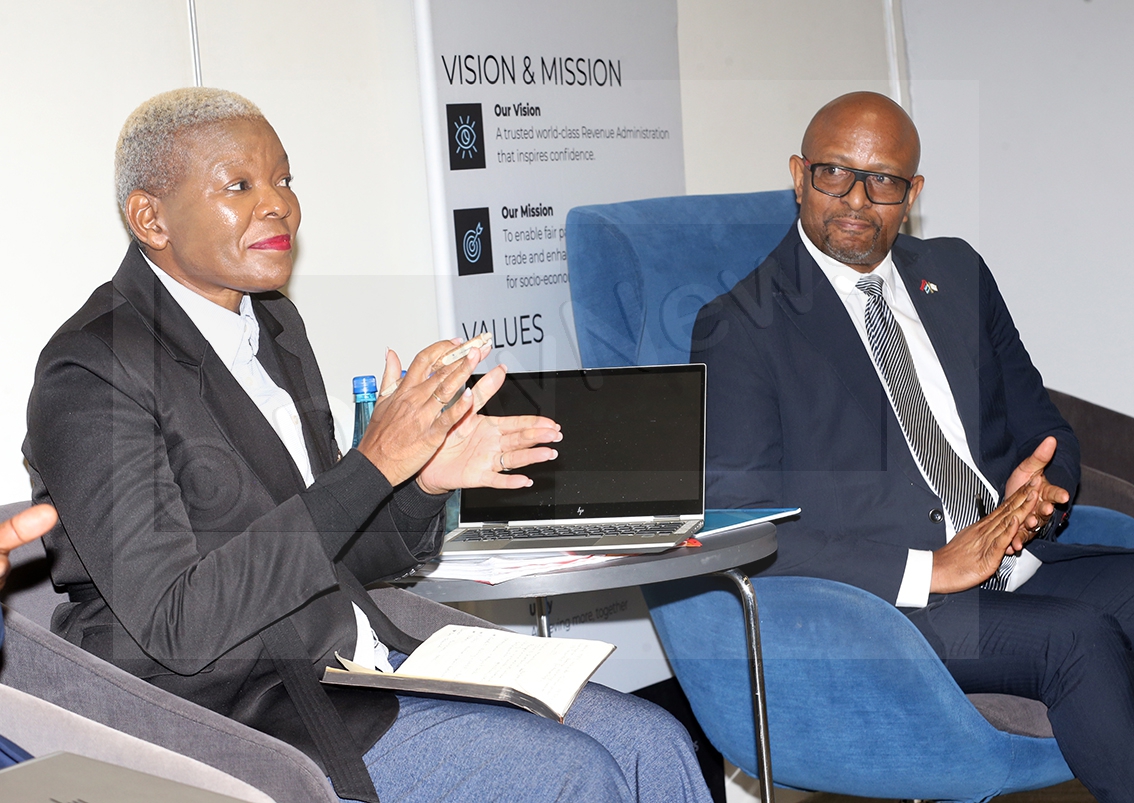
Botswana is mobilising domestic tax revenue to approximately 13 per cent of its Gross Domestic Product, says Botswana Unified Revenue Services Acting Commissioner General, Mr Phodiso Valashia.
Addressing the media on the recent Tax Reforms affecting Value Added Tax (VAT), Income Tax and the Tax Administration Act, in Gaborone recently, Mr Valashia said the nation should be ambitious enough to move decisively towards a tax-to-GDP ratio of 25 per cent over the next three years, making the move more than a fiscal target.
“It is about a Botswana that increasingly finances its own development, strengthens its economic resilience, creates opportunities for its people and invests with confidence in its future. Prosperity is not created by taxation, nor can it be sustained by debt alone. Prosperity is created by productive businesses, innovation, investment and the hard work of our people,” he said.
Mr Valashia said the role of a modern tax system was to ensure that prosperity created was translated into better education, quality healthcare, greater economic opportunity and a better quality of life for every Motswana.
Furthermore, he said it enabled Botswana to finance more of its own development, strengthen its fiscal sovereignty and reduce excessive dependence on debt.
Mr Valashia said the aim was to build a revenue service that was fair in its administration, simple in its processes, responsive in its service, intelligent in its decision making and trusted by the people it served.
Acting commissioner, domestic taxes, Ms Segametsi Radibe-Michael said they had reviewed all the revenue laws and a lot was coming out of the review project, one of those being the housing of procedural rules into one act which had come to be known as the Tax Administration Act, a debut for Botswana.
Ms Radibe-Michael said the organisation was to carry out a phased implementation, to ensure preparedness of both the revenue service and the tax payers.
She said new regulations had been issued and more were being developed and expected to be published before the end of the year.
“The new regulations we have now re-enacted means the old have been repelled. We have used a savings clause to make sure that in the meantime some of the regulations from the old laws can continue during the transition period, to make sure there is no gap,” said Ms Radibe-Michael.
She said guidelines were also being developed which would explain expectation on the part of the taxpayers as guided by feedback from the public and businesses.
Talking to the Value Added Tax, Ms Radibe-Michael said the idea was to widen the tax base because the ambition was to operate a broad-base VAT system which taxed everything.
VAT is a consumption tax, which means that its burden falls on the consumers and not businesses who are allowed to claim VAT charged by their counterparts, Ms Radibe-Michael said.
She explained that the system they had, ensured that every-time businesses reported, they were to off-set what they had brought from what they had collected in 12 months.
She further said as part of the project, they were to ensure the widening of the segments of the VAT that were eroded to avoid the need for government to raise the rate while they also wanted to ensure equality of transactions in some areas such as auctioneers and deputy sheriffs. ENDS
Source : BOPA
Author : Gontle Merafhe
Location : Gaborone
Event : Media briefing
Date : 14 Jul 2026
Related News

13 Oct 2026
Expo sparks regional leather expansion
12 Oct 2026
Partnership to boost vehicles maintenance
12 Oct 2026
Farmers urged to treat agriculture as a business
12 Oct 2026