


Tomato surplus sparks snack innovation
10 Aug 2026
For many horticultural farmers, a bumper harvest, depending on the market trends, opportunities coupled with other challenges beyond the farmer’s reach, could be both a blessing and a curse.
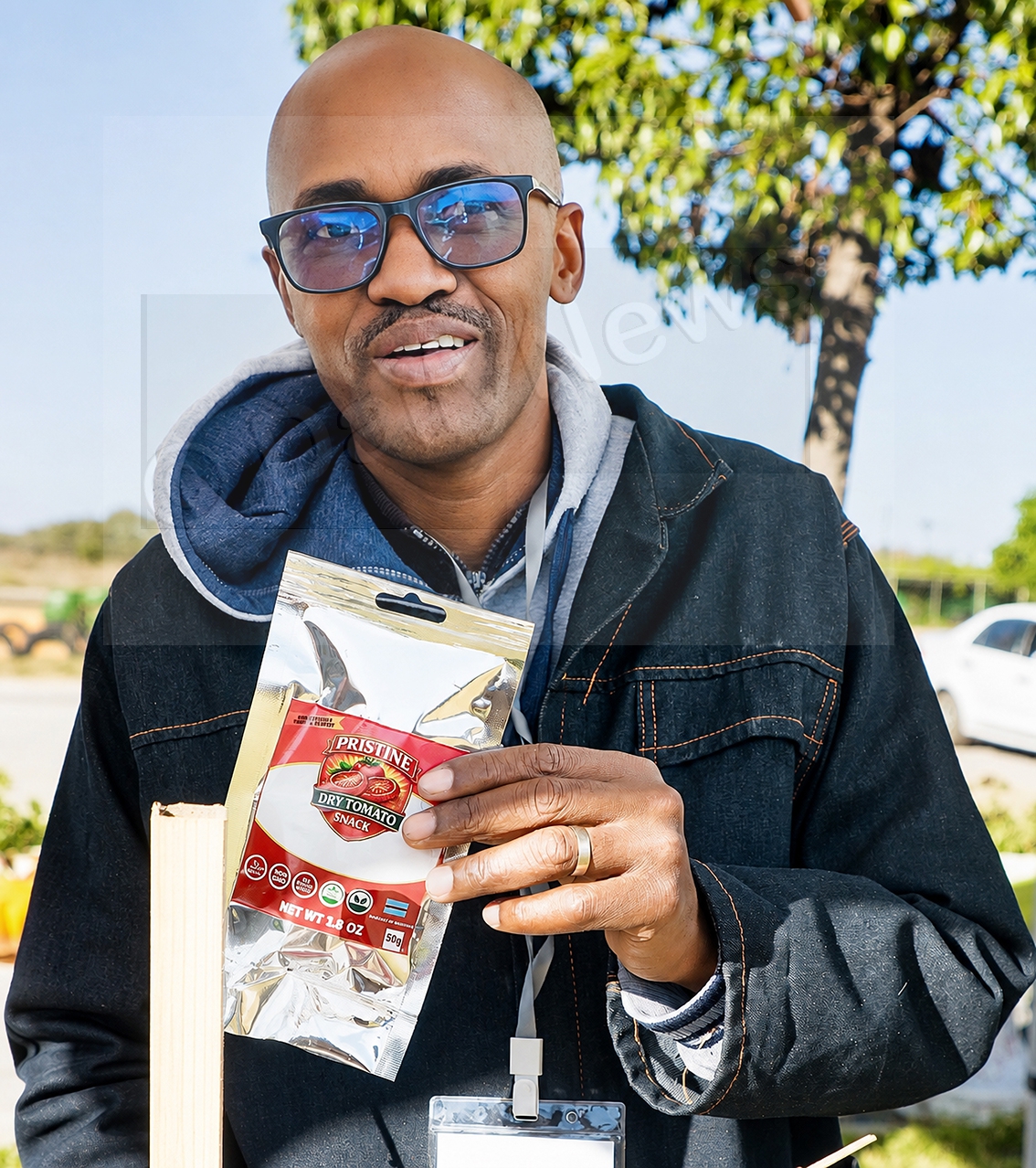
Mr Wababo Kedikilwe (49), a tomato farmer in Serowe is well aware of the pros and cons in farming.
Following a bumper harvest in 2013, exceeding the market, Mr Kedikilwe was faced with the calamity of suffering a heavy loss as the surplus harvest was bound to go to waste.
However, his ingenuity and never give up mentality helped him to rise despite the challenging the environment, eventually finding refuge in it, therefore turning the challenge at hand into a business opportunity.
What began as a struggle with tomato oversupply in 2013, became Pristine Tomato Snack, a dried tomato product that carved its place in pubs, kitchens, and farmer’s markets across the village.
Mr Kedikilwe has been a horticultural farmer since 2013. He started with tomatoes, but each season came with the same frustration: too much produce, too few buyers, and losses piling up.
“Every year we would harvest and the market would be flooded. Prices would drop and tomatoes would rot before they could be sold,” he reminisces .
Instead of allowing the tomatoes to go to waste, he decided to research for preservation methods and product development options.
He spent months reading, watching videos, and testing different techniques in his kitchen.
It was during this period that he became interested in drying tomatoes, an old preservation method that was not common in his community.
After several trials and errors, spoiled batches and recipes that were too salty or too bland, he finally formulated a recipe that worked. In 2025, Pristine Tomato Snack was born.
Pristine, a snack designed to be versatile, could be consumed directly from the packet as a crunchy snack, or rehydrated and added to stews and soups to enhance flavor.
He added that the product’s major advantage was its long shelf life. While fresh tomatoes lasted days, the dried version could last for months without refrigeration, thus for a farmer that battled post-harvest losses due to oversupply, this was a game changer.
To fund his agricultural venture, Kedikilwe is a beneficiary of the then ISPAAD Horticulture Support Programme, as well as the National Development Bank.
He said the support helped him stabilise his horticultural project and invest in the equipment needed to process and package the snack.
He further said that when he started selling directly to customers, he did not expect the reaction he got, indicating that, the product received a positive response in Serowe, spreading by word of mouth.
He mentioned that it became particularly popular among patrons of local pubs who were looking for an affordable and tasty snack to go with their drinks. Many customers compared its taste to biltong, a comparison that surprised even Mr Kedikilwe.
“It tasted almost like biltong. People liked it because it is affordable and it filled you up”, he said.
The snack also became a hit at farmer’s market days. The product is often sold out hours before the events ended, with customers returning with friends and family to buy more. In a way, he noted, the product spoke for itself.
He said that local market vendors also began to take interest, some approached him to stock Pristine at their stalls, while others asked if he could supply in bulk for events and weddings.
Despite the demand, scaling up was not easy. Mr Kedikilwe said one of his biggest challenges was meeting regulatory requirements.
He cited expensive certification procedures, health certificates, and product testing as major obstacles for small agro processors trying to enter formal markets.
“The cost of compliance is very high for someone starting small. Testing alone costs an arm and a leg,” he said.
Mr Kedikilwe further said the process of getting his product certified meant delays in accessing supermarkets and other big retail outlets. For that period, he continued to rely on direct sales and community markets.
He also noted the need for better equipment, citing that drying tomatoes in bulk required consistent electricity and proper dehydrator costs that were still out of reach without further investment.
Mr Kedikilwe believed his story reflected a larger issue facing horticultural entrepreneurs in Botswana.
He called for the introduction of horticulture specific financial aid schemes, as well as robust training and mentoring programmes for farmers who wanted to add value to their produce.
“Farmers needed more than just seeds and fertilizers. We needed to be taught how to process, package, and market. We needed mentors who had walked this road before us,” he said.
He argued that with the right support, more farmers could turn losses into opportunities, create jobs, and contribute to food security.
Despite the hurdles, Mr Kedikilwe remain optimistic. He expressed hope to expand production and reach markets beyond Serowe including Gaborone, Francistown, and eventually regional export.
His immediate goal was to formalise the business, get full certification and increase output to meet the growing demand.
He noted that he was also working on new flavors to add variety to the Pristine brand. ENDS
Source : BOPA
Author : Keamogetse Setilo
Location : Serowe
Event : Interview
Date : 10 Aug 2026
Related News


13 Oct 2026
Expo sparks regional leather expansion

12 Oct 2026
Partnership to boost vehicles maintenance
12 Oct 2026
Farmers urged to treat agriculture as a business

12 Oct 2026