


E-waste strategy to protect environment
13 Jul 2026
Government has launched the Botswana National E-waste Management Strategy, described as a landmark step towards transforming the way the country manages one of the world’s fastest-growing waste streams, while unlocking green jobs, safeguarding public health and protecting the environment.
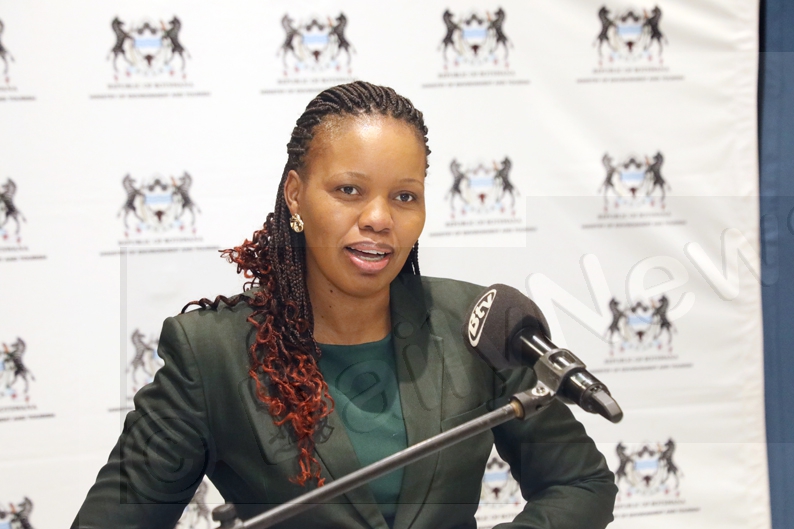
Launching the strategy in Gaborone, on Friday, the Ministry of Environment and Tourism permanent secretary, Ms Abigail Khumoyame said the milestone demonstrated the country’s commitment to sustainable development, environmental stewardship, technological advancement and the protection of public health.
“This launch represents more than the unveiling of a strategy, but a declaration of Botswana’s collective commitment to transform the management of E-waste and position the country as a regional leader in environmentally sound E-waste management,” she said.
Ms Khumoyame noted that rapid technological advancement had significantly improved people’s socio-economic lives, but had also resulted in increasing volumes of obsolete mobile phones, computers, household appliances and other electronic equipment requiring safe disposal.
Botswana, she said was not immune to the global E-waste challenge. According to the Global E-waste Statistics Partnership Africa Report of 2022, she said more than 62 million tonnes of E-waste were generated worldwide, with only about 20 per cent being formally recycled.
“Africa contributes approximately 2.9 million tonnes annually, while most countries continue to face inadequate infrastructure for safe collection and recycling. Locally, the National E-waste Monitor contained in the Statistics Botswana 2024 report estimated that Botswana generated about 13 000 tonnes of E-waste every year, largely driven by increasing consumption of electrical and electronic equipment, including motor vehicles,” she added.
She warned that if not properly managed, E-waste posed serious risks to human health, environmental integrity and economic development, particularly in developing countries where infrastructure for effective management remained inadequate.
The permanent secretary said the new strategy provided a comprehensive roadmap for environmentally sound management of E-waste throughout its life cycle by promoting reuse, refurbishment, recycling and a circular economy.
She said the strategy also sought to create an enabling regulatory environment that encouraged investment, innovation and the growth of sustainable industries while creating employment opportunities for young people.
Ms Khumoyame said government had already revised the national waste management policy to promote a circular economy, adding that the responsibility now rested with all stakeholders to translate the strategy into practical projects and initiatives capable of delivering meaningful benefits to communities.
She further stressed that the country remained committed to implementing international environmental agreements, including the Basel Convention and the Stockholm Convention, while aligning national policies with global best practice.
The Basel Convention is an international environmental treaty adopted in 1989 in Basel, Switzerland and came into force in 1992, while the Stockholm Convention is a global environmental treaty adopted 2001 in Stockholm, Sweden, and entered into force in 2004.
The Basel and Stockholm Conventions protect human health and environment from the harmful effects of hazardous waste, including certain types of E-waste, by regulating how such is moved across international borders and Persistent Organ Pollutants, which are toxic chemicals that remain in the environment for long period, accumulate in living organisms and can travel long distances in air and water, respectively.
The permanent secretary also expressed gratitude to the International Telecommunication Union, the United Nations Environment Programme, Botswana Communications Regulatory Authority and Statistics Botswana for providing financial, technical and institutional support towards the development of the strategy.
She said the launch marked the beginning of a new chapter, calling on government, the private sector, development partners and citizens to work together to transform E-waste from a growing environmental challenge into an opportunity for innovation, green growth and sustainable development. ENDS
Source : BOPA
Author : Lorato Gaofise
Location : GABORONE
Event : Launch
Date : 13 Jul 2026
Related News



07 Oct 2026