

Africa loses billions to corruption
26 Feb 2014
The African Union 2012 report has revealed that Africa loses US$148 billion to corruption yearly.
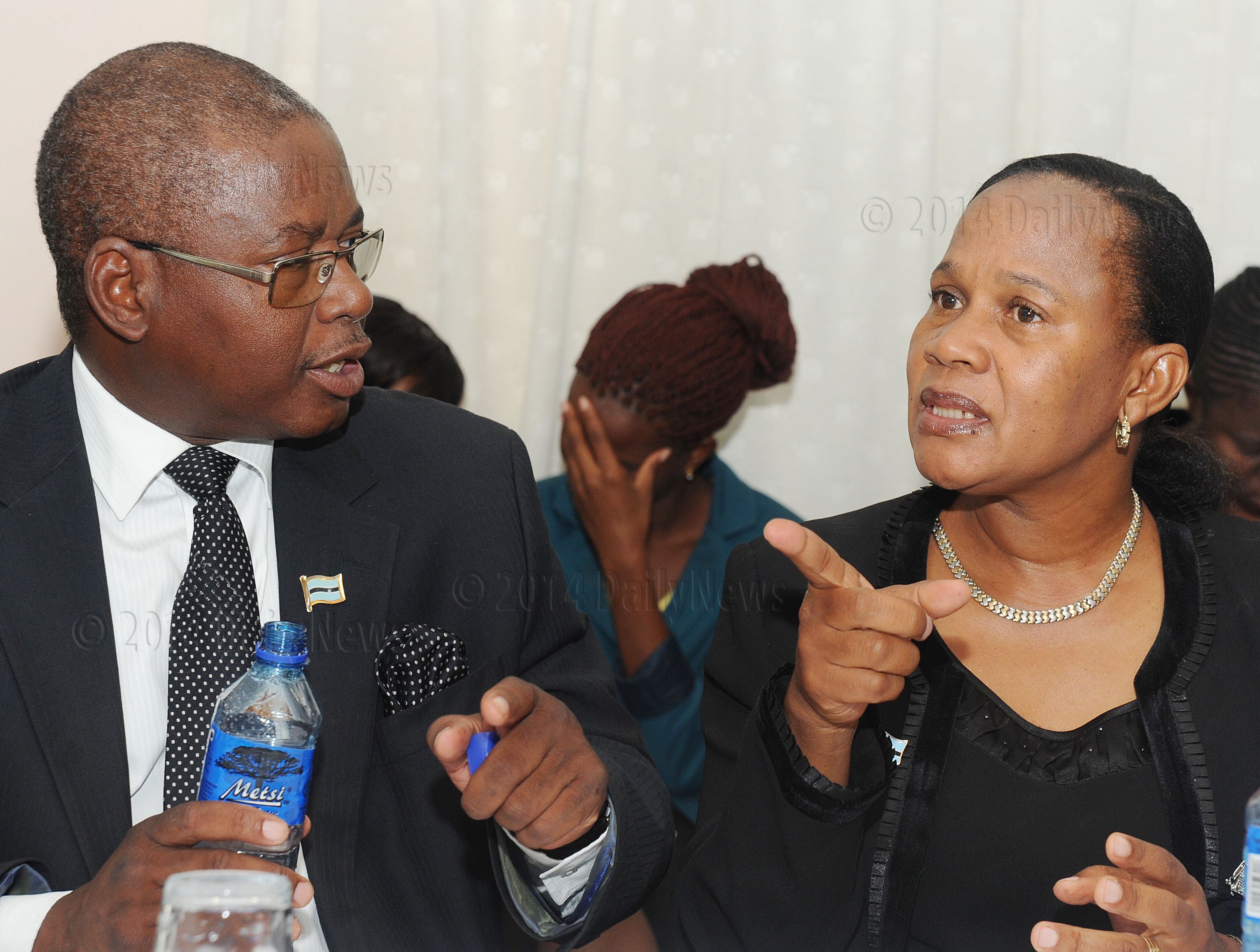
Speaking at the opening session of the first Botswana United Nations Convention Against Corruption review cycle 2010-2015, Directorate of Public Prosecutions (DPP) director, Mr Leornad Sechele said corruption knew no boundaries, as such it was no longer about nipping it in the bud, but rather cutting off the branches.
“Corruption has no surname and if it is an institution it needs to be collapsed,” he said. He said such a huge amount of money could be utilised to serve the people of the continent by building hospitals, schools, roads and other national projects.
“We all know such funds are channeled or diverted into private pockets of corrupt individuals,” said Mr Sechele. He indicated that the objectives of the review workshop came pursuant to the auspices of the provisions of Article 63 of the United Nations Convention Against Corruption (UNCAC).
“This article established the conference of State Parties for the promotion and review of the implementation of the Convention. In 2009 at Doha, the conference of State Parties established the mechanism for the review of implementation of the convention,” he said.
Mr Sechele further said the first review cycle, which Botswana would be going through, centred around criminalisation and enforcement.
“Under the convention, it is not enough to just promulgate laws, but it is also critical that such laws are enforced and failure to do so would mean that criminalisation would actually serve no purpose,” he said.
He further said it was important for Botswana to have ratified the UN Convention against corruption, adding that because of globalisation, the world had become one big village and as such even perpetrators of crime found it easy to launder proceeds of corruption across borders without hindrance.
Mr Sechele stated that Botswana had in the past few years experienced an upsurge in cases where electronic transfer of funds had taken place and the accused persons could not be brought to book within the jurisdiction of the courts as a result of the fact that there was either no agreement to extradite or repatriate the ill-gotten gains from foreign countries.
He further said corruption did not only affect the public sector, but also had an impact on the private sector. “Our laws should therefore be stretched to cover the private sector as it has been evident that corrupt officials/individuals in government launder public assets to their privately owned companies,” he said.
He said countries must employ all the necessary mechanisms to prevent, detect, punish and eradicate corruption and other related offences in both public and private sectors.
Mr Sechele said there was need to widen the definition of corruption and economic crime to encompass all corruption-related offences as stipulated in the UNCAC.
The review will run for two days with experts from the UN and members of the review panel from Bulgaria and Burundi, amongst Botswana’s other stakeholders such as the DCEC, Botswana Prisons Services, Botswana Police, Financial Intelligence Agency (FIA) and DPP.
For her part, Ms Tanja Santucci from UNCAC, Vienna said 170 countries were party to the convention as corruption was a global problem that needed the intervention of everyone.
“People should note that this review is not about ranking countries, but rather to see what Botswana has in terms of laws, identify strengths, weaknesses and see how best to assist,” she said.
She said the fight against corruption should be taken seriously and serious measures should be implored. ENDS
Source : BOPA
Author : Omphile Ntakhwana
Location : GABORONE
Event : Review cycle 2010-2015
Date : 26 Feb 2014
Related News

21 Jun 2026

18 Jun 2026
Commission targets youth empowerment
18 Jun 2026
Countries commit to partnership

18 Jun 2026