


Botswana Heightens Ebola Preparedness
04 Jul 2026
Botswana has intensified Ebola preparedness measures following reported cases in parts of Central Africa, with the Ministry of Health (MoH) assuring the public that the country remains on high alert.
MoH spokesperson Dr Christopher Nyanga said Botswana was operating under alert mode with all public health emergency systems fully activated.
“While no cases have been detected, all technical pillars under the Public Health Emergency Management framework have been activated,” he said.
He said the country had implemented a costed national Ebola preparedness and contingency plan supported by Rapid Response Teams (RRTs) and Emergency Medical Teams (EMTs), which were on standby and undergoing continuous training in outbreak response, including case investigation, contact tracing, sample collection and infection prevention and control.
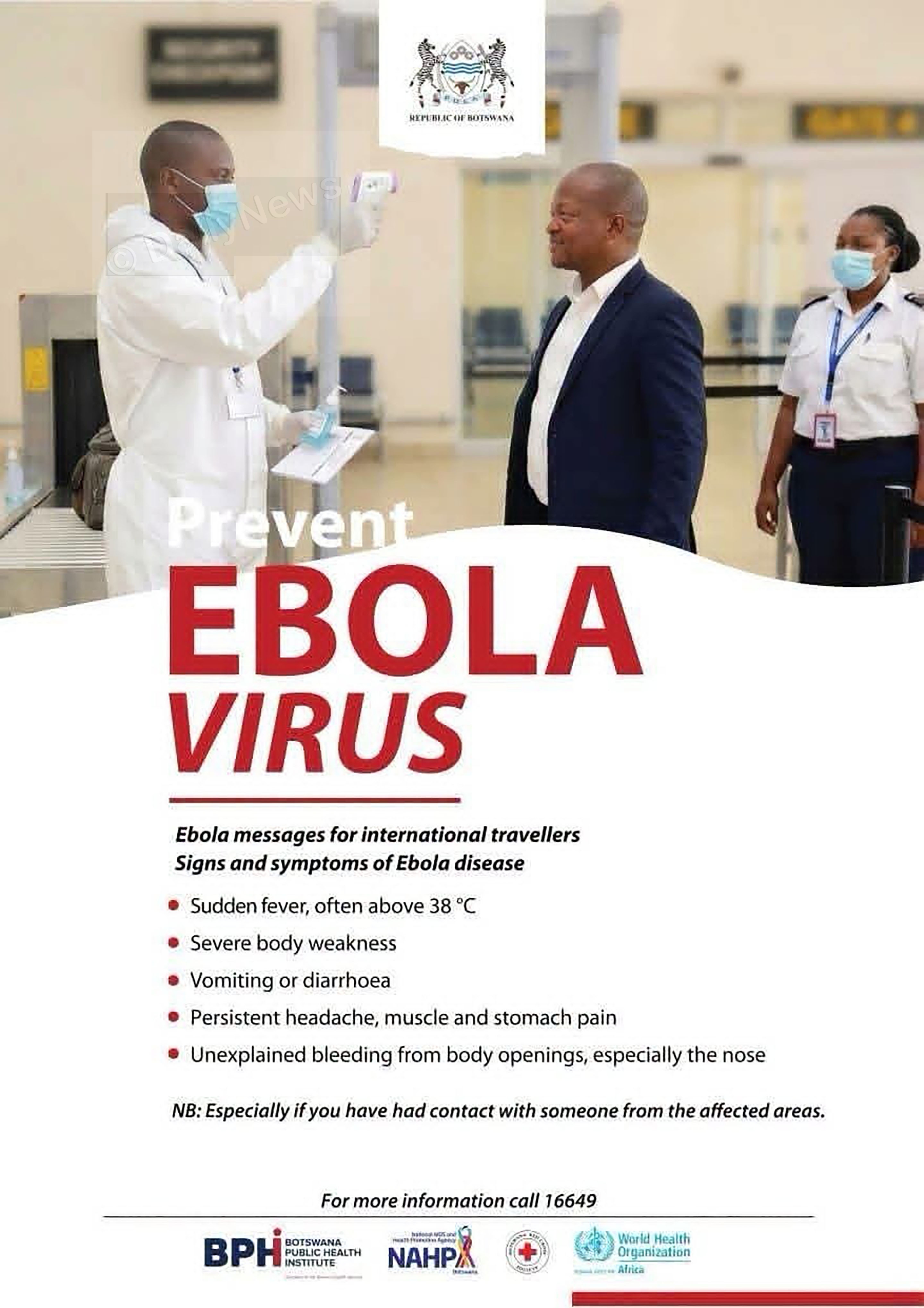
Dr Nyanga said surveillance had been strengthened at all border posts and points of entry, with mandatory screening for travellers from affected regions.
“Truck drivers from affected countries and all other cross-border travellers are subjected to mandatory health screening,” he says, adding that measures include temperature checks, health declaration forms and visual assessments, with designated holding areas for suspected cases.
He further said isolation facilities had been identified across all districts and supply chains activated to ensure availability of PPE and essential medical supplies.
Although Botswana has secured medication and related supplies , the circulating Bundibugyo virus currently has no specific therapeutics and vaccines, with treatment focusing on supportive care.
Dr Nyanga said Botswana was also working with neighbouring countries, the World Health Organization and the Africa Centres for Disease Control and Prevention to strengthen surveillance and information sharing.
He further urged members of the public to be alert to symptoms including sudden fever, severe weakness, muscle and joint pain, persistent headache, vomiting, diarrhoea, and in some cases unexplained bleeding or bruising, especially after travel to affected areas.
“Anyone who develops these symptoms within 21 days of travel should immediately isolate and seek urgent medical attention,” he said. ENDS
MoH spokesperson Dr Christopher Nyanga said Botswana was operating under alert mode with all public health emergency systems fully activated.
“While no cases have been detected, all technical pillars under the Public Health Emergency Management framework have been activated,” he said.
He said the country had implemented a costed national Ebola preparedness and contingency plan supported by Rapid Response Teams (RRTs) and Emergency Medical Teams (EMTs), which were on standby and undergoing continuous training in outbreak response, including case investigation, contact tracing, sample collection and infection prevention and control.
Dr Nyanga said surveillance had been strengthened at all border posts and points of entry, with mandatory screening for travellers from affected regions.
“Truck drivers from affected countries and all other cross-border travellers are subjected to mandatory health screening,” he says, adding that measures include temperature checks, health declaration forms and visual assessments, with designated holding areas for suspected cases.
He further said isolation facilities had been identified across all districts and supply chains activated to ensure availability of PPE and essential medical supplies.
Although Botswana has secured medication and related supplies , the circulating Bundibugyo virus currently has no specific therapeutics and vaccines, with treatment focusing on supportive care.
Dr Nyanga said Botswana was also working with neighbouring countries, the World Health Organization and the Africa Centres for Disease Control and Prevention to strengthen surveillance and information sharing.
He further urged members of the public to be alert to symptoms including sudden fever, severe weakness, muscle and joint pain, persistent headache, vomiting, diarrhoea, and in some cases unexplained bleeding or bruising, especially after travel to affected areas.
“Anyone who develops these symptoms within 21 days of travel should immediately isolate and seek urgent medical attention,” he said. ENDS
Source : BOPA
Author : Taboka Ngwako
Location : Gaborone
Event : Interview
Date : 04 Jul 2026
Related News



07 Oct 2026