


New era for public schools infrastructure
25 Jun 2026
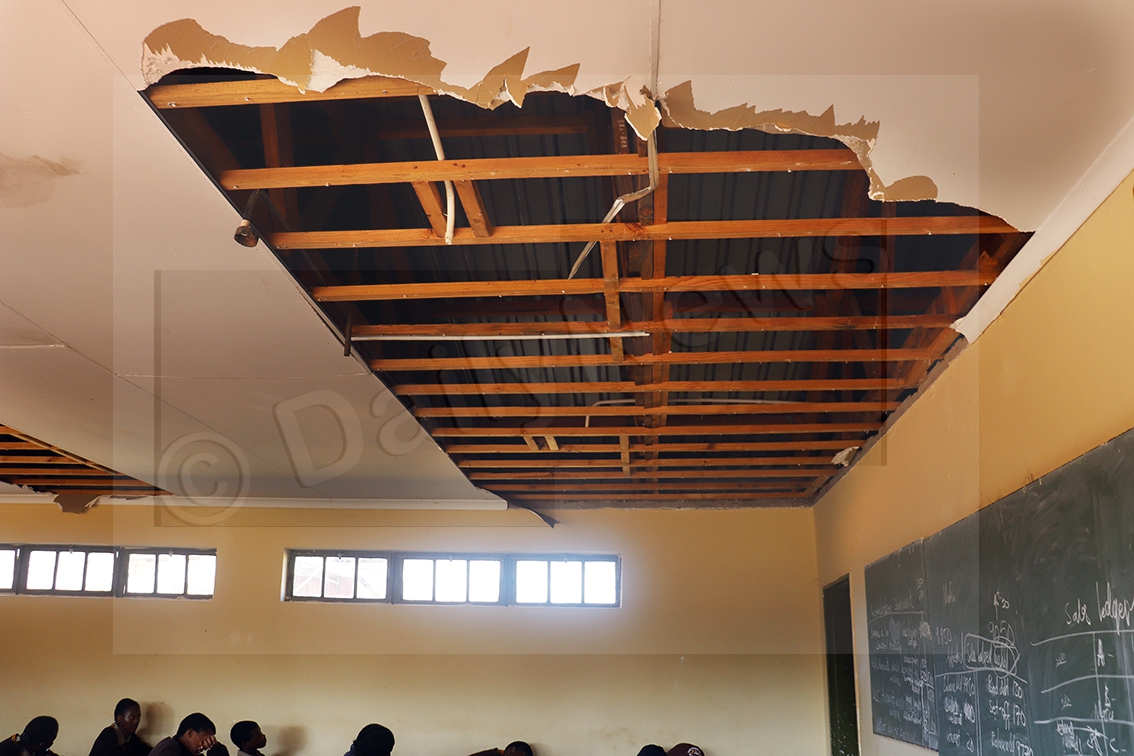
For decades, the rhythm of morning assembly across schools countrywide has played out against a backdrop of quiet decay.A generation of learners have walked through school gates to face the same stubborn realities of blistering paint peeling off classroom walls like old sunburns, teacher housing wearing the scars of prolonged neglect and school grounds desperately holding onto the dreams of the children who occupy them.
Yet, within these fragile spaces, magic happened.
Out of dilapidated classrooms, future doctors, leaders and artists dreamed themselves into existence.
But inspiration should not have to fight against its environment.
On March 14, during a national clean-up campaign launch in Gaborone, President Advocate Duma Boko put into words what many had felt for years when he announced a sweeping and radical promise that every single government school in the country would be refurbished.
It was the spark that ignited the National Programme on Refurbishment, Modernisation and Maintenance of Schools.
At the heart of the programme is the newly established Education Infrastructure Management Company (EIMC), a government-owned company mandated to oversee the development, maintenance and management of schools’ infrastructure.
To understand how this monumental promise will become reality, BOPA reporter, Ndingililo Gaoswediwe, sat down with the EIMC chief executive officer, Ms Chandada Masendu-Kusane, to discuss a bold government initiative that promises to transform public school infrastructure across Botswana.
In the interview, Ms Masendu-Kusane outlines the company’s mandate, its vision and how it intends to help shape a more inspiring learning environment for future generations.
The urgency behind the programme becomes apparent when one considers the state of schools today.
Ms Masendu-Kusane said assessments conducted in junior and senior secondary schools across the country revealed that about 75 per cent required urgent intervention and many of them fall within what EIMC classifies as the ‘red zone’, schools characterised by dilapidated buildings, broken lighting systems, overcrowded classrooms, deteriorating ablution facilities and teacher accommodation in poor condition.
Even more concerning, she said some schools that were classified as requiring moderate intervention only a year ago had since deteriorated into the red zone.
Thus, for Ms Masendu-Kusane, these findings underscore why ‘business as usual’ can no longer be an option.
Established in December 2025, EIMC was created as a special purpose vehicle tasked with taking full responsibility for the expansion, digitisation, professionalisation and management of public schools across Botswana.
Its creation reflects government’s recognition that school infrastructure requires not only occasional repairs, but a dedicated institution focused on long-term planning, maintenance and sustainability.
“Schools are in a bad state physically,” Ms Masendu-Kusane said.
But crumbling infrastructure is only one part of the challenge. In an increasingly digital world, she believes the country’s education system risks falling behind if schools are not modernised and equipped to meet contemporary learning demands.
“Digitisation is important in this digital era and when compared with the global space, Botswana is way behind,” she added.
The company was therefore established not only to renovate schools, but also to transform how they are managed and operated.
Ms Masendu-Kusane pointed to the widening gap between public and private schools, a trend she believes is reflected in the rapid growth of home schooling and private tutoring centres.
“The mushrooming of home schools and tutoring centres is a cause for concern because it shows that government schools are not offering what the public expects,” she said.
The National Programme on Refurbishment, Modernisation and Maintenance of Schools aims to reverse that trend by restoring confidence in public education and ensure that choosing a private school becomes a matter of preference rather than a necessity.
The programme covers all 1 020 public schools across Botswana, which comprises 779 primary schools, 207 junior secondary schools and 34 senior secondary schools.
Implementation will take place in phases, with the first three-year phase running from April 2026 to April 2029. By the end of that period, Ms Masendu-Kusane says visible change should be evident across the country’s education landscape.
Assessments have already revealed significant infrastructure pressures, particularly at junior secondary schools.
She explained that when Botswana moved from a two-year Junior Certificate (JC) programme to a three-year structure in 1996, infrastructure expansion did not keep pace with enrolment growth.
Most junior schools were originally designed to accommodate 12 streams.
The introduction of an additional year effectively created demand for six more streams, leaving many schools operating beyond their intended capacity. Boarding schools have also been heavily affected, with overcrowding becoming a growing concern.
To begin addressing these challenges, the first phase of the programme will focus on 22 pilot schools, split equally between 11 junior secondary schools and 11 senior secondary schools. Among the junior schools earmarked for refurbishment include Madikwe, Patikwane, Ramokgonami, Gobojango and Marakanelo, while the selected senior schools include Molefhi, Gaborone, Maun, Matshekge and Tutume McConnell College. EIMC insists that this initiative will differ fundamentally from previous refurbishment programmes.
In the past, schools were often repaired only to fall back into disrepair due to inadequate maintenance systems.
This time, maintenance has been built into the model from the outset.
Once schools have been restored to acceptable standards, maintenance budgets will be introduced and facility management systems established to monitor infrastructure performance, service schedules and warranties.
Ms Masendu-Kusane said EIMC will also assume responsibility for operational support services, allowing teachers to concentrate on teaching rather than supervising cooks, groundsmen and other support staff.
Beyond infrastructure, the company will oversee aspects of financial governance, including collection of school fees and teacher rentals.
Current collection rates are estimated at only 25 per cent, highlighting significant opportunities to improve efficiency and generate resources that can be reinvested into schools.
School halls, sport grounds and other facilities will also be better utilised to generate income for ongoing maintenance and development.
To ensure effective implementation, EIMC has adopted a decentralised operational model covering seven zones across the country.
Each zone will have a dedicated facility manager, while districts will be supported by clerks of works responsible for overseeing maintenance projects and ensuring quality standards.
In efforts expected to benefit local economies, EIMC has also established an artisan and TVET database comprising plumbers, welders, carpenters and bricklayers who will be engaged to carry out maintenance and refurbishment projects within their own communities.
Yet, perhaps the biggest challenge remains funding. Transforming public schools nationwide will require an estimated P7 billion.
Ms Masendu-Kusane explains that while government has allocated P1 billion for the 2026/27 financial year, with P300 million set aside for the first 22 schools, additional funding will be required to realise the programme’s full ambitions.
To bridge the gap, EIMC is actively pursuing partnerships with foundations, development finance institutions, bilateral partners, corporations and trade unions.
The company is already in advanced discussions with a local foundation and is working with the Southern African Development Community Development Finance Resource Centre (SADC-DFRC), which will help connect EIMC with 37 development finance institutions across 16 countries.
At the same time, efforts are underway to secure international grants, including funding opportunities linked to sanitation, infrastructure and educational development.
For Ms Masendu-Kusane, however, the programme is ultimately about far more than bricks and mortar.
Through this initiative, government hopes to change the national narrative and transform public schools into environments that inspire excellence and reflect the aspirations of a modern Botswana. ENDS
Source : BOPA
Author : Ndingililo Gaoswediwe
Location : Gaborone
Event : Feature
Date : 25 Jun 2026
Related News


07 Oct 2026