


Shokomokwa Horticulture Project Thrives
23 Jun 2026
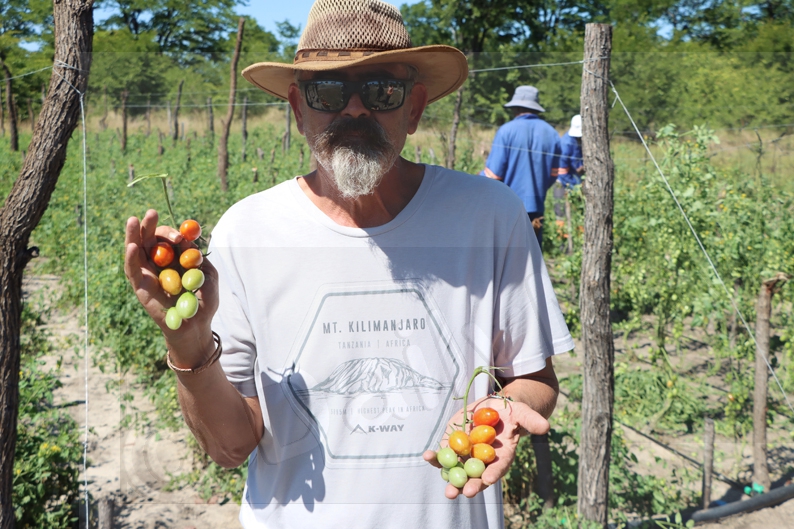
The first batch of fresh produce from Shokomokwa Agric-Training project has hit the local market, marking a critical milestone in the evolution of the project. ocated in the outskirts of Shorobe and championed by Wilderness Safari Company, the project aims to enhance food security, create jobs and foster economic inclusion within local communities.
The over P2 million facility is multi-faceted: it serves as an agriculture training initiative in vegetable farming and also has beekeeping and seedling production wings.
Through its seedling production aspect, Shokomokwa Agric-Training project aims to generate over 10 000 seedlings annually while at the same time training community members in vegetable farming and sustainable agriculture, providing direct income generation and long-term food security.
While the project focuses on empowering local communities, it also aims to supply fresh produce to the eco-tourism industry in the country.
The company’s project and stakeholder manager, Mr Attorney Vasco confirmed in an interview that the farm was indeed thriving, with the first harvest comprising vegetables such as baby tomatoes, green pepper, baby marrow and okra already reaching the market as big supermarkets place orders.
Although staff housing units and offices form an integral part of the Shokomokwa Agric-Training project, the farming aspect could not be put off while pending the construction of the facilities, which is currently underway.
According to Mr Vasco, an urgent need existed and continues to exist, to properly position local farmers and community members so that they can tap into the fresh vegetable produce supply chain as the horticulture industry is currently struggling to cope with the demands of the market due to several challenges.
Acknowledging government for periodically implementing bans on the importation of basic vegetables in order to protect domestic farmers, the project manager believes that the farm will act as motivation to farmers to up their game and produce more to meet the market demand.
“This project is a step in the right direction as we are cultivating future farmers who will produce high quality produce for both the local market and the tourism industry. This project also bridges the gap between traditional agriculture and environmental conservation,” he added.
With the Ngamiland region renowned for agro-pastoralism, which is a primary source of livelihood on which local communities are heavily-reliant, Mr Vasco sees Shokomokwa as a basis for a potential mindset shift – it is a veil through which community members can see the other side of agriculture – one that has nothing to do with livestock rearing.
The persistent livestock disease outbreaks, which have had severe consequences for cattle farming in the area are another reason why locals should be able to warm up to horticulture.
To Mr Vasco, the Shokomokwa project presents a timely opportunity for members of the community to shift into climate resilient ventures such as horticulture, fodder production and other agribusinesses which offer a highly viable path forward.
“We want to see members of the community including young people transitioning away from heavy reliance of cattle and taking advantage of financial assistance schemes to venture into other viable agriculture activities”.
Mr Vasco also highlighted that they are in talks with Botswana University of Agriculture and Natural Resources (BUAN) with a view to forge collaboration and see how best they can improve and grow the project.
Their envisaged partnership is premised on the fact that BUAN is already playing a critical role in modernising the country’s agricultural sector by among others, focusing on upskilling youth, driving climate-smart solutions and bridging academic research with practical farming.
That the institution is supporting the national goal of food security and economic diversification is a plus, and yet another reason why its collaboration with the Shokomokwa project would be invaluable.
Meanwhile, the Shokomokwa project has created eight permanent jobs plus rotational opportunities for community members through seasonal employment, giving people across Shorobe, Sexaxa, and surrounding areas a tangible introduction to horticulture-based livelihoods.
Once the project is fully complete, the company commits to increase production and create more employment opportunities – a time that locals wish could arrive as soon as now. ENDS
Source : BOPA
Author : Esther Mmolai
Location : MAUN
Event : interview
Date : 23 Jun 2026
Related News


13 Oct 2026
Expo sparks regional leather expansion

12 Oct 2026
Partnership to boost vehicles maintenance
12 Oct 2026
Farmers urged to treat agriculture as a business
12 Oct 2026