


Judiciary struggles under staff shortages and rising legal costs
18 Jun 2026
The Administration of Justice is battling severe manpower shortages and mounting legal aid costs that have strained its finances, despite notable improvements in court performance and progress in expanding judicial services across the country.
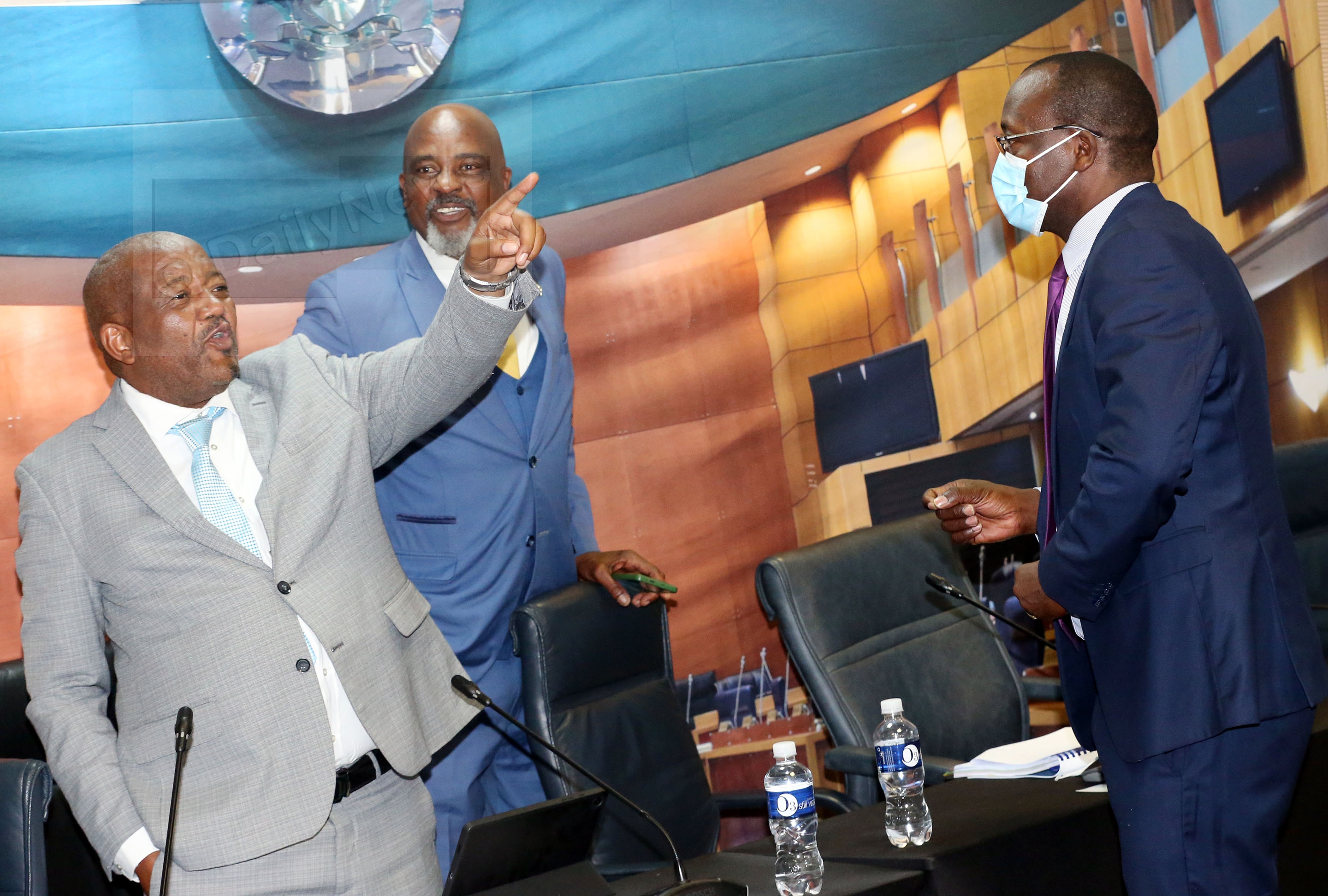
Appearing before the Parliamentary Standing Public Accounts Committee in Gaborone on June 16, the High Court chief registrar, Mr Mompati Taolo said the judiciary continued to face operational and financial challenges as it sought to fulfil its constitutional mandate of upholding human rights, democracy and the rule of law.
Mr Taolo said the judiciary, established under Section 95 of the Constitution as an independent arm of the state, had recorded encouraging gains during the 2022/23 financial year following disruptions caused by the COVID-19 pandemic.
“Performance of the courts improved by eight per cent in the Magistrates’ Courts and five per cent in the High Courts, for the year under review, being a comeback from the COVID-19 challenges,” he added.
The judiciary he said, also advanced key infrastructure projects, including the second phase of the establishment of the Maun High Court Division through the delivery and installation of an additional courtroom and administration block.
Among other achievements, Mr Taolo highlighted legislative reforms that strengthened access to justice and improved compliance with international financial standards.
He cited amendments to the Magistrates’ Courts Act, which increased the civil jurisdiction of the courts from a maximum of P40 000 to P100 000; a change that came into effect in August 2022.
He further noted that amendments aligning the definition of beneficial ownership with provisions of the Financial Intelligence Act contributed to the country’s improved compliance rating during an Eastern and Southern Africa Anti-Money Laundering Group assessment held in Zambia in July 2022.
However, Mr Taolo expressed concern that the judiciary’s progress was being undermined by a critical shortage of manpower.
“As courts continue to expand into new locations, staffing levels have failed to keep pace with growing operational demands,” he said.
He added that no additional manpower had been provided to support newly established courts and expanded functions, resulting in severe shortages among court administration personnel.
Recently, the chief registrar said the judiciary had established new courts in Mogoditshane and Takatokwane, but challenges remained. Mr Taolo also revealed that authorities were still struggling to secure suitable premises for the Mogoditshane Magistrate’s Court.
While efforts were underway to acquire land for a permanent facility, he said the court was currently operating from the Broadhurst Magistrate’s Court and the Mogoditshane Rural Administration Centre.
He also raised concerns over escalating legal aid costs following amendments to rules governing fees for attorneys handling criminal cases on a pro deo basis.
The changes, he said resulted in an increase in fees and tariffs.
Additionally, while the revised fee structure succeeded in encouraging more lawyers to take up pro deo cases, Mr Taolo said the increase had not been budgeted for during the 2022/23 financial year, ‘creating significant financial pressure on the Administration of Justice’.
He said the judiciary could not suspend court proceedings and was, therefore, compelled to continue incurring the additional costs, resulting in outstanding payments owed to lawyers representing accused persons in criminal matters.
The financial strain, he said forced the judiciary to reprioritise its programmes and defer some planned activities in order to ensure that core judicial functions continued uninterrupted.
Despite the challenges, the chief registrar said the Administration of Justice maintained a high level of expenditure performance during the year under review.
Mr Taolo said the judiciary received a recurrent budget allocation of more than P344 million and spent more than P339 million, representing 99 per cent utilisation of the approved budget.
Under the development budget, he said the Administration of Justice was allocated more than P16 million, of which approximately more than P8 million was spent during the financial year 2022/2023, which was 54 per cent.
The budget, he said covered infrastructure projects such as; procurement of Transactional Advisor for the construction of staff houses and a purpose-build court in Serowe, using a Public Private Partnership, maintenance of court facilities, procurement of vehicles for newly established courts, improvements to court security, temporary office accommodation, as well as the computerisation projects such as e-Filing, computerisation of the Administration of Justice and improvements to judicial libraries.
“The under expenditure is attributable to the lack of skilled manpower in areas of architecture, engineering and quantity surveying. The absence of these experts causes delays in the pre-contract processes and in effective project management,” he added.
To mitigate this challenge, Mr Taolo said the Administration of Justice had identified some positions to rationalise and create the quantity surveyor and mechanical engineer positions.
In terms of revenue generation, the chief registrar said the organisation had estimated to collect more than P35 million, of which more than P29 million was collected, which translated to 85. ENDS
Source : BOPA
Author : Lorato Gaofisi
Location : Gaborone
Event : PAC
Date : 18 Jun 2026
Related News

09 Oct 2026
Duma Boko School prepares for January intake
09 Oct 2026
Botswana and Zimbabwe seal waste management deal

08 Oct 2026