


Stakeholders rally behind new GBV programme
17 Jun 2026
Development partners have pledged support for Botswana’s newly launched National Gender-Based Violence GBV Prevention and Response Programme, describing gender-based violence as one of the country’s most pressing development challenges that requires urgent and coordinated action.
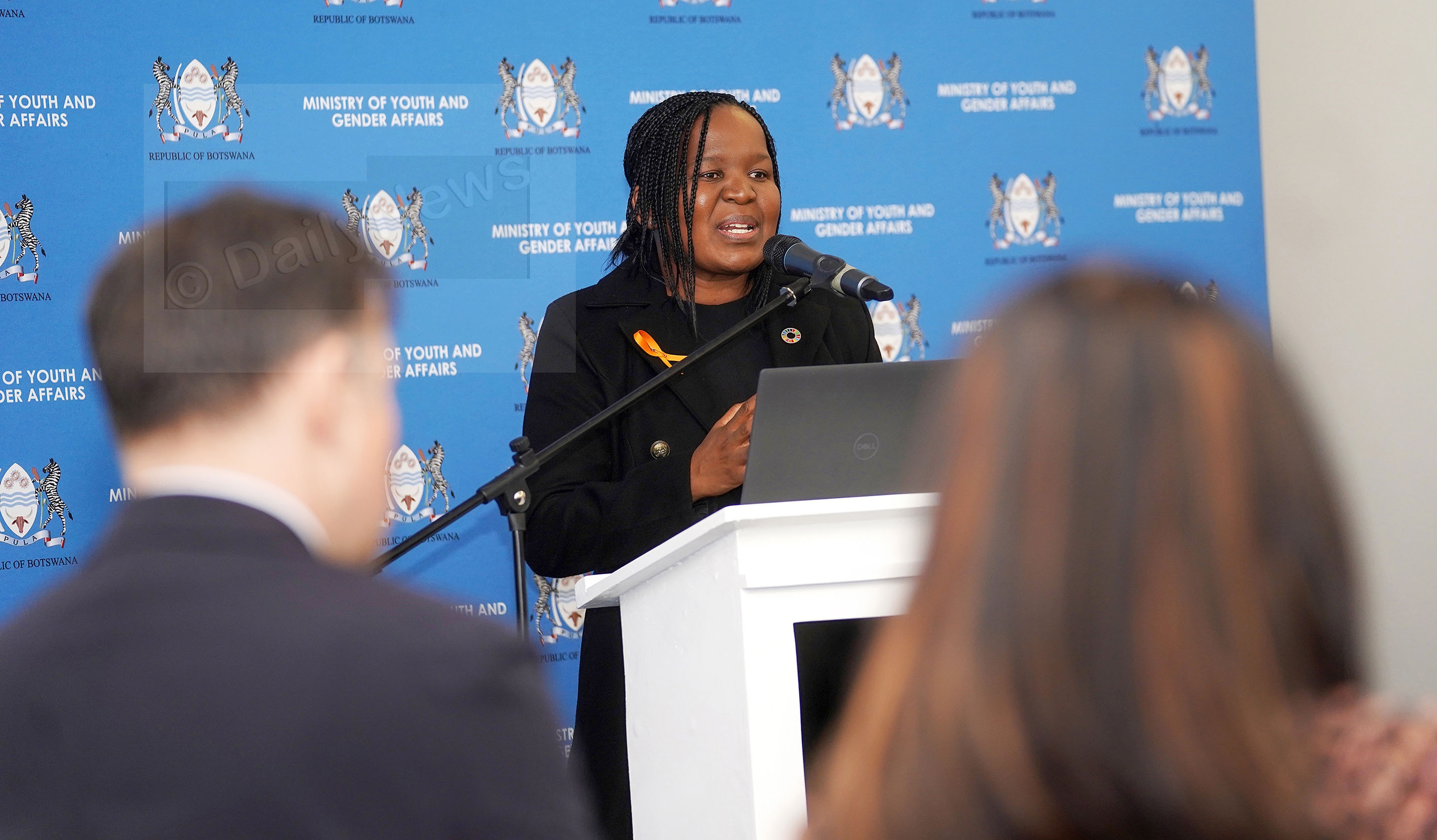
Speaking at the High-Level Development Partners Forum held in Gaborone on June 16 under the theme: Working Together to End Gender-Based Violence in Botswana, United Nations Resident Coordinator Wenyan Yang said that despite Botswana’s notable progress in advancing gender equality, gender-based violence continued to undermine development gains and social progress.
Ms Wenyan acknowledged Botswana’s achievements, including legal reforms that have strengthened women’s rights and the progress made towards gender parity in education. However, she noted that the persistence of GBV remained a major concern affecting families and communities across the country.
“Gender-based violence is not only a human rights violation, but also a profound barrier to sustainable development, social cohesion, and economic progress,” Ms Wenyan said.
She noted that the newly launched programme adopted a “whole-of-government” and “whole-of-society” approach inspired by the global Spotlight Initiative.
This framework brings together the government, development partners, civil society, academia, the private sector, and local communities to tackle the root causes of violence while strengthening support systems for survivors.
The programme focuses on four key pillars; strengthening laws, policies, and institutions prevention by addressing harmful social norms and promoting women’s economic empowerment, improving protection and response services for survivors, supporting civil society organisations and women’s movements.
Ms Wenyan called on development partners to maintain and, where possible, increase their support for Botswana’s anti-GBV efforts.
“We must ensure that our words and commitments today translate into real change in the lives of people across Botswana,” she urged.
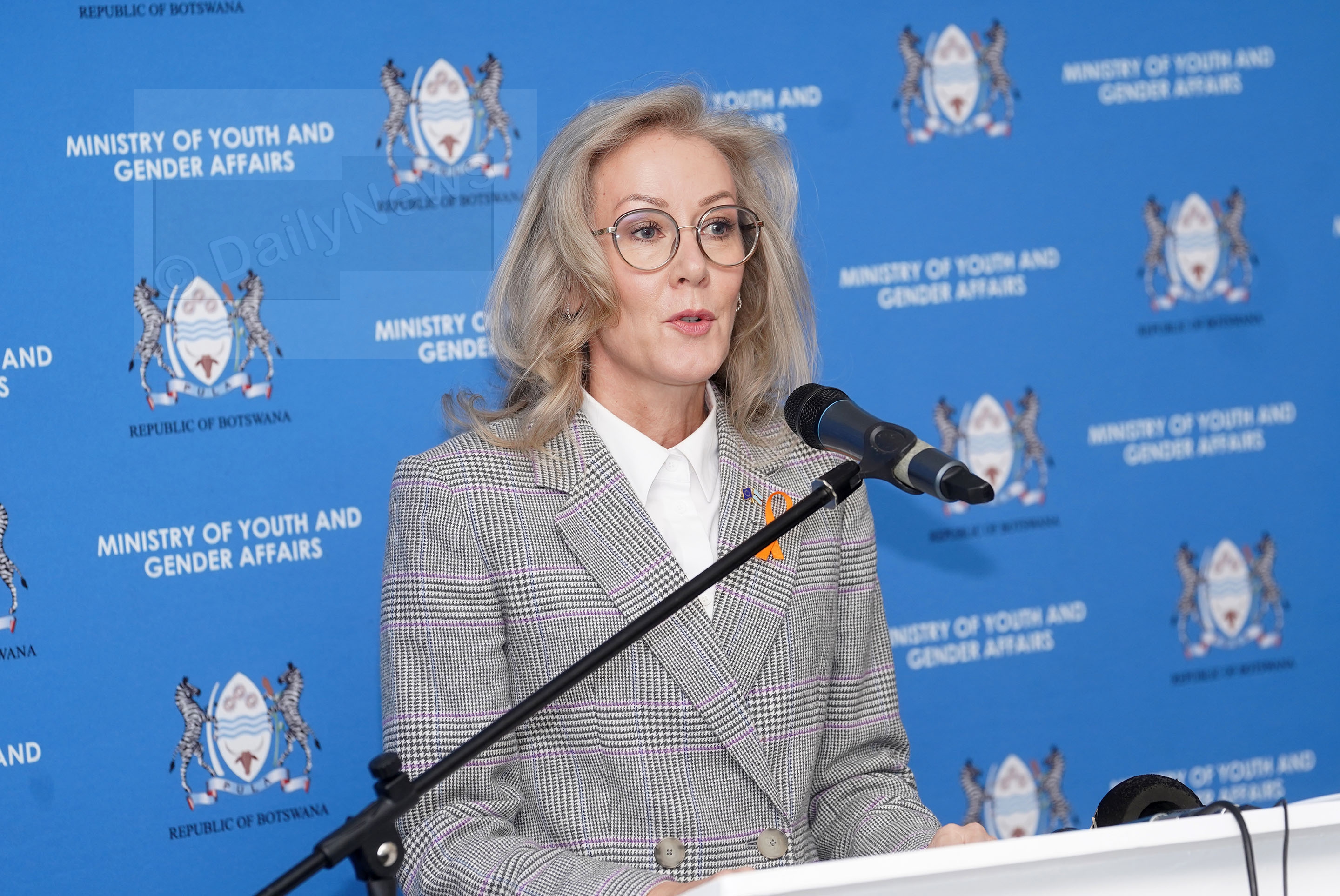
Also addressing the forum, European Union Ambassador to Botswana and SADC, Ms Petra Pereyra, described gender-based violence as a societal crisis that threatened Botswana’s development aspirations.
She emphasised that the high prevalence of GBV alongside low reporting rates highlighted the urgency of strengthening prevention and response mechanisms.
“These numbers are not abstract data. They represent real lives. They represent mothers, daughters, sisters, partners, and friends whose safety, dignity, and potential are being systematically undermined,” Pereyra said.
Ms Pereyra affirmed that the European Union fully supported Botswana’s multi-sectoral response to GBV and would continue to contribute through political advocacy, technical expertise, civil society support, and private sector engagement.
Furthermore, she called on the government to sustain the political will that drove the development of the programme, urging authorities to ensure full implementation backed by adequate resources, clear timelines, and robust accountability mechanisms.
Speaking on behalf of the United Nations Population Fund (UNFPA), Programme Specialist for Youth and Gender, Ms Kagiso Molatlhwa, said the programme was modelled after the Spotlight Initiative—a global effort launched in 2017 to eliminate violence against women and girls.
She noted that available data continued to paint a worrying picture, underscoring the vital need for stronger collaboration among stakeholders.
Ms Molatlhwa shared that regional data from 2018 showed Botswana’s lifetime prevalence of intimate partner violence among women aged 15 to 49 stood at 37 per cent, placing the country among the most affected in Southern Africa.
The statistics showed Botswana recording higher prevalence rates than South Africa (24 per cent) and Namibia (27 per cent), while Zambia and Lesotho stood at 41 per cent and 40 per cent respectively.
She observed that stakeholders were still largely referencing 2018 statistics, which highlighted an urgent need for stronger data generation and evidence-based programming to better inform interventions and policy decisions.
In addition Ms Molatlhwa stated that the programme adopted a whole-of-society approach similar to Botswana’s successful response to the HIV and AIDS epidemic, uniting government institutions, development partners, civil society organisations, academia, the private sector, the media, and local communities.
“The problem of gender-based violence is too complex for any one institution to solve alone. Everyone has a role to play,” she said.
The forum culminated in the signing of the National Gender-Based Violence Prevention and Response Programme by the Permanent Secretary in the Ministry of Youth and Gender Affairs, Ms Natasha Rampa, and United Nations Resident Coordinator, Ms Wenyan Yang.
The signing marked the formal adoption of the framework and launched coordinated efforts to mobilise resources and partnerships for its implementation.
Stakeholders at the forum expressed optimism that the programme will successfully strengthen coordination, improve services for survivors, and accelerate efforts to prevent violence before it occurs. ENDS
Source : BOPA
Author : Lindi Morwaeng
Location : Molepolole
Event : Development Partners Forum
Date : 17 Jun 2026
Related News
08 Oct 2026


07 Oct 2026