


Speaker implores Parliament to drive reforms
11 Jun 2026
Botswana’s 13th parliament has been challenged to rise to the historic responsibility of deepening democracy, restoring public trust in institutions and steering the country towards economic transformation amid mounting national challenges.
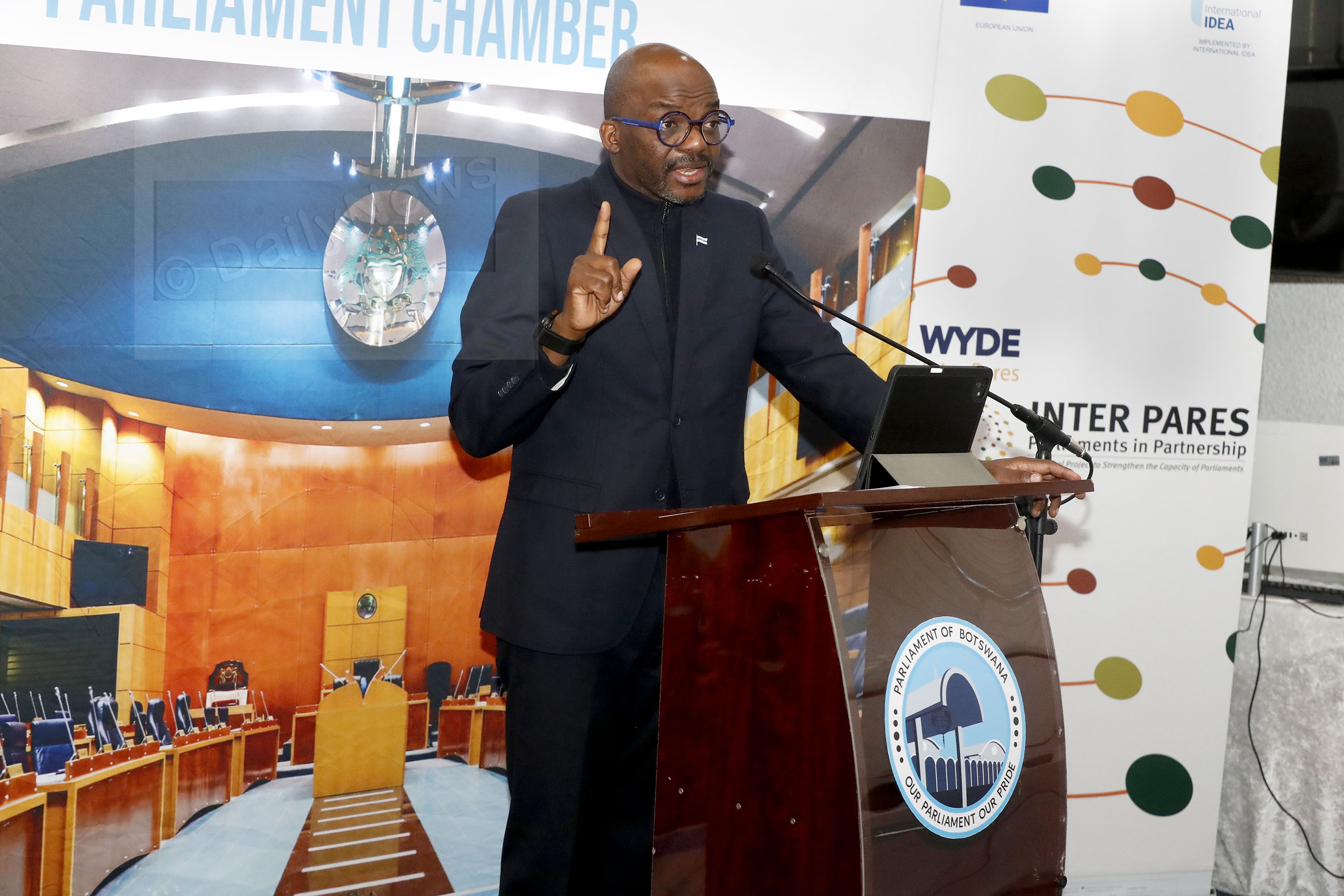
Delivering a keynote address during a three-day Parliament’s Budgetary Engagement and Oversight of Public Enterprises workshop in Gaborone, on Wednesday, the National Assembly speaker, Mr Dithapelo Keorapetse said the current parliament occupied a unique place in Botswana’s history following the country’s first change of government and was, therefore, expected to drive meaningful reforms and strengthen democratic governance.
Parliament, Mr Keorapetse said remained the cornerstone of accountability and democratic oversight, particularly at a time when citizens across Africa were increasingly demanding transparency, responsiveness and good governance from their leaders.
“Democracy extends beyond elections and majority rule, requiring governments to remain accountable to citizens through their elected representatives,” he said. He stressed that public officials and political leaders must be prepared to answer for their decisions, respond to criticism and accept responsibility where failures occur.
Mr Keorapetse also noted that parliamentary committees served as one of the most effective instruments available to parliament in holding the executive and public institutions accountable for the use of public resources and the implementation of government policies. He warned that Botswana finds itself at a critical juncture, balancing the benefits of past economic successes against emerging structural, social and environmental challenges that threatened future growth and development.
According to the speaker, the country’s current economic difficulties presented an opportunity to chart a new development path and accelerate efforts to diversify the economy away from overreliance on diamonds. He said the decisions taken today by policymakers and legislators would have far-reaching consequences for future generations, making evidence-based decision-making and adherence to the rule of law more important than ever.
Mr Keorapetse further highlighted growing concerns across Africa regarding declining public confidence in institutions, citing studies showing that whilst citizens overwhelmingly supported democratic governance, many remained dissatisfied with the performance of public institutions and elected leaders.
He said surveys conducted across the continent revealed increasing demands for accountability, free and fair elections and responsive leadership, whilst at the same time exposing declining trust in politicians and public institutions.
“The 13th Parliament is looked upon as an institution that must help supply the democracy that citizens demand,” he said.
Mr Keorapetse argued that parliament’s oversight role had become increasingly important in rebuilding public trust and ensuring that governments remained answerable to the people.
The speaker said legislatures remained central to protecting democratic values and ensuring that citizens’ voices were reflected in national decision-making processes.
He said national budgets represented more than figures and expenditure allocations, emphasising that budgets reflected the values and priorities of a nation, revealing what governments considered most important, whether education, healthcare, infrastructure, social welfare or economic development.
“Effective parliamentary scrutiny of budgets is, therefore, essential to ensuring that public resources are used efficiently and that government commitments translate into tangible improvements in the lives of citizens,” he said.
For that reason, Mr Keorapetse said parliament must strengthen its oversight capacity to ensure that promises made during budget presentations were matched by actual delivery on the ground.
The workshop on Budgetary Engagement and Oversight of Public Enterprises brought together legislators and stakeholders to share best practices on public finance management, accountability and governance, as Botswana sought to strengthen parliamentary oversight and improve the performance of state-owned enterprises.
The three-day workshop, organised by the Botswana Parliament in partnership with International Institute for Democracy and Electoral Assistance through Inter Pares, an European Union-funded parliamentary capacity-building programme, aims to equip MPs with the tools and comparative knowledge to deepen parliamentary oversight of public spending and the performance of State-Owned Enterprises, building on parliament’s existing appropriation powers and its relationship with the Supreme Audit Institution.
The workshop, attended by parliamentarians, experts, development partners and civil society representatives expects them to explore strategies aimed at enhancing transparency, improving financial accountability and ensuring that public institutions deliver value for money, while contributing to national development objectives. ENDS
Source : BOPA
Author : Lorato Gaofisi
Location : Gaborone
Event : Oversight of Public Enterprises Workshop
Date : 11 Jun 2026
Related News
08 Oct 2026

07 Oct 2026