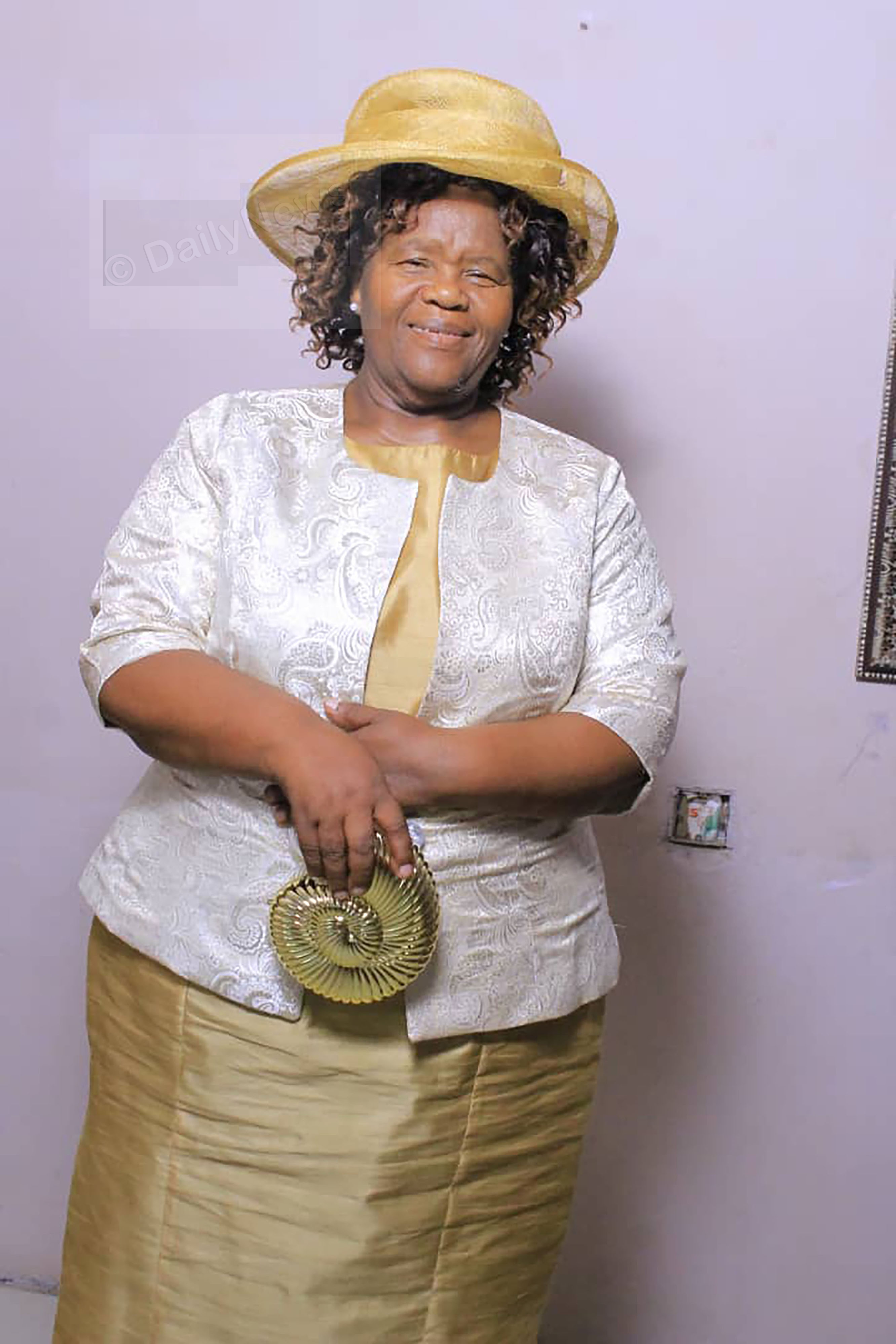
Experience of a colonial child

24 Feb 2014
Life at Bonnington farm as she knew it during Botswana’s colonial era was a mixture of beauty and a trauma for her and Africans who worked on the farm, said Carolyn Slaughter.
Addressing members of the public during a pep-talk on Thursday February 20 in Gaborone, Slaughter said she was doing badly at the time, as the colonial era was coming to an end, and people wanted to claim back their land from the colonisers.
However, Botswana was quite unique as the country transitioned peacefully into an independent state, unlike other African countries, she said.
Carolyn, daughter of one of the first District Commissioners in Bechuanaland, says she grew up as a colonial child between 1952 and 1958, aged between six and 15. Her family moved between Maun, Francistown and Gaborone, before they finally left Africa in 1961, she adds.
She said she was in the country between the ages of six and 15 when extraordinary life experiences transpired and the landscape of the country was a huge sultry for her.
People who worked at the Bonnington farm afforded money, but Le Cordeur, who was the farm owner, was somehow harsh as he used to say how a black person was supposed to be ordered to work, she said.
Farm life she said was traumatic for her as a child because she would beat up the farm workers whilst on duty.
After independence, Le Codeur fled the country as he was scared that the natives were going to claim back their land as it happened in Kenya and Rhodesia.
He left a letter which expressed his fears that colonialism was nearing its end, and the contents of the letter read, “If anyone happens to read this letter please take care of my children.”
Slaughter said the British government did not invested much in the country; “there was pretty much nothing there in terms of infrastructural development,” she said, noting that the country was developed from scratch by its owners after independence.
She said there was a school for white kids and there were 10 in class taught by Klopper who taught anything that came to her mind.
She said they walked to school from the DC’s house and after her primary school she was later sent to a boarding school in Rhodesia and Johannesburg where she became isolated as she was not allowed to talk to black kids.
However, Slaughter said she had a close relationship with her nannies, as her inaccessible mother who was used to glamorous life in India got frustrated when they moved to Maun.
Her mother she said used to spend most of her time under a mosquito net while they were in Maun.
When commenting, one of the white people said there was social discrimination during the colonial era, as marriage between a black and a white person was prohibited. He said if it happened it had to be managed as it did happen in Maun.
He also said when a tennis court was built in Molepolole, black people were not allowed to use it, even a chief.
Her sister, Angela Heslop, said she recovered from the traumatic memories experienced whilst in Africa. Heslop said she rectified the problems and got on with productive life; “I loved being in Africa,” she said.
Furthermore, Slaughter, who has written 13 books with a storyline that das a focus in Botswana, among them “The dream of the Kalahari,” said there was a need for reading to be encouraged in Botswana.
She said it was very important for writers to be supported, citing that there was a need to have a structure for writers in the country.
She noted that there were issues that had to be addressed by writers, journalists and people who want to write fiction or memoir saying children sometimes do not know who their fathers are, as much as issues of violence. Ends
Source : BOPA
Author : Thandy Tebogo
Location : GABORONE
Event : Address
Date : 24 Feb 2014
Related News

06 Aug 2026

06 Aug 2026
Mayor implores creatives to be innovative
05 Aug 2026
Batho Ba Metsi honours Okavango Delta custodians

05 Aug 2026