



Policy aims to turn villages into engines of prosperity
14 Apr 2026
The Revised National Policy for Rural Development 2025 marks a bold policy overhaul that seeks to reposition rural areas as engines of economic growth and national prosperity, moving away from traditional views of them as centres of subsistence and dependency.
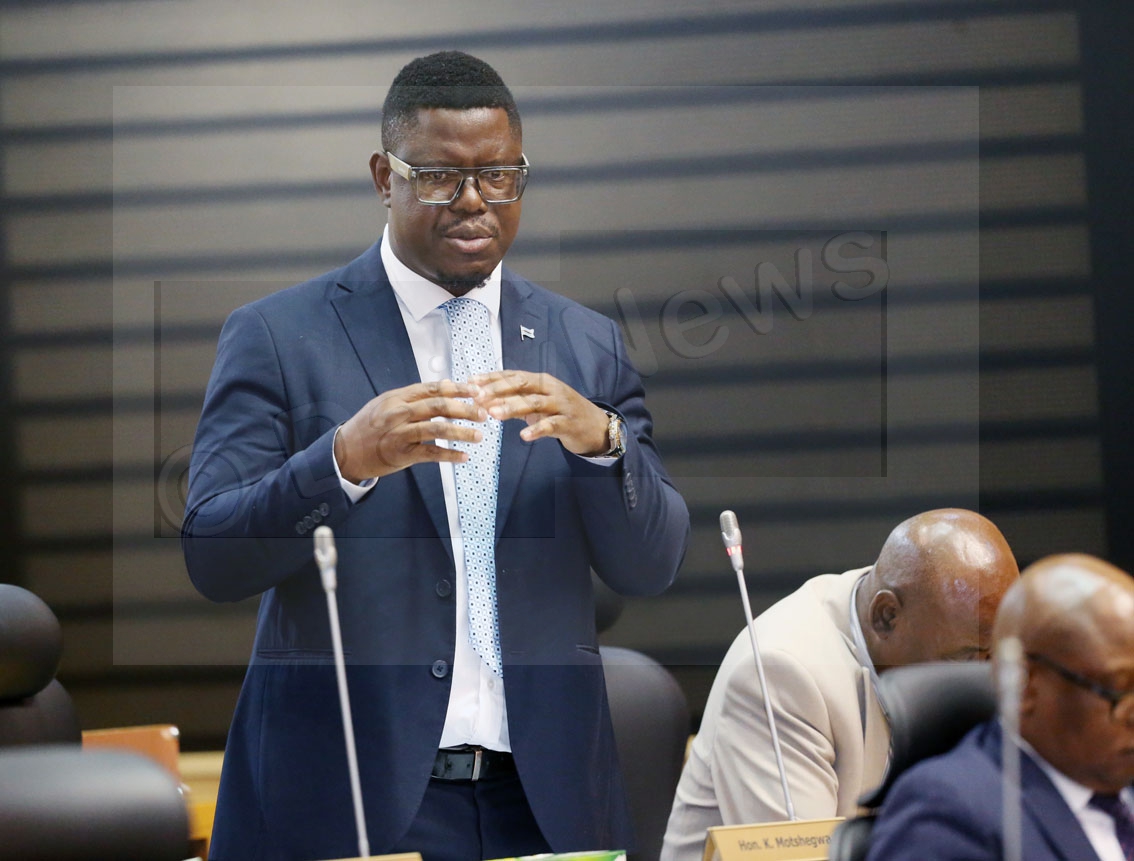
Tabling a motion for adoption in Parliament on Monday, Minister of Local Government and Traditional Affairs, Mr Ketlhalefile Motshegwa, emphasised that once approved, the framework would drive rural industrialisation and align rural development with the country’s broader economic transformation agenda.
Minister Motshegwa said the revised policy resulted from a thorough and evidence-based review process supported by the United Nations Development Programme (UNDP). The minister said consultations reached all 25 rural districts to ensure that no area was left behind and involved a wide range of stakeholders, including local community organisations, government ministries, state-owned enterprises, Rural Development Council, performance management fora and the Parliamentary Portfolio Committee on Local Governance and Social Welfare.
“Two national validation workshops were held and the draft received widespread support,” he told Parliament, adding that “Botswana has spoken with clarity; rural areas must no longer be seen primarily as sites of poverty, but as centres of national prosperity.”
He outlined the historical progression of rural policy in Botswana, stating that the 1973 Land Development Policy focused on alleviating rural poverty through agriculture, infrastructure development and basic service delivery. He said in the 1980s and 1990s, priorities expanded to include health, education, road infrastructure, decentralisation and improved governance.“The Revised National Policy for Rural Development of 2002 later reinforced sustainable, community-driven approaches. These earlier initiatives delivered measurable progress. Many villages now enjoy access to clean water, sanitation, roads, electricity, schools, clinics and more recently, internet connectivity.Studies show improvements in rural living standards thanks to sustained government investment in social development,” he explained.
Despite such gains, he said significant obstacles continued to constrain full rural transformation, including high youth unemployment, persistent poverty, gender inequality, limited access to quality health services especially for vulnerable groups and growing disparities between rural and urban areas.
Mr Motshegwa further noted that such challenges must be addressed decisively under the new policy. He said the revised policy represented a clear break from earlier welfare-oriented models, owing to its central goal to transform the rural landscape from a traditional informal sector into a modern, commercial and inclusive ecosystem.
He said its core objectives included enhancing the quality of life by building economically vibrant and socially resilient communities. Again, he stated that the policy aimed to create local opportunities that curbed rural-urban migration and its associated problems, such as urban unemployment, pressure on infrastructure, informal settlements, family breakdown and social disintegration.
“It also seeks to reduce the long-term government welfare burden by promoting self-reliance among individuals and households, while generating a multiplier effect through private sector attraction, introduction of modern technologies and increased demand for locally produced goods and services, ultimately boosting job creation,” he said.
Mr Motshegwa said the policy was fully aligned with key national frameworks, including the Botswana Economic Transformation Programme, National Vision 2036, National Development Plan 12 and Sustainable Development Goals (SDGs) principle of ‘leaving no one behind’.
“It directly implements the current administration’s manifesto commitments following the 2024 general elections, which placed inclusive growth at the centre of efforts to deliver quality lives for all Batswana,” he said.
He stated that its implementation would rest on two critical pillars, including building a deep rural economy, with emphasis on commercialisation, value addition, entrepreneurship and integration into national and regional value chains as well as focus on land management, climate resilience and green economy, promoting sustainable land use and environmentally responsible development.
Minister Motshegwa stressed that the strong political commitment to reviving rural areas cannot go unnoticed, saying a stronger rural economy was expected to attract businesses, stimulate innovation and contribute to balanced national development while easing pressure on urban centres.
He said the policy formed part of a new chapter in Botswana’s socioeconomic journey, shifting the focus toward productive inclusion and self-sufficiency in rural communities.
Debating the motion, Specially Elected MP, Major General Pius Mokgware supported the adoption of the Revised National Policy on Rural Development, arguing that should it be fully excuted, it would bring redress to youth unemployment and migration to cities. Maj. Gen.
Mokgware also emphasised the need to create local economic opportunities for young people to stem rural-urban drift, reduce pressure on cities and prevent social issues like informal settlements and family breakdown.
He said to reduce or deter occurrence of crime in cities its paramount for developments to reach people in rural areas, not the other way round.
Kgatleng Central MP, Mr Mpho Morolong supported the strategic shift as proposed by the minister and welcomed the move away from subsistence models toward commercial rural economies, stressing the need for practical implementation plans to translate policy into tangible job creation and private investment in villages.
Mr Morolong said producers in villages ought to be supported with adequate market access to avoid migrating to towns for selling their goods.
He further called for clear timelines, adequate funding, coordination across ministries, especially agriculture, land and environment and robust monitoring mechanisms to avoid past policy gaps. ENDS
Source : BOPA
Author : Marvin Motlhabane
Location : Gaborone
Event : Parliament
Date : 14 Apr 2026
Related News

25 Aug 2026
Forensic audit generates 90 priority actions
25 Aug 2026