


Mbizi initiative brings schools back to life
23 Mar 2026
In the early 1980s, Botswana introduced community junior secondary schools to address the shortage of secondary schools.
Initially, the schools were established to address the shortage of senior secondary schools, with community involvement in construction and operations through a Board of Governors.
Over time, government, however, took full control, and community involvement seemingly dwindled. Recently, there is a renewed interest in revitalising community participation and in the North East region, an initiative called Mbizi was introduced.
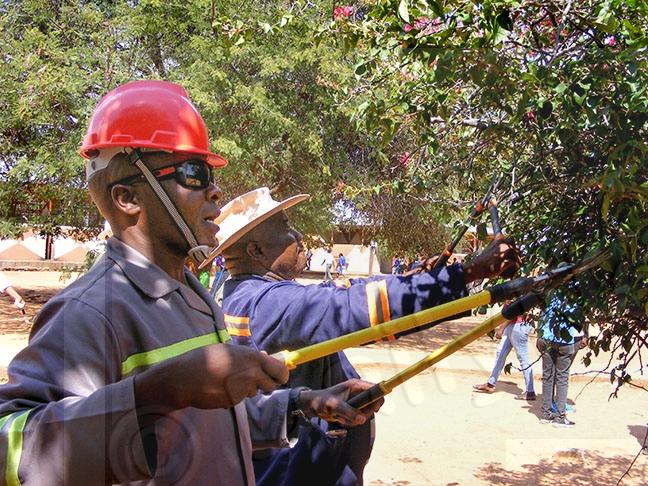
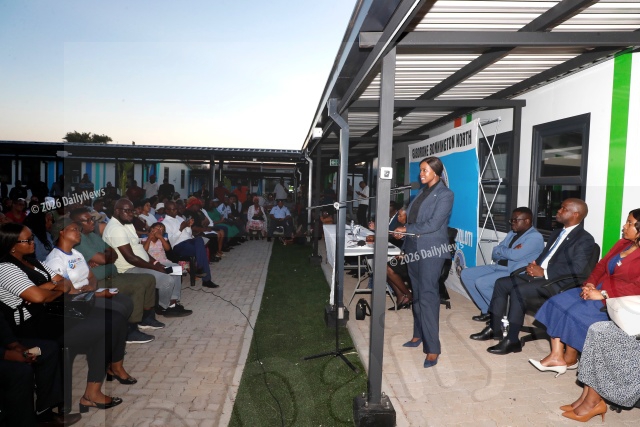
Mbizi, a Kalanga word for ‘Molaletsa’, brings community members together to maintain schools. Using their own tools and skills, they cut trees, and undertake a variety of maintenance works including carpentry, bricklaying, plumbing and painting; saving schools huge sums of money.
In 2023, at Batanani Junior Secondary School in Mapoka, the initiative saved P512 million, reducing the tendering price to P80,000.
According to Dr Moses Mpuchane, regional Parents Teachers Association chairperson for the Ministry of Child Welfare and Basic Education’s North East region, Mbizi was the answer to the often exorbitant maintenance bills.
“Compared to tendering, Mbizi is much cheaper. Various companies donate free materials and we used free skills from brigade students,” he said, making reference to the work that had been undertaken at Batanani JSS through the initiative.
He noted that the initiative reduced costs by over 80 per cent, which was commendable.
“The Mbizi initiative is as good as it is effective,” Dr Mpuchane said. “It brings back community members’ sense of ownership in respect to schools in their localities.”
He explained that though government has taken full control of junior secondary schools, Mbizi aims to re-establish community involvement.
Dr Mpuchane emphasised that the initiative was borne out of the urgent need to address the glaring dilapidation of schools, particularly those with boarding facilities.
The state of such schools required much more than simple maintenance as it bordered on rendering facilities completely inhabitable. This called for urgent attention, and Mbizi became the much-needed solution.
“Mbizi is good because it reduces the costs of maintenance. When tendering is used, bidders often hike prices, making the cost of maintenance unbearable for government,” he said.
Dr Mpuchane is heartened by the support of parents of learners of the four junior secondary schools in the North East Region, and had indicated that support for the initiative had shown how much communities could achieve when they worked in unison. He believed that such initiatives were a legacy and must be continued for the good of communities.
“Just imagine parents, teachers, brigade students, and learners themselves coming together for one common goal,” he said, summing up the power of Mbizi.
Mr Leaname Tebele, chief public relations officer for the northern region, said the Mbizi initiative remained a vital part of the community in Botswana's North East region, with Phase II set to focus on priority needs.
According to Mr Tebele, community involvement had always been integral to schools’ operations. He clarified that community involvement was never removed, but rather, the board of directors, was dissolved.
He said Phase 11 of the initiative would focus on priority needs, building on the success of Phase 1, whose focus was boarding schools.
He explained that five schools in the North East region benefited from the initiative, demonstrating the potential for community-driven development. These, he said, were Shanganani JSS in Tsamaya, Thamani JSS in Tshesebe, Batanani JSS in Mapoka, Matsiloje JSS in Matsiloje, and notably, Tashatha JSS in Tati Siding did not benefit at the time because it was not a boarding school. ENDS
Source : BOPA
Author : Thamani Shabani
Location : Francistown
Event : Interview
Date : 23 Mar 2026
Related News

10 Oct 2026
Feature Reliving the Long March 90 years on
09 Oct 2026