


Labour systems reforms critical
18 May 2026
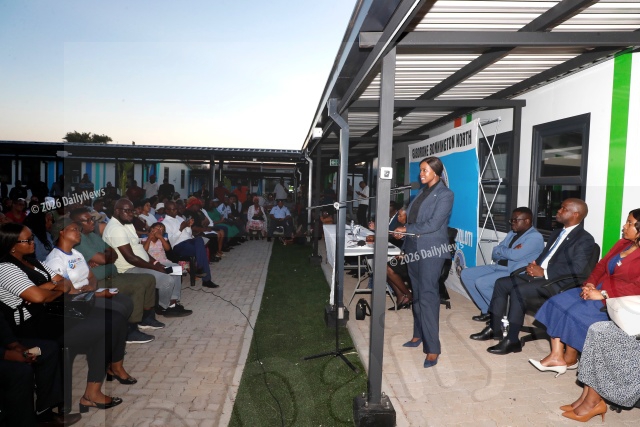
Judge of the National and Supreme Court of Papua New Guinea, Justice Key Dingake has called for sweeping reforms to labour systems in Botswana, Africa and across the world.
Among the reforms, Justice Dingake proposed were universal social protection systems, strengthened trade unions, expanded labour protections for informal and digital workers, stronger social dialogue mechanisms and the embedding of diversity and inclusion into workplace culture.
Justice Dingake was delivering a keynote address during the opening of the 3rd Industrial Relations Conference 2026 in Gaborone on Tuesday.
Justice Dingake further appealed for industrial relations practitioners, governments and employers to pursue meaningful reforms that restored dignity to workers.
He said there could be no social justice if the tripartite constituents, being government, employers and trade unions, did not understand how connected they were and how much they needed each other.
He further called on governments, employers and labour institutions to reclaim human dignity as the foundation of industrial relations.
He warned that Africa risked creating a soulless and deeply unequal future of work if workers were increasingly treated as disposable commodities instead of human beings deserving dignity, fairness and protection.
Justice Dingake stressed that the world of work should not be treated as a ‘battleground for the soul of humanity’.
“The future of work will be just, inclusive and dignified only if we anchor industrial relations not in the logic of efficiency alone, but in the jurisprudence of what I call the human heart,” he said.
Citing International Labour Organisation (ILO) statistics, Justice Dingake noted that approximately 61 per cent of the world’s workers, representing nearly two billion people, remained trapped in the informal economy, with Africa among the worst-performing regions in terms of wage growth since 2015.
He said the persistence of poverty among working people, whilst a small elite continued to accumulate wealth, also exposed the failure of existing labour systems.
Justice Dingake said digital literacy should be able to afford workers to access affordable internet connectivity, urging governments and policymakers to prioritise universal social protection systems, stronger labour laws and the extension of legal protections to platform workers and dependent contractors, who often fell outside traditional employment definitions.
Therefore, he further warned that the Fourth Industrial Revolution, characterised by artificial intelligence, automation and digital platforms, was rapidly transforming employment relationships, whilst simultaneously threatening workers with exclusion and dispossession.
The veteran jurist also used the platform to advocate for greater workplace inclusion, arguing that diversity, equity and inclusion should move beyond “bureaucratic checklist compliance” and become rooted in genuine respect for human dignity.
He said women, persons with disabilities and members of the LGBTQI+ community continued to face discrimination and exclusion in workplaces across Africa.
“We cannot speak of dignity in the workplace without speaking of equality,” Justice Dingake said.
The two-day conference, held the theme: The New Dawn: Key to Industrial Relations Transformation, was hosted by Trade Lights.
The conference sought to foster resilient and adaptive industrial relations systems capable of responding to modern labour challenges in a post-pandemic and technology-driven economy.
This year’s gathering also focused on unpacking the implications of Botswana’s new Employment and Labour Relations Act of 2025, while promoting more productive, harmonious and digitally advanced workplaces.ENDS
Source : BOPA
Author : Lorato Gaofise
Location : Gaborone
Event : 3rd Industrial Relations Conference 2026
Date : 18 May 2026
Related News


10 Oct 2026
Feature Reliving the Long March 90 years on


09 Oct 2026