Industrial Court Deploys New Strategy To Eradicate Case Backlog
16 Mar 2026
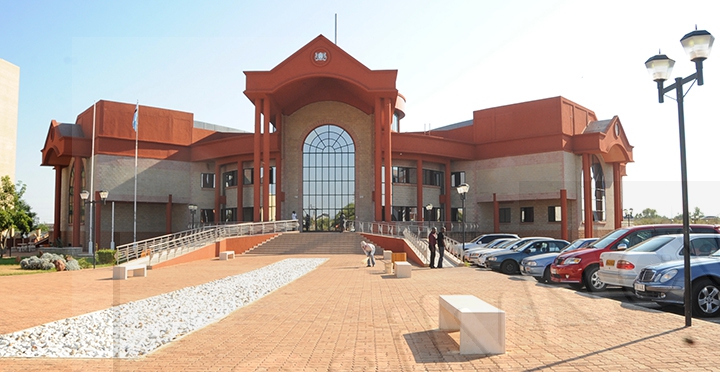
The Industrial Court is set to devise new means to eradicate its case backlog through the establishment of a Judicial Case Management (JCM) Unit, which will comprise four Judges of the Industrial Court.
Presenting the Industrial Court’s budget estimates for the 2026/27 financial year, Minister of Justice and Correctional Services, Mr Nelson Ramaotwana, said the court remained resolute in its commitment to international standards, particularly delivering judgments within three months of a case’s completion. Minister Ramaotwana noted that the current average turnaround time for cases was nine months from registration to judgment.
“To improve efficiency, the court has endeavoured to provide regular training for judges and registrars on emerging trends and changes in labour law,” he said.
However, he noted that no training sessions were conducted in the previous financial year due to financial constraints. In addition to the operationalisation of the Maun Division, which serviced Shakawe, Kasane, Gumare and Ghanzi, the court continued to hold circuit courts in Palapye, Selebi Phikwe and Letlhakeng. The minister further revealed that the Industrial Court had developed an electronic Case Management System to digitise operations.
He added that the court planned a soft launch of the system within the first quarter of the 2026/2027 year, following the procurement of necessary software. Mr Ramaotwana proposed a budget of P62.2 million for recurrent expenses to cover personal emoluments, utilities, the Industrial Court board and circuit courts.
An additional P18.9 million was requested under the development budget for the ongoing expansion of the Gaborone Industrial Court as well as the establishment of the Maun Industrial Court. Debating the budget proposals, legislators emphasised the need for Alternative Dispute Resolution (ADR) to tackle backlogs involving layoffs, unfair dismissals, unpaid wages and workplace bullying.
Maun East MP, Mr Goretetse Kekgonegile argued that the decline in reported cases was not a sign of success, but rather a sign that litigants were abandoning cases due to delays. He opined turnaround times had actually stretched to 10 months in some instances.
Kanye West MP, Mr Victor Phologolo suggested court-annexed mediation and the use of temporary judges for non-complex cases to expedite the process.
Mr Prince Maele, MP for Tswapong North, praised the court’s accessibility, but suggested the use of native languages during proceedings so that litigants can express themselves without relying on translations. Jwaneng/Mabutsane legislator, Mr Omphemetse Kwapa called for further decentralisation, noting that the cost of travel to court often forced the less privileged to give up on their claims.
Shoshong MP, Mr Moneedi Bagaisamang proposed mobile courts for rural communities, noting that many low-income workers lost their severance benefits because they cannot reach help.
Mr Ignatius Moswaane of Francistown West, supported the budget but called for the establishment of an Industrial Court of Appeal. Okavango West MP, Mr Kenny Kapinga, highlighted the high volume of non-payment disputes in his constituency and requested a dedicated labour office in Shakawe to reduce travel to Maun.
Responding to MPs’ contributions, Minister Ramaotwana agreed that government must meet litigants halfway. He suggested that moving forward, promotion of virtual court hearings would be a priority to prevent citizens from abandoning cases due to the distances involved. BOPA
Source : BOPA
Author : Mmoniemang Motsamai
Location : Gaborone
Event : Parliament
Date : 16 Mar 2026
Related News
20 Aug 2026

20 Aug 2026
Policy to reform health system
20 Aug 2026
More than P2 billion for BDF pensions
19 Aug 2026