



Ministry to establish child support centres in districts
09 Mar 2026
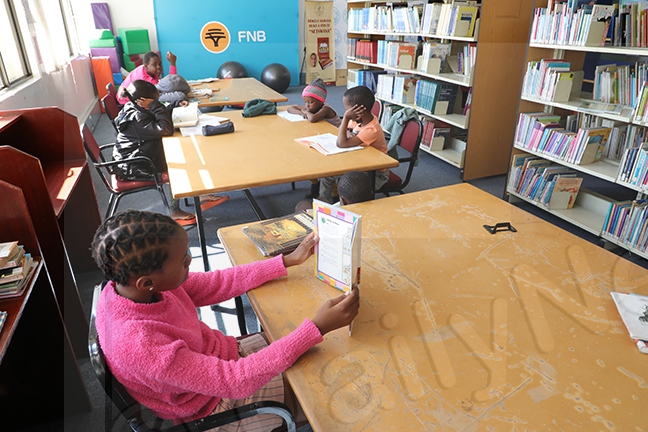
The Ministry of Child Welfare and Basic Education plans to establish Multi-disciplinary Child Support Centres in every district through the Botswana Economic Transformation Programme (BETP).
This was said by Minister Nono Kgafela-Mokoka when answering a question in Parliament, stating that the centres would be staffed by a full complement of professionals to ensure faster and more accessible support for children with special educational needs. Minister Kgafela-Mokoka said the ministry was also planning to decentralise its diagnostic services, which currently operated through a hub-and-spoke model.
She indicated that the ministry operated the Central Resource Centre for special education in Tlokweng as the main hub for diagnostic assessment services supported by two satellite assessment offices in Francistown in North East and Kanye in Southern regions and was also at an advanced process of operationalising the Maun Centre for Special Education which would further strengthen the services.
She explained that all their interventions were delivered through a multidisciplinary team comprising educational psychologists, speech and language therapists, occupational therapists, physiotherapists, social workers, counsellors and other professionals to provide comprehensive support to children with special educational needs and their families.
Currently, she said the ministry had employed three educational psychologists who conducted psycho-educational assessments nationwide, one based at the Maun Centre for Special Education, one at Kanye serving South, Ghanzi and Tsabong regions while one, on contract, based at the CRC in Tlokweng serving the South East, Central and Kweneng regions.
“I must acknowledge that we currently face a significant shortage of these critical officers, which limits our ability to provide timely psycho-educational and diagnostic assessments to every learner who requires them. To address this, my ministry has prioritised training in educational psychology and related fields,” she added.
Ms Kgafela-Mokoka also stated that time taken to complete a psychometric assessment for one learner was not fixed but varied depending on several factors including the child’s mental age and ability to handle assessment tasks, the nature and complexity of the presenting a disability or condition as well as the child’s responsiveness during the session.
The minister also told Parliament that the overarching policy was inclusive education which meant that every school was a special education institution capable of catering for learners with diverse needs in mainstream classrooms.
Every primary school, she said had a head of department-learning difficulties, responsible for coordinating special and inclusive education. For learners who required support beyond the mainstream inclusive setting, Ms Kgafela-Mokoka said they maintained a continuum of placement options including self-contained special education units.
She cited that in Tutume District, there was one such unit at Timbi Primary School, which catered for learners with intellectual and developmental disabilities, learners with sensory impairments (hearing impairment and blindness) were referred to specialised schools in the North East region while those with dyslexia and physical disabilities were primarily supported within mainstream schools through the head of department - learning difficulties and the school intervention teams.
Nkange MP, Mr Motlhaleemang Moalosi had asked the minister to state the number of educational psychologists employed and if they were sufficient to assist with psychometric assessment for learners across various primary schools.
The MP had also wanted to know the amount of time taken to do psychometric assessment for one learner and the number of special education schools in Tutume District, the kind of cases they were capable of dealing with. BOPA
Source : BOPA
Author : BOPA
Location : Gaborone
Event : Parliament
Date : 09 Mar 2026
Related News

25 Aug 2026
Forensic audit generates 90 priority actions
25 Aug 2026