Farmers on edge as FMD threat looms over Molopo River
26 Jan 2026
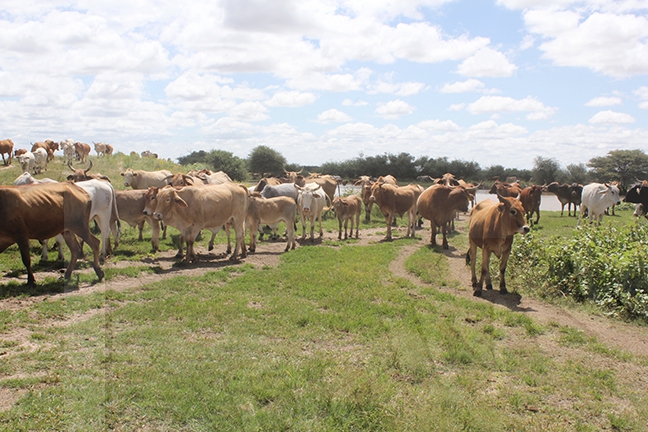
The Molopo River is more than just a geographic boundary. For the farmers of southern Botswana, it is a lifeline that has suddenly become a liability.
Along the dusty stretches from Mabule to Phitshane-Molopo, the air is thick not only with the heat of the Kalahari but with a palpable sense of unease. The threat is invisible, but its name carries the weight of financial ruin - Foot and Mouth Disease (FMD).
For Mr Boitshoko Maphage, who oversees cattle across the sun-baked plains of Tshidilamolomo and Sekhutlhane, the geography of the region has become a source of sleepless nights. The Molopo River, shared with South Africa, represents a 50-kilometre stretch of vulnerability.
“Farmers now realise that an FMD outbreak can lead to the highest level of poverty,” Mr Maphage says, his voice reflecting the gravity of the situation.
He points to the proposed P700 compensation per head should the virus spread into the country, a fraction of a healthy animal’s market value.
“The impact will be huge and as farmers, we grossly underestimate it. The EU market will be lost and feedlots will be crippled as the general movement of livestock is curtailed,” he warns.
For generations, communal farming in this area followed a predictable, if sometimes loose, rhythm. But as the threat of FMD looms, that rhythm is being forced to change. The mindset shift required for modern animal husbandry is no longer just a government suggestion, but a survival tactic.
In Botswana, cattle are more than livestock, they are a ‘bank account on four legs.’ Because the Southern region is a ‘Green Zone,’ certified free of FMD without vaccination, farmers here enjoy access to premium markets in the European Union, Saudi Arabia and the United Arab Emirates. One infected animal could, however, freeze the entire machine.
“Farmers realise they can be rendered destitute overnight,” Mr Maphage explains. This realisation has sparked radical grassroots movement. Rather than waiting for government intervention, local farmers are proposing a contributory scheme, pooling rolls of fencing wire to erect a new barrier further back from the river. They view the current border fence as a dilapidated relic, incapable of keeping their livelihoods safe.
In the areas of Ditlharapa and Marojane, Mr Marumo Morule of Rooidam cattle post watches the horizon with a critical eye. He draws a parallel that every Motswana understands - the COVID-19 pandemic.
“Movement around kraals should be restricted by declaring them ‘no-go areas,’ applying the same measures we used during the pandemic,” Mr Morule argued.
To him, the threat is as much about human movement as it is about roaming livestock. The challenge, however, remains the ‘business as usual’ attitude of some communal farmers. In many areas, the river remains the primary water source and the cordon fences designed to control movement have been vandalised, ironically, by the very people they were meant to protect.
Chief veterinary officer in Gaborone, Dr Olorato Tshireletso weighs the macro-economic stakes. The Southern part of the country is the engine of Botswana’s beef export industry.
“The socio-economic impact is high because Batswana survive through cattle production,” Dr Tshireletso notes. A single outbreak would trigger an immediate suspension of Botswana’s disease-free status by the World Organisation for Animal Health. Prices would plummet and the foreign currency that fuels the national economy would evaporate.
To prevent this, government has moved to fortify the buffer. According to principal veterinary officer, Mr Motlamedi Keboitsi, a new 200-kilometre double cordon fence stretching from Banyana farms to Thareseleele serves as a frontline defense.
This is critical, as most feedlots are concentrated in the south (Zones 11 and 13). If these zones are compromised, the Botswana Meat Commission would lose its primary supply. Zone 11 includes Kanye, Kweneng, Kgatleng, Tlokweng and Ramotswa and Zone 13 comprises Kuke, Ghanzi and Phefodiafoka. Zone 10 is Mahalapye while Zones 9 and 7 are Palapye and Selebi-Phikwe respectively.
As the sun sets over the Molopo, the conversation among farmers is no longer just about the rain or the price of feed. It is about surveillance, looking for the tell-tale limp, the excess salivation or the blisters that signal the end of a dream.
Mr Omphemetse Mogorosi, of the Gatampa-based Farmers Clan Consultancy, advises farmers to remain vigilant but calm. He asserted that the era of the ‘roaming cow’ must end if the era of the ‘global exporter’ is to continue.
“Intensified surveillance and control strategies have been put in place to contain the situation should any eventualities occur,” he adds.
In the Southern region, the fence is more than just wire and wood. It is the only thing standing between the prosperity of the Green Zone and the shadow of destitution. BOPA
Source : BOPA
Author : Thandy Tebogo
Location : Kanye
Event : Interview
Date : 26 Jan 2026
Related News
08 Oct 2026