Voice Of Church Remains Critical
15 Jan 2026
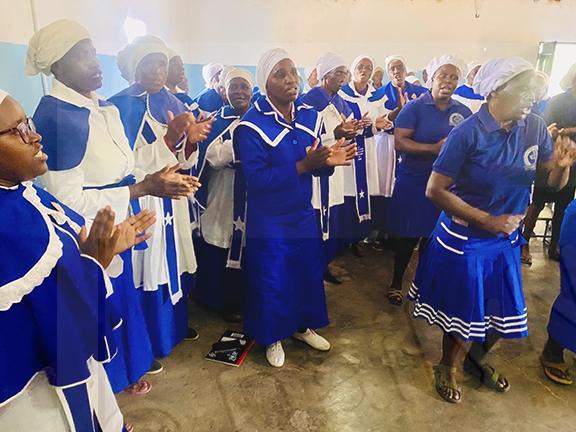
The role of the church to usher in sanity, foster harmony, and restore hope within any given people and nation remains profound to date. It is against this background that many within the broad spectrum of society are concerned about the deafening silence of the church at a time when the very foundations that have held the nation together for years seem not to hold up. Perhaps, inspired by the Body of Christ’s legacy to salvage society from full-scale degeneration, many are itching to hear the Body of Christ’s stance to give the kiss of life to the ailing society.
The church should rise like a phoenix from the ashes and restore hope, they maintain.
For many years now, Botswana has been rocked by gender-based violence (GBV) that has disintegrated into a spate of heartless murders, including wanton extermination of the lives of innocent and defenceless children, sending a chill down the spine of the entire populace. Many are left with more questions than answers.
Political leadership and stakeholders alike have, in an attempt to pull society out of this mire, forged ties and enacted more stringent laws as a deterrent, but little has been achieved to date.
President Advocate Duma Boko has recently underscored the urgent need for stronger legal frameworks and more effective enforcement mechanisms to hold perpetrators of GBV accountable. His call for action is a stark reminder of the severity of the matter.
He highlighted that GBV prevalence rates remained alarmingly high, particularly among women and girls.
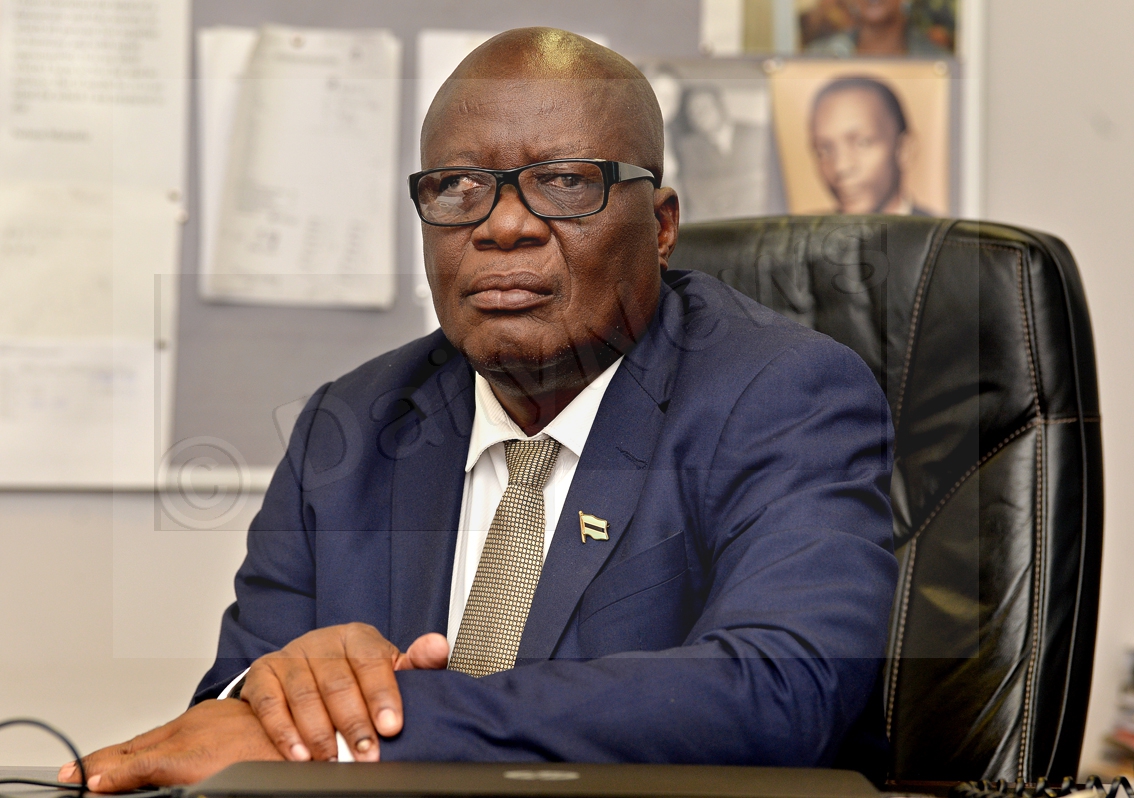
President of Botswana Unified Fraternals (BUF), a relatively new organisation that oversees existing ministers’ fraternals, Bishop Malejane John Ramotshabi says the church remains committed to its obligation of nation-building and promotion of good morals in the community.
Bishop Ramotshabi said the church was far from absolving itself of its moral duty, as some people may think.
Bishop Ramotshabi, who also serves as the chairperson of the Francistown Ministers’ Fraternal, underscored that for many years, the church had been a staunch partner and stakeholder in the fight against societal ills.
The Leader of Christ International Fellowship acknowledges, however, that limitations such as finances, as well as a disjointed church of the past, could be the reason the body of Christ had not been visible and more impactful.
He admitted that for a long time, the church had not been well-organised, something he asserted belonged to the past, as the recent development of new structures to govern the church would make it cohesive, formidable and responsive enough to address pressing issues affecting the nation.
“We have been at the centre of nation building at church and community levels through many programs whose objective is to build holistic and morally sound members of the society,” he said, stating, however, that the lack of finances to roll out some of the community-building initiatives had been an albatross around the neck to make inroads.
Moreover, he noted that the church hasd also utilised the Ministers’ Fraternal platforms to convey wisdom to the government, encouraging it to incorporate its perspective into the overall policy-making process that fostered morally sound communities.
He stated that at some point in the past, the church was at variance with the government concerning specific laws that, although politically correct, had deviated from the decorum of good morals.
He cited as an example, legislation that promoted equality between men and women, one of the many pieces of legislation that some have misconstrued to encourage lawlessness and total disregard for men’s headship within the family structure.
“This law, although at face value it looks like a corrective measure and a human rights issue, has rendered asunder the moral campus of the peaceful coexistence of many couples, resulting in dissolution of marriages and, in worst-case scenarios, gruesome killings,” he said.
All is not lost, according to the Man of the Cloth, although much work is needed to wage a winning battle against the moral abyss.
The cohesive nature of the contemporary church, he relayed, was well-equipped to grapple with societal ills and maintain sanity within the community.
Plans are afoot for the Botswana Unified Fraternals, a composition of the Botswana Council of Churches (BCC), Evangelical Fellowship Botswana (EVB), and the Organisation of African Churches (OAF), to roll out its program, which includes engaging the political leadership to find lasting solutions to the nation’s problems.
“Our first stop will be at the Minister of Labour and Home Affairs, Major General Pius Mokgware, where we intend to introduce ourselves and share our vision. This would kick into motion a program of events that we have as BUF,” he said, stating that the body of Christ intended to leverage the social media platforms to reach out to the masses.
That being the case, Bishop Ramotshabi said the Francistown Ministers’ Fraternal had a cordial working relationship with various organisations and government departments, among them Nyangabgwe Hospital, Jubilee Hospital, schools, the District Administration office, and many others, to provide counselling.
His nugget of wisdom to those aspiring to wed is that there is hope in marriage.
“People need to be taught about the ups and downs of marriage so that they will be able to deal with stumbling blocks that may arise successfully. They need to be drilled and taught that marriage takes a great deal of effort from both parties,” he said, regretting the huge statistics of marriage dissolution, which he believed were a result of a lack of guidance.
Ending one’s life or killing someone in the name of love, he asserted, was not a solution either. He said couples should normalise ironing out their differences at all times to enjoy peaceful and fruitful relationships. BOPA
Source : BOPA
Author : Mooketsi Mojalemotho
Location : Francistown
Event : Interview
Date : 15 Jan 2026
Related News
08 Oct 2026