Discipline and vision drive Chikwama farming empire
13 Jan 2026
At the break of dawn, when Francistown is still wrapped in darkness, life quietly stirs at the Bus and Taxi Rank. One by one, small trucks popularly known as Dynas or affectionately called Matshelonyana by Batswana roll in, their engines humming softly as they offload crates of freshly harvested produce.
Ripe tomatoes, crisp cabbages, pungent onions, sweet butternuts and juicy watermelons spill onto the market floor, signalling the start of another trading day. This pre-dawn hustle embodies local term “Vuka u zezele” the early riser gets the best catch. In this competitive marketplace, arriving late often means missing out on the freshest produce.
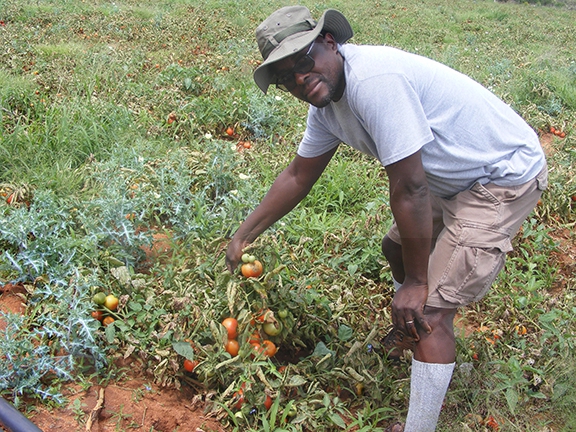
Among the familiar faces is Mr Johannes Chikwama, a black Boer farmer whose presence commands quiet respect. Rugged and sturdy, dressed in khaki overalls, a wide-brimmed hat and heavy-duty boots, he looks every bit the traditional farmer — a reflection of years spent working the land.
A dedicated horticultural farmer from Ditladi village, east of Tonota, Mr Chikwama arrives at the market unfailingly at 0300hrs, seven days a week.
“I arrive at exactly 0300hrs from Monday to Sunday,” he said, underscoring the discipline required in commercial farming.
Tomatoes form the backbone of his production, but his farming portfolio extends far beyond. Across six farms, Mr Chikwama cultivates English watermelons, cabbages, onions and other crops, a remarkable achievement in Botswana’s semi-arid climate, further challenged by climate change and recurring droughts. Yet he remains unwaveringly optimistic.
“Everything is possible. Money is in the soil,” he said.
His farming operation spans three farms in Ditladi, one in Gulushabe (Tonota), one in the North East District and two in Boteti, with produce reaching markets as far as Kasane.
The Ditladi farms draw irrigation from the Shashe River, while the Boteti farms are electrified and supplemented by solar systems, significantly reducing production costs.
“Horticulture is all about irrigation,” he said. “You cannot rely on rain-fed farming. Crops need water 24/7.”
He takes pride in selecting crop varieties suited to Botswana’s conditions, including SV 4126 tomatoes, Star 3301 cabbage and Tiger watermelons. While horticulture demands heavy investment, he believes the returns justify the risk.
“The business is expensive, but the returns are quick and good,” he noted.
Beyond profit, Mr Chikwama is deeply rooted in community service. He has donated produce to the Ditladi community and remains willing to support local primary schools and funerals. However, he pointed out challenges, particularly expectations that donations be delivered to people’s homes.
“If people have transport, they should collect the produce so it does not interfere with market sales,” he explained.
Farming for Mr Chikwama is a family affair. His wife, Chada, their son Johannes (junior), and farm manager Mr Elliot Muwungai all play active roles in the business. Together, they run Johannes Produce, a testament to their shared work ethic.
He treats his workers with dignity, providing free accommodation, electricity, water and food. Some farms even keep pigs, goats and chickens, raised solely to supply meat for workers rather than for sale.
“I want my workers to feel at home and take ownership of their work,” he said.
Despite owning a tractor and six trucks, Mr Chikwama maintains a low profile. He does not use social media for marketing, preferring word-of-mouth and consistent quality.
He also opens his farms to students from the Botswana University of Agriculture and Natural Resources (BUAN) and Zimbabwe’s University of Chinhoyi for industrial attachment, offering hands-on experience and allowances.
His advice to aspiring farmers is firm and uncompromising:
“Do not treat agriculture as a passion, a retirement package or an opportunity. Farming is a profession.”
He also called on government to simplify access to agricultural policies and programmes, and urged the Water Utilities Corporation to open the Shashe River at least once a year during prolonged dry spells. While appreciative of electricity infrastructure along the river, he stressed the need for improved road networks.
From humble beginnings in 2011 to managing six thriving horticultural farms, Mr Chikwama’s journey is a testament to discipline, resilience and vision. True to his belief that “money is in the soil,” he continues to prove it, harvest after harvest. BOPA
Source : BOPA
Author : Thamani Shabani
Location : Ditladi
Event : Interview
Date : 13 Jan 2026
Related News
08 Oct 2026