Bobirwa farmers brace for Lemang Dijo rollout
11 Dec 2025
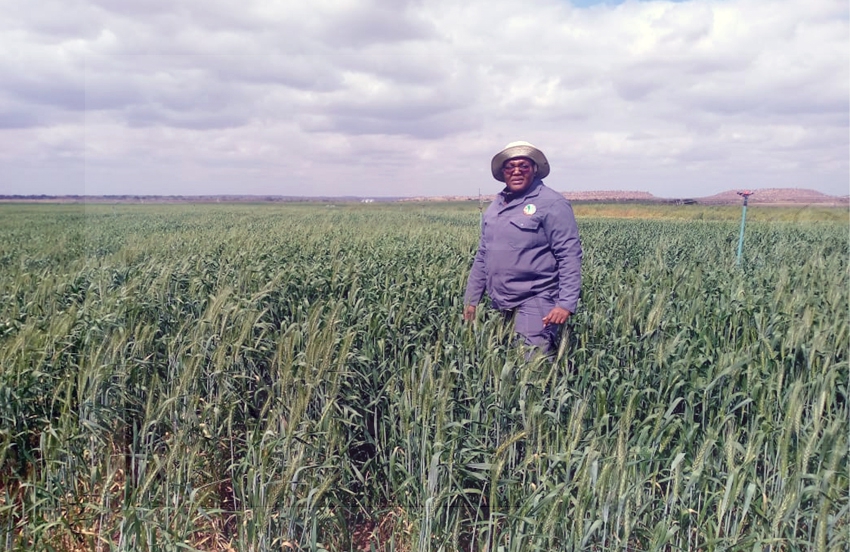
Across Bobirwa District, a mix of anxious hope and quiet fear hangs in the air. Subsistence farmers - young and old - are watching the skies and their phones with equal intensity, waiting for two lifelines: the long-awaited rains and the text message alerting them that their Lemang Dijo subsidised packages have arrived.
For many, the anticipation is sharpened by uncertainty. They hope the rains will continue long enough for successful planting, yet dread that heavy downpours could render their clay-rich fields inaccessible to tractors and animal draught power.
As of December 8, 6 733 subsistence farmers had registered for the Lemang Dijo programme in Bobirwa, with 168 already receiving e-vouchers. But those issued with vouchers report a common frustration: the absence of seeds at designated agro-dealers, a delay they fear could undermine government’s intention of ensuring timely planting.
While most farmers are clear on the crop production element, many remain unsure about the programme’s integrated beekeeping requirement. Only a handful of those interviewed understood the role of bees in pollination, while others admitted to fear or confusion -particularly about handling the insects.
The programme guidelines explain that bees pollinate about 90 crops, increasing yields by up to 30 percent per hectare, with the beehive e-voucher capped at P1 500.Yet 72-year-old Ms Tshokolo Baruti of Mmasenana lands in Semolale is skeptical.
“Jaanong dinotshi tsone ke le mosadi?” she asked rhetorically, wondering how a woman her age could cope with bees. Still, she remains committed to planting as soon as she receives her seeds, fertiliser and other inputs — and hopes the forecasted rains will find her field already ploughed.
The programme has also drawn interest from young farmers, including those familiar with earlier schemes such as ISPAAD and Temo-Letlotlo. Mr Letso Oleteng, 20, of Magaleng lands in Sefophe, is still waiting to redeem his 100 percent subsidy for tillage, seeds, pesticides, shelling and threshing - all covered under a P2 900 per hectare e-voucher. Currently in Gaborone, he says one phone call will put him on the next bus home. Unlike some, he accessed the guidelines on social media and believes the beekeeping component makes economic sense.
Other farmers, such as Mr Kebalepile Mzila of Mahibitswane lands in Tobane, were unable to source seeds after being turned away from BAMB in Selebi-Phikwe. Mzila, who previously learned beekeeping through ISPAAD, has already planted four hectares and awaits inputs for his Lemang Dijo plot.
At Phokoje lands in Mmadinare, 71-year-old Mr Boikaego Kangangwana is energised by the new programme, although he depends on tractor owners and worries about delayed assistance. He notes that when he plants on time, his fields typically produce a bumper harvest.
Not all farmers are enthusiastic about the compulsory beekeeping element. Ms Maretha Mokgathane of Keisane lands, Bobonong, said farmers were advised to “go home and reconsider” their stance. She admits she did not fully understand the requirement and will be planting maize instead of her usual beans. Similarly, 39-year-old Ms Refilwe Madema of Mabolwe rushed to register after learning she had missed a kgotla meeting. She has since been approved for the programme and, like others, is waiting for seeds but remains uncertain about the bee component.
District agronomist Ms Keakabetse Phalaagae acknowledged both the knowledge gaps and logistical setbacks. She assured farmers that no one will receive beehives without proper training, noting that issuance will only begin next season after compulsory introductory courses. She also confirmed delays in seed and fertiliser supply, explaining that designated suppliers had not completed registration at ministry headquarters during the first week of December.
To ease the backlog, the crop production office began collecting fertilisers from Francistown on December 10 using its only functioning truck. The department currently has just two working vehicles, even though officers must verify fields before payments to service providers can be authorised.
The district office has requested funds from programme headquarters to hire casual labourers and repair additional vehicles borrowed from the district commissioner’s office.
Lemang Dijo is an output-based agro-ecological programme designed to strengthen household food security and correct structural weaknesses that limited earlier initiatives. For now, the farmers of Bobirwa wait - for the rains, for the seeds, and for the message that will signal their turn. ENDS
Source : BOPA
Author : Manowe Motsaathebe
Location : BOBONONG
Event : FEATURE STORY
Date : 11 Dec 2025
Related News
08 Oct 2026