


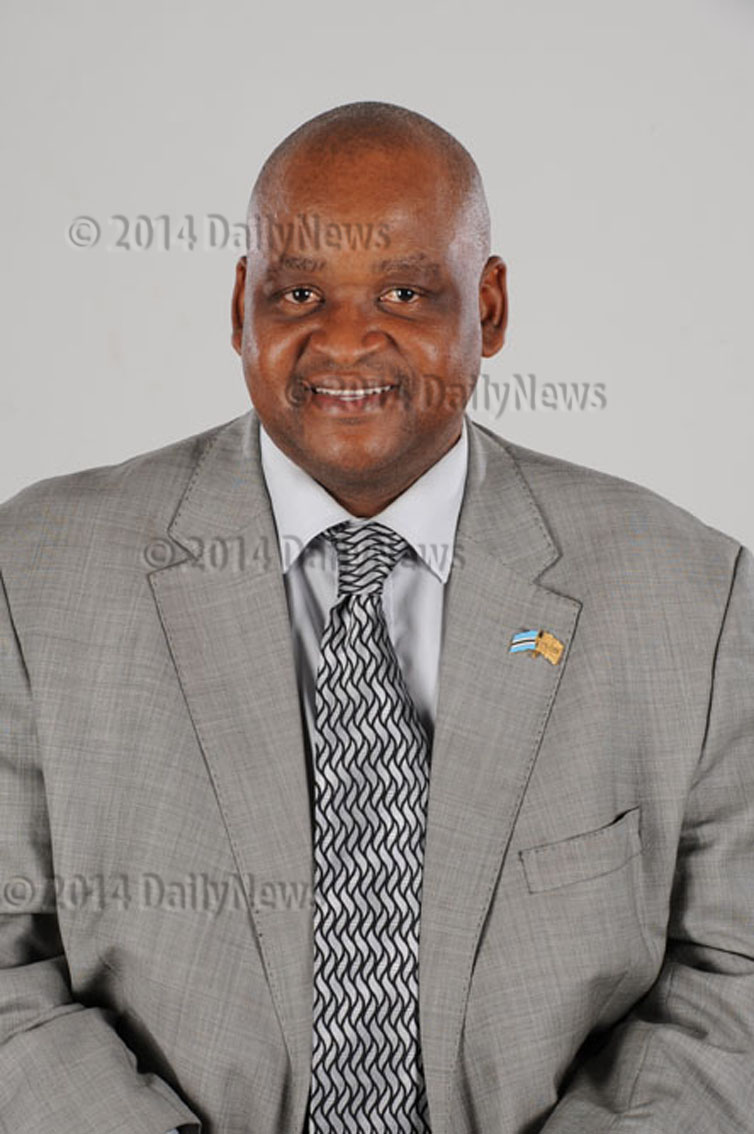
Makgalemele tables one village one product motion
09 Feb 2014
MP for Shoshong, Mr Phillip Makgalemele has put before Parliament a motion requesting government to adopt the Japanese model of one village one product (OVOP) as a strategy for boosting rural economic growth.
Presenting the motion in Parliament on Friday, February 7, Mr Makgalemele said OVOP was adopted in Japan in 1979 and successfully created an economic development model for rural areas.
He said the model was a community centred and demand driven regional economic development approach aimed at producing competitive products utilising local resources in which the area had a comparative advantage.
The model, he said, started from creating a network in the community and came up with a vision of transforming the socio-economic outlook of the community to the one that could produce more value-added products that could effectively compete in the global market.
He said the model was largely rooted in the utilisation of local resources including raw materials, commodities, technology and human resource in a manner that created a sense of self-reliance, ownership and strong will to create competitive advantage by exploiting the community core competence.
The OVOP, he said, was anchored in the sense that every village was endowed with unique resources that if converted into unique products through value addition and marketed nationally and internationally, would sustain and improve the livelihoods of the rural poor.
Furthermore, he said the model had shown to be progressive and could be important impetus in rural economic growth in Botswana if it was well carried out.
Economic rural empowerment, he said would further ease burden on the government as it would promote a culture of self-sufficiency on the part of communities.
The anticipated decline in diamonds and uncertain market forces as well as declining agricultural sectors present an opportunity for community centred driven economic development to utilise local resources.
He said according to the 2011 Statistics Botswana report, the rural population was less than 40 per cent of the total population and the decline in rural population might be seen as a sign of people moving to urban areas in search of perceived economic opportunities, hence the need to consider strategies for boosting rural economic growth.
Mr Makgalemele said rural areas were persistently experiencing the highest poverty incidences compared to any other place in the country.
Commenting, MP for Palapye, Mr Moiseraele Goya said this model would promote employment creation for the rural community.
Every village, he added, has its own co-competency citing coal at Palapye. Supporting the motion, MP for Tswapong North, Mr Prince Maele said the model had been tried and tested and had shown to be successful in countries such as Thailand.
He said the model could work for this country and would address the problem of depopulation of rural areas, poverty eradication and would promote entrepreneurial skills. ENDS
Source : BOPA
Author : Kgotsofalang Botsang
Location : GABORONE
Event : Parliament
Date : 09 Feb 2014
Related News

25 Aug 2026
Forensic audit generates 90 priority actions
25 Aug 2026