Centre benefits artists tourists
27 Jan 2014
After a visit to the Kgalagadi South constituency in 2010, President Lt Gen. Seretse Khama Ian Khama issued a directive ordering the Ministry of Youth, Sport and Culture to establish a regional arts and crafts purchasing centre in the Kgalagadi region.
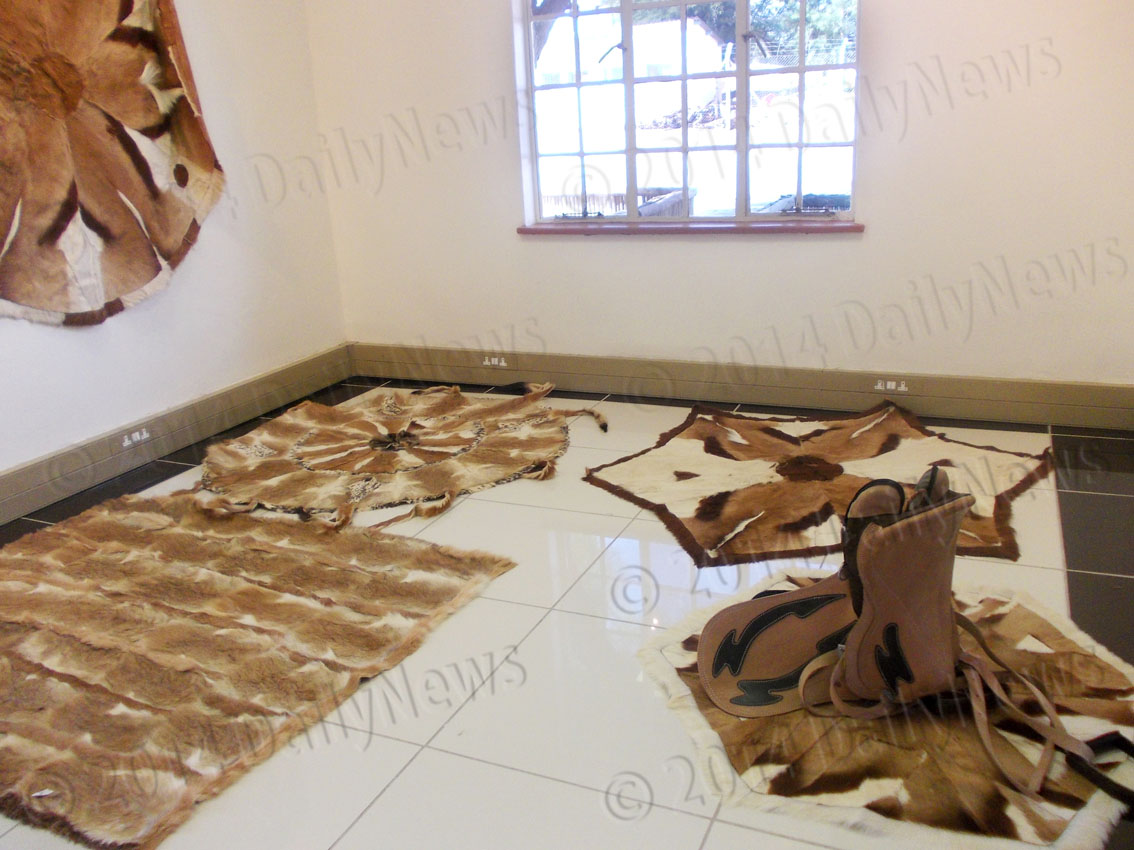
That directive resulted in the establishment of the Tsabong cultural centre, which currently served as the central market for performing and visual arts products and services in the region. The centre was part of government's concerted efforts to preserve and promote the country’s cultural heritage.
It was officially opened by Shaw Kgathi in May 2012 and it was serving as an operational link between culture and tourism. It was located in the centre of the village, where almost all industrial activities took place place and it offered the ideal selling point for the artists’ artefacts and services.
Keabetswe Motswasele, the curator of Tsabong cultural centre, said in an interview that the centre was readily available for artists from all over the country to exhibit their wares and market them to potential buyers.
“These artworks are exhibited, sold and marketed at the centre on a daily basis. The centre is a valuable link between artists and their customers,” he said.
He explained that after exhibition, most of the artefacts, products and services were further marketed by the Ministry of Youth, Sport and Culture through the Department Of Arts and Culture.
The ministry often facilitated the sale of these artefacts and services to tourists, local buyers, government departments and parastatals.
Motswasele added that the ministry often exhibited the artefacts and services in other areas of the country, thus exposing the artists to a much bigger market.
“After accessing larger and more lucrative markets, our artists are able to not only grow their brand but also make more sales. They also incur limited costs as the ministry absorbs the cost of marketing and transportation of these artefacts and services,” said Motswasele.
He reiterated government’s unwavering support of arts and culture as well as her recognition of the need to preserve and promote the national cultural and historical heritage.
He said such commitment was evidenced by the establishment of museums, archives, libraries and monuments which currently fall under the portfolio responsibility of the Ministry of Labour and Home Affairs.
After independence in 1966, government also retained the institution of bogosi to administer customary law, and established the House of Chiefs to advise Parliament on matters of custom and tradition. “All these attest to the high regard in which traditional culture is held,” he said.
Mr Motswasele explained that the Tsabong cultural centre is important to the national economy because it provides an invaluable link to culture and tourism.
He said that culture is a motivating factor for the development of tourism as it acts as a pull factor and helps to diversify the tourism product. He further explained that, apart from its mandate of preserving arts and culture, the centre is by itself a tourism attraction.
“The Tsabong cultural centre is the first of its kind in Botswana. In its two year existence it has managed to attract artists from all over the country. Crafts, literary and visual and performing arts are regular features at the centre,” he said.
While he admitted that such talents have not been developed to optimal levels, Motswasele said the Tsabong cultural centre fosters growth of cultural industries by offering specific and tailored support to budding crafts people, writers and visual and performing artists.
He said they have been successful in recruiting artists to utilize the centre for practice purposes and for the production of their art products.
“The centre usually hosts workshops and seminars for the artists and producers’ direct benefit. For example, beading and leather workshops are held to encourage participants to see the value in the arts and consider taking them up as a form of employment creation and economic diversification,” he said.
Motswasele revealed that the annual Khawa dance and cultural festival has opened up a lot of opportunities for artists as they are able to sell their wares to the multitudes who flock to it. He said revellers who travel to Khawa usually stop by the centre to marvel at and purchase artefacts.
However, Motswasele said the arts and culture industry is faced with a myriad of problems, among them a small domestic market, lack of tourism activities and limited raw materials. He added that some talented artists are often reluctant to pursue their talent, denying the industry fresh and innovative ideas. ENDS
Source : BOPA
Author : Malebogo Manene
Location : TSABONG
Event : Interview
Date : 27 Jan 2014
Related News
06 Aug 2026
06 Aug 2026
Mayor implores creatives to be innovative
05 Aug 2026
Batho Ba Metsi honours Okavango Delta custodians
05 Aug 2026