

Panel discussion targets boys men issues
23 Apr 2024
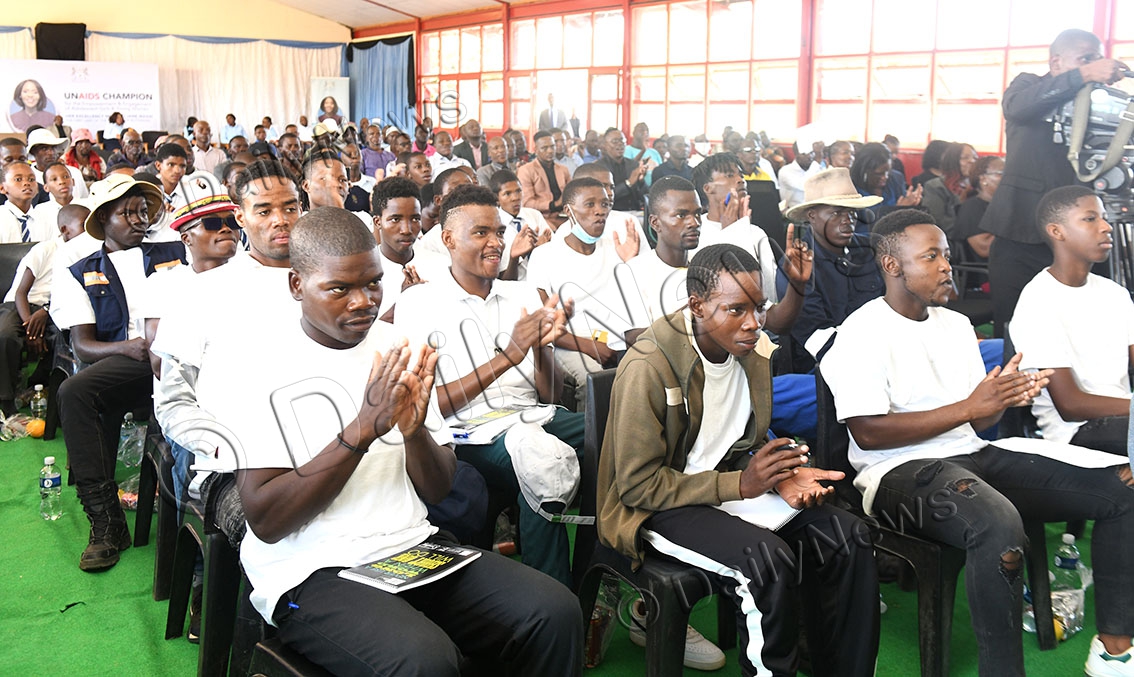
From boys of primary school-going age to grey-haired old men, a little over a hundred of Charleshill’s male population on Monday converged at Rethuseng Junior Secondary School to discuss and dissect issues that affect them.
Their keen interest clearly kindled by the stature and calibre of their host, First Lady Ms Neo Masisi, men and boys trickled in in their numbers and awaited her arrival in great anticipation from as early as an hour before she was scheduled to join them.
When the director of ceremonies signaled the First Lady’s arrival, her audience rose to give her a hearty welcome as would be expected, their anticipation filling up the school hall. Kgosi Mbao Kahiko III of Charleshill set the panel discussion in motion by urging men, in his brief welcome remarks, to take the lead in guaranteeing the protection of women for a safer and more secure nation.
“Borre, phimolang dikeledi mo difatlhegong tsa bomme, a e se nne lona ba le dirang gore ba rothise keledi. Borre a re emiseng go betelela bana. Fa o leba ngwana wa mosetsana se bone mosadi mo go ene, bona ngwana. A re chencheng!” his voice echoed across the dead-silent space and touched his occupants with his words in a deep way.
A five-man strong panel of discussants comprising a kgosi, a Men Sector representative, and experts on gender-based violence HIV and AIDS and entrepreneurship were ushered in to tackle a couple of issues that are of interest and concern to men.
First to go was Kgosi Samuel Kambura of Makunda whose task was speak to the role of men in family setups.
To Kgosi, a man’s primary role is to be a guiding light to his family especially to his male child to whom he should instill ‘botho, le go nna pelotelele le go mo sosoeletsa kwa go nneng ralelwapa wa motia.’
Ms Unangoni Motshidisi of the Botswana Police Service tackled the issue of GBV where she said though men are ‘traditionally’ known to be the aggressors, tables are turning with women beginning to also increasingly subject men to abuse.
“Men who are experiencing GBV often do not come forth to report and we blame this on lack of knowledge of where to seek help,” she said and told the audience that the police, in partnership with communities will be continuing its drive to sensitise men on these issues.
Mr Ronnie Phuthego from the Ministry of Entrepreneurship addressed the question of why there were no economic empowerment programmes specific to men, to which he said save for the few set up for women and youths, the rest of the programmes are gender-neutral in their design and men should choose from among those.
On the low numbers of men accessing healthcare services, another panellist Mr Gofaone Khumo from the Ministry of Health linked the problem to several issues such as lack of knowledge on available services, and flawed perception that men should always exhibit strength When engaging the panellists, Mr Oduetse Masaka asked for economic empowerment programmes tailor-made for men, a courtesy that government has extended to women and the youth.
Mr Masaka also admitted to assertions by some panellists that men were reluctant to seek medical help and a youth, Mr Wetsho Ralehika concurred.
To Mr Ralehika, lack of confidentiality by both the police and healthcare workers was a stumbling block to them reporting GBV cases and seeking medical attention. Ms Masisi took to the podium and urged men and boys to break out of their cocoons and become advocates of their own rights and needs.
She said men can be the keys to the solutions Botswana seeks in terms of birthing a wholesome man whose place in society will be dignified and be without blemish. Ends
Source : BOPA
Author : Keonee Majoto
Location : Charleshill
Event : Meeting
Date : 23 Apr 2024
Related News
26 Jul 2026
They Came They Conquered
24 Jul 2026
Desert Bush Walk here

24 Jul 2026