Poaching on the rise
03 Dec 2013
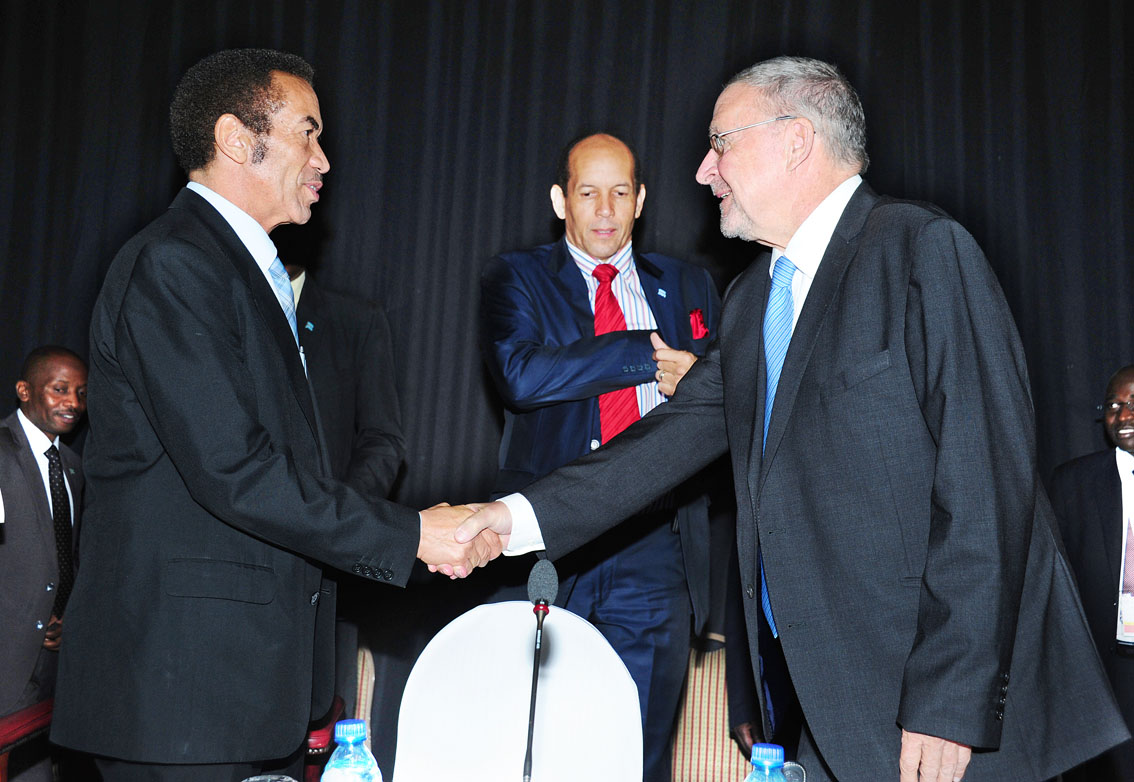
Wildlife crime has become an international problem, usually driven by people that have never lived close to the natural resources that they are exploiting, says President Lt Gen. Seretse Khama Ian Khama.
The President, who was addressing the Elephant Summit in Gaborone on Tuesday, December 3, said those engaged in illegal exportation and importation of wildlife would thrive, while those living in close proximity and dependent on these same resources would suffer endless opportunity costs.
President Khama said Africa’s elephants did not escape the challenge as they had increasingly become the focus of crime. He noted that, as trade became increasingly controlled by international networks of organised criminal, challenges at the national level also grew.
Environmental ministries, he said, were often overwhelmed, citing the need of collaboration, cooperation and commitment of other sectors of governments such as police, defence forces, finance, customs, the judiciary and foreign affairs to help address and hopefully overcome the increased challenge.
The growing trade in illegal ivory, he said, was a national issue, not sectoral , stating that for many of the African countries, it required leadership, commitment and direction at the highest political level to ensure that the necessary resources were made for a highly approach to law enforcement. President Khama said Botswana was proud that it was home to a healthy elephant population.
He observed that while Botswana had challenges in managing the impacts of elephants on their habitats and conflict with local communities, the country considered itself fortunate that illegal off-take had not yet become a serious threat to elephants.
He said the African range had joined forces, developed and committed to the African Elephant Action Plan, which provided a good framework for dedicated action to conserve the species, adding that some countries were ramping up enforcement, both in protected areas and at the ports and borders.
President Khama said CITES provisions were strengthened earlier in 2013 with the eight countries most involved in large scale ivory trade, developing and implementing concrete action plans which should be completed by June 2014.
He said despite the unprecedented level of awareness, the countries had not yet delivered the necessary response that kept pace with the pressures faced, “we have not come together here in Botswana to reinvent the wheel.”
The scale of illegal ivory trade, he said, had clearly increased, while in some places, the impacts of the trade might not be seen immediately on elephant populations due to shortcomings and limitations of monitoring abilities President Khama said Africa could escape from its current challenges by being able to sustainably utilise its natural capital.
He stated that the ever increasing world population, the need to feed and house all was putting an increasing pressure on all the natural resources.
President Khama said it was an inescapable reality that the ever increasing loss of ecosystems and services, exacerbated by the growing impacts of climate change, was putting lives and livelihoods of citizens at risk.
The Director General of IUCN Ms Julia Marton-Lefevre said it was essential to invest in protecting remaining wild areas and ensure that law enforcement was in place along the entire value chain, helping to secure adequate funding and equipment for those on the front lines of conservation.
Ms Marton Lefevre stated that the issue of organised crime in ivory trafficking must be addressed, and help to ensure that those responsible were apprehended and held accountable for their crimes, facing tough penalties, including seizure of assets, that would act as effective deterrents. ENDS
Source : BOPA
Author : Thandy Tebogo
Location : GABORONE
Event : Elephant Summit
Date : 03 Dec 2013
Related News
10 Jun 2026

10 Jun 2026