

Education builds resilience adaptability
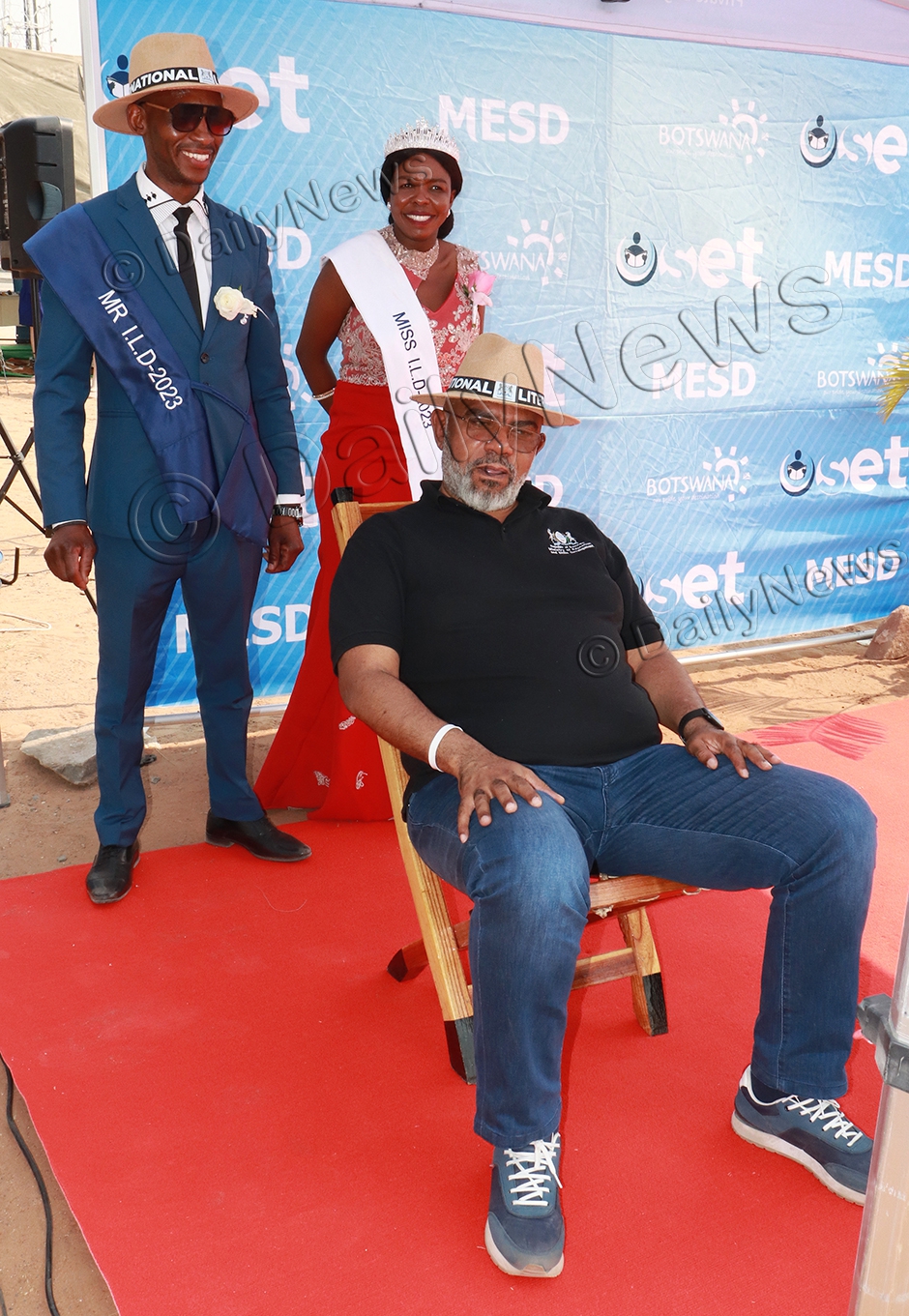
11 Sep 2023
Education builds resilience and adaptability in societies, Assistant Minister of Education and Skills Development, Mr Aubrey Lesaso said recentl y.
Officiating at the commemoration of the international literacy day in Ghanzi on 8 September under the theme: Promoting literacy for the world in transition, Building Literacy foundation for sustainable and peaceful societies, he said promoting literacy for the world encompassed not only functional literacy, but also digital, financial, human rights, and environmental literacies.
The literacies, underpinned development of sustainable and peaceful societies.
He said critical elements of prosperous societies, including strong international relations, robust human capital, and equitable resource distribution, all stemmed from effective governance.
Mr Lesaso said the Ministry of Education and Skills Development focused on enhancing human capital to boost economic productivity, political engagement and social ties, and had in place policies to drive achievement of Sustainable Development Goal 4 (SDG4).
“By Implementing the Educational Training Sector Strategy Plan (ETSSP 2015-2020), we are forging a modern, inclusive, and diverse knowledge-based economy as advocated for in the SDG4, Out of School Education and Training (OSET) plays a pivotal role in addressing the SDG 4.4 and 4.6 both of which promote adult literacy and vocational skills,” he said.
Mr Lesaso added that Botswana’s efforts in education were improving citing Early Childhood Care and Development, whose enrolment rose from 18 per cent to 33 per cent since 2015.
Access to primary education stood at 94.5 percent with a completion rate of 98.1 per cent while transition to junior secondary school was at 93.7 per cent with a completion rate of 94.1 per cent, according to Botswana Implementation Plan for SDG4, he said.
The assistant minister further said literacy rate had risen to 90.2 per cent (courtesy of Statistics Botswana 2014), adding this was one of the highest in Sub Saharan Africa. He said in recognition of education as the basis for sustainable and peaceful societies, the curriculum at basic education covered topical issues of Environment, Anti-corruption, Gender, Human Rights and political awareness, which were key builders of tolerance and peace among societies.
However full achievement of the SDG needed 100 per cent enrolment in basic education, which would soon happen as schools continued to undergo infrastructural development to cater for inclusive education.
He said such children, youth and adults who either did not complete standard 7 or did not receive any formal education form a section of Botswana’s population were being assisted through Out of School Education and Training for children (OSEC), Adult Basic Education Programme (ABEP) and Skills Training and Development (SDTP).
“Vocational and technical skills, alongside tertiary education, are focal points. Rapid skills centers and learning hubs are expanding.... Despite budget constraints, we are adapting to technological shifts, globalisation, and climate pressures, guided by strategic plans,” he said.
Mr Lesaso said despite limited budget there were on-going programmes and initiatives to match technological shifts, global integration and climate change. Such programmes and initiatives were guided by ETSSP 2015, Vision 2036 and spoke to Botswana’s Reset Agenda.
“These programmes cause us to introspect and change the type of education we provide and how we provide it,” he said, adding the ministry had a strong campaign for digitalised schools through Thutonet connectivity, which equipped individuals and families with knowledge, skills and values required for sustainable living.
Mr Lesaso said the government was connecting internet to village dikgotla, clinics, libraries and other village community centres, which would aid OSET learners.
He said there was need for all to embrace mindset change, as that would help to transform Botswana’s economy from upper middle income to a higher income country.
The assistant minister regretted that some people in Ghanzi were denied the opportunity to learn reading and writing as they were bound in private farms, and called for opening up of gates of such farms to allow people to have access to education.
Director-General of UNESCO Ms Audrey Azoulay, whose message was read by deputy permanent secretary for education (Support) Mr Kgopotso Ramoroka said literacy could liberate communities, enable everyone to integrate into society and strengthen participation in civic life.
She said there had been significant progress in terms of literacy in the last 40 years as 3.6 billion people learned to read and write raising the global literacy rate from 68 percent in 1970 to 85 percent in 2020.
However, the current situation was still rife with injustice and inequality, she said.
She regretted that at halfway point of the 2030 Agenda for Sustainable Development, 244 million school- age children were still not in school, 98 million of them in sub-Saharan Africa.
At the same time, 773 million adults still could not read and write, two thirds of them being women.
Giving the vote of thanks, Member of Parliament for Gantsi north, Mr John Thiite called for establishment of OSET college in Ghanzi north saying the region was lagging behind in terms of literacy.
Earlier in her welcome remarks, kgosi Annah Rankho of Ghanzi had called for called for change of mindset toward education saying education broadened one’s mind and subsequently helped one to tackle life better. Ends
Source : BOPA
Author : Mothusi Galekhutle
Location : GHANZI
Event : International literacy day
Date : 11 Sep 2023
Related News
28 Jul 2026
28 Jul 2026
MPs express differing views on student friendly

27 Jul 2026
Damaged Roads contributing to accidents
27 Jul 2026