


Re-engineered Ipelegeng progressing well
30 Aug 2023
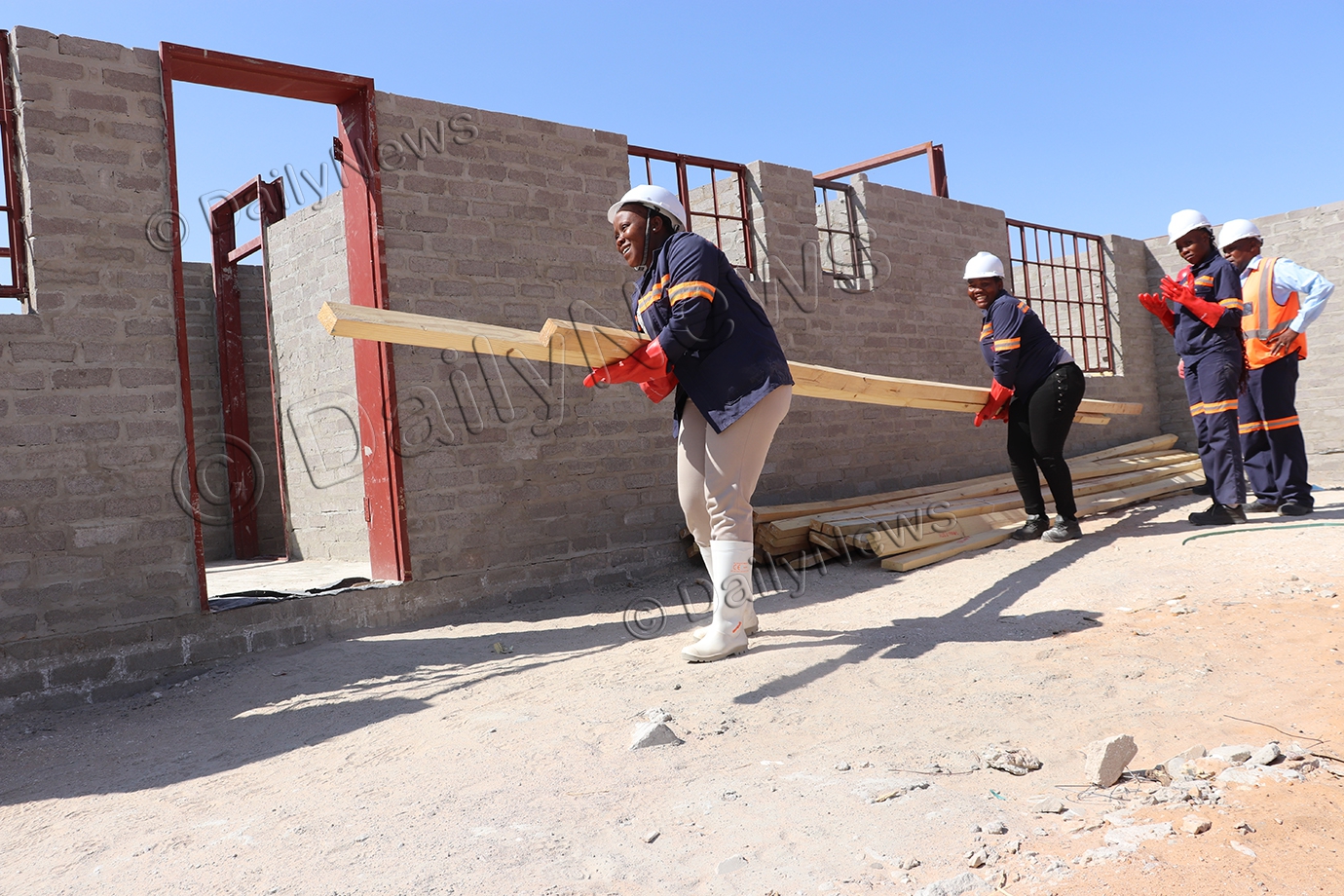
Implementation of the re-engineered Ipelegeng programme, through which beneficiaries are given practical skills, is said to be progressing well in Tsabong.
As part of the training programme, the trainees are currently involved in construction of a semi-detached house.
This follows government’s review of Ipelegeng programme, which directed that the programme be re-engineered and that the labour-intensive public works be improved to construct long term beneficial projects and offer skills transfer opportunities to beneficiaries.
Tsabong District Council’s Ipelegeng programme coordinator, Mr Patrick Oats told BOPA that since the ground-breaking ceremony in March, the trainees were doing well and the house under construction was currently at window level and had so far passed all inspection levels.
To date, 37 beneficiaries, 17 women and 20 men – have been trained in bricklaying, plumbing, electrification, roofing, and painting.
“They start with theory followed by intense practical work on site,” Mr Oats explained.
Mr Oats said the project, currently at window level, was expected to be completed by December.
He noted that government sought to achieve a knowledge-based economy, and that skills transfer through the revamped Ipelegeng programme would enable beneficiaries to become self-employed.
He disclosed that at the beginning, getting the trainees, who had been used to the old version of Ipelegeng, to adapt to the new expectations was a challenge.
It was then decided to inculcate a mindset change for them to industrious and deliver on time. To achieve this, the Botswana National Productivity Centre (BNPC) was brought on board to train beneficiaries on mindset change to inculcate a spirit of productivity.
Mr Oats indicated that besides BNPC, another institutional partner was the Construction Industry Trust Fund (CITF) because the idea is to have the trainees certified at the end of their training.
CITF assistant facilitator, Mr Gaolatlhwe Gopolang said he was impressed with the trainees’ progress because when the programme started most of them did not have even basic skills.
He explained that CITF had been engaged to work with councils to train Ipelegeng beneficiaries because its skills transfer application was different from other institutions as it used a competency-based modularised training, which was a learner-centred approach where teachers only demonstrate and offer guidance while the learner does most of the work. ends
Source : BOPA
Author : Calviniah Kgautlhe
Location : TSABONG
Event : Interview
Date : 30 Aug 2023
Related News
15 Jun 2026
15 Jun 2026
Twenty minutes that shook Gaborone
15 Jun 2026
Botswana considers diplomatic mission in Russia

15 Jun 2026
Leverage neurodiversity for innovation gains

15 Jun 2026