

Human capital governments priority - Minister Serame
29 Aug 2023
Human capital development remains a key policy priority for the government, hence the health sector has been allocated the largest share in terms of development spending.
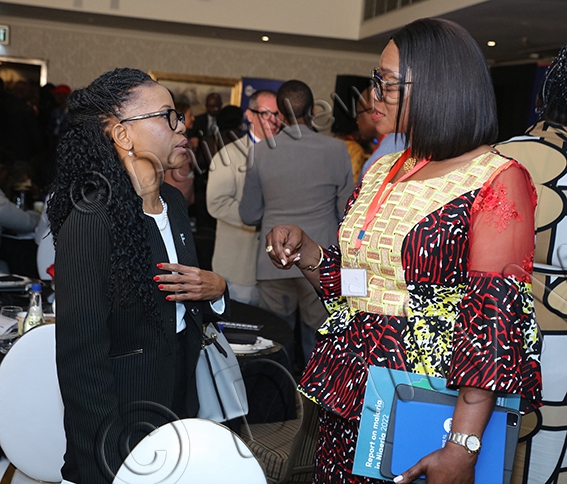
Minister of Finance, Ms Peggy Serame said during a panel discussion on financing for malaria at a side meeting at the ongoing 73rd session of WHO Regional Committee for Africa (RC73) session in Gaborone yesterday.
“Within health sector spending, the elimination of malaria remains an important national health agenda for Botswana as supported by a strong political will at the highest level and the availability of domestic and external financing,” she said.
Ms Serame said in the past five years, the budget for malaria had increased by 28 per cent representing about 0.3 per cent of the total funds allocated to the Ministry of Health during the same period.
“This level of expenditure somewhat reflects our success towards eliminating malaria in Botswana,” she said.
She further stated that government efforts were complemented by technical and financial support from strategic bilateral and multilateral partnerships from organisations such as WHO.
“Such partnerships have strengthened our efforts of ensuring that output is commensurate with the resources allocated,” she said.
Meanwhile, eSwatini End Malaria Fund chairperson, Ms Thandile Nxumalo said African countries needed a multi-sectoral approach to eliminate malaria.
“We need more public-private partnerships in order to advocate for more funding towards the eradication of malaria,” she said.
She said with eSwatini on the verge of malaria elimination, King Mswati III launched the first-ever national End Malaria Fund in May 2019 to close over P74m funding gap and achieve the country’s vision of eliminating local transmission of malaria by the end of 2022.
Ms Nxumalo said as a result, the country had achieved commendable progress in driving action and accountability from government, the private sector and civil society leaders, as well as increased funding and engagement from local communities.
“The idea was for every sector to take ownership over the fight the end malaria.
According to the latest WHO World Malaria Report, eSwatini recorded 268 cases and zero deaths from malaria in 2018 and is now classified as ready for malaria elimination,” she stated.
For her part, African Leaders Malaria Alliance, Ms Joy Phumaphi stated that it was up to all African countries to assume the responsibility of eradicating malaria in the region.
“We need to implement data-informed strategies for tailored interventions to ending malaria so that our continent can focus on other areas of development,” she said.
In Botswana, malaria is one of the major health risks, with over three-quarters of the country’s geographical space classified as at risk of malaria infection. ENDS
Source : BOPA
Author : Taboka Ngwako
Location : GABORONE
Event : 73rd session of World Health Organisation
Date : 29 Aug 2023
Related News

28 Jul 2026
Use local resources to drive rural economy
28 Jul 2026
MPs express differing views on student friendly

27 Jul 2026