Upgrade Trans-Kalahari Corridor - Official
02 Aug 2023
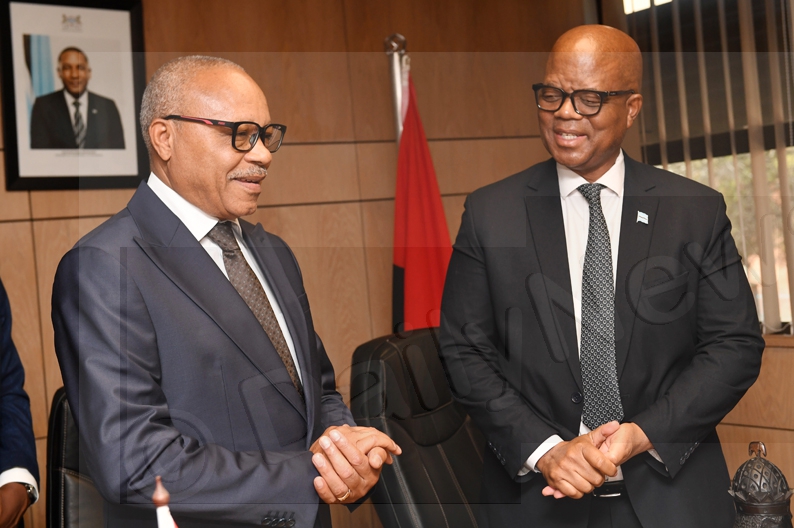
The time has come to upgrade the Trans Kalahari Corridor to a smart one, Trans Kalahari Management Committee (TKCMC), co-chairperson for Botswana, Mr Orapeleng Mosigi said.
He was speaking at the beginning of the 12th edition of the TKC Joint Law Enforcement Operation (JLEO) in Jwaneng on July 31.
Mr Mosigi underscored the need to create a conducive environment by improving the infrastructure and administration processes along the corridor in order to promote trade integration and increase economic activity for corridor member states.
He said development of any such corridor must be done with the aim to make to it smart. Similarly, already existing corridors must be upgraded to be smart.
“When we develop and operate our corridors, we need to ensure that we implement particular attributes so that the corridor can actually fit the definition of a smart corridor,” he said.
Mr Mosigi said monitoring traffic movements, providing real time information, use of information technology and adopting paperless trade for transport and logistic processes were some of the essential attributes needed towards attaining a smart corridor status.
Additionally, platforms such as the civil window, which would allow traders and transporters a single-entry point to fulfill all regulatory requirements, one stop border posts and weigh bridges along the corridor, as developed by the World Trade Organisation, World Custom Organisation and the Regional Economic Communities, would upgrade the TKC.
Even though there was some effort at implementing some of these platforms, members had to work hard to ensure more were in place for effective trade and movement facilitation.
“I see we have actually started with the one stop border post but we need to… [bring] all the other tools so we can facilitate movement along the corridor,” he said.
Furthermore, Mr Mosigi underscored the need for good road infrastructure that was safe and secure for the users.
He called on members to ensure that roads were well maintained to accommodate high volumes of traffic along the corridor.
He also said this called for timely response to challenges experienced along the TKC.
Mr Mosigi appreciated the good number of participants from the three member states for this year’s operation, saying it showed their commitment to address various obstacles affecting the corridor.
He also thanked them for their determination to align their objectives with the aspirations of their respective countries regarding regional integration and economic prosperity for their people.
For his part, the Trans Kalahari Corridor Secretariat (TKCS) executive director, Mr Leslie Mpofu acknowledged the growth of the JLEO, which managed the TKC as an additional trade route to other traditional ones in the region.
TKC members were committed to ensuring effective communication and connectivity through development of infrastructure for improved trade within the region and seamless movement between member states, he said.
However, he decried challenges such as inadequate infrastructure, long waiting times, inappropriate fees, cumbersome formalities and unclear rules which he said were some of the hindrances to effective trade facilitation.
The Trans-Kalahari Corridor includes the Trans Kalahari Highway, which provides a direct route from the port of Walvis Bay and Windhoek in central Namibia, through Botswana, to Pretoria in South Africa.
The road was officially opened in 1998.
The corridor also includes railway lines from Walvis Bay to Gobabis in Namibia, and from Johannesburg to Lobatse. Recently Botswana and Namibia resolved to expedite construction of a railway line connecting Gaborone to Swakopmund.
The railway line will become an important addition to the TKC. Ends
Source : BOPA
Author : Kehumile Moekejo
Location : Jwaneng
Event : JLEO
Date : 02 Aug 2023
Related News