

'You can donate blood for own later use'
06 Jul 2023
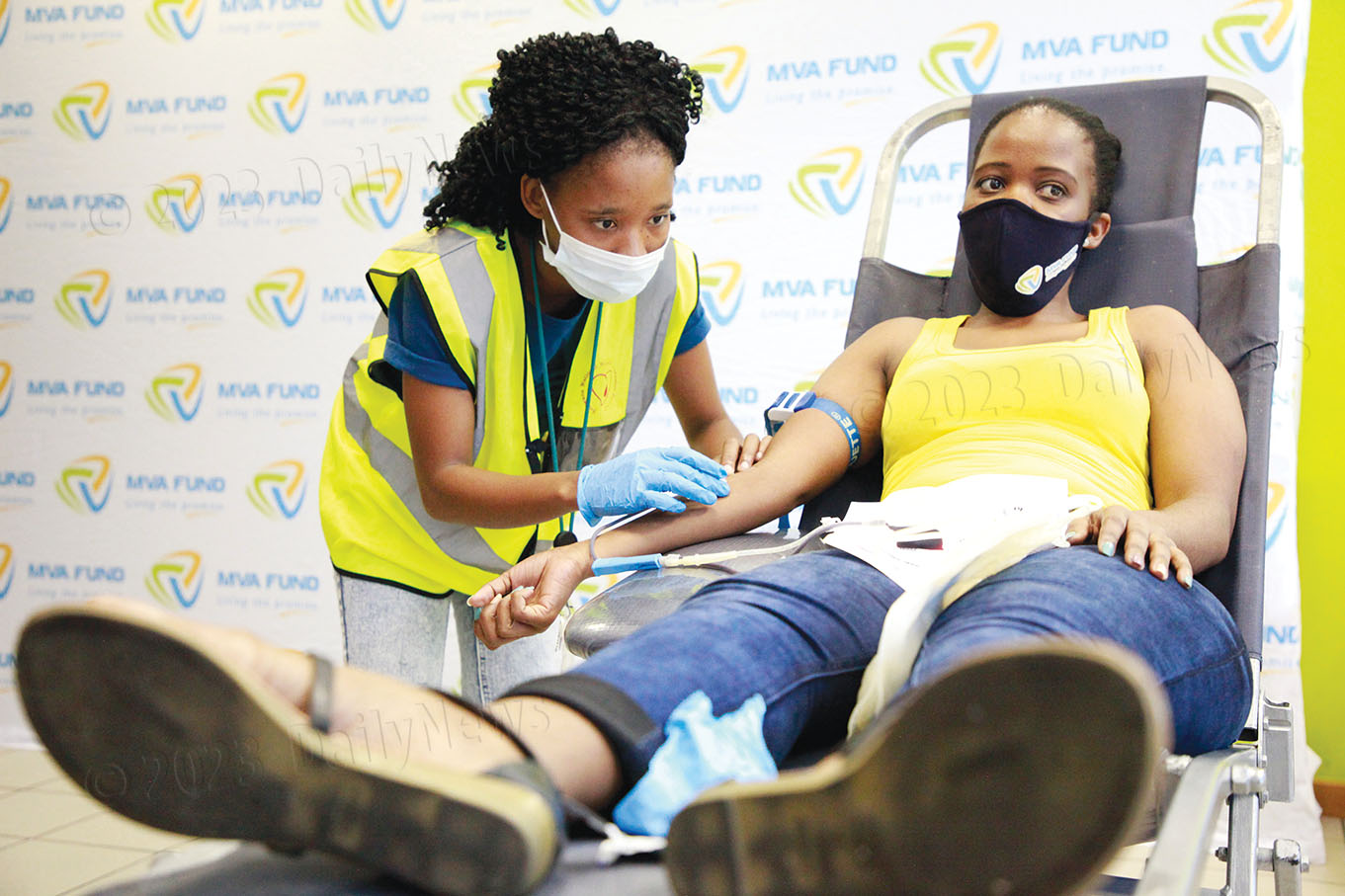
Blood, as the saying goes, is life. Seeing how indispensable it is to our existence we have had to find an ingenious way, called transfusion to ensure we keep it flowing in our veins and arteries.
The process saves millions of lives around the globe every day, but it is dotted with many snags, the major of which is shortage of blood.
In Botswana for example, the National Blood Transfusion Services say they only ever are able to collect a third of the blood they need in a month. This month, according to Chief Registered Nurse Mr Thabo Majane, they collected only 14 199 against a target of 45 000 pints, which translates to a whimpering 31 percent.
Dwindling numbers of donors appear to have put paid to any hopes of ever reaching the target, and it is a race against time as scientists try to find other ways to replace blood -including attempts to create it and its components.
A glimmer of hope lies in donating your own blood so it may be infused back into you when needed, a process that is otherwise called autologous or homogeneic transfusion - as opposed to allogenic, where compatible blood from, often a total stranger, is infused into you.
It is a glimmer of hope alright, but it seems to fade when it is placed on the reality table.
“It not everyone who can donate their own blood,” says Autologous Blood Donation Unit head at Princess Marina Hospital, Ms Kelebogile Molatlhegi.
There are a number of reasons, chief among which is the fact blood can only be stored for 42 days in terms of local and WHO policy.
And no one really needs to donate blood for re-transfusion, unless they can see into the future and tell when they are going to need the blood, she says.
“So, no, we cannot have that as an option, save under peculiar circumstances,” she says.
Those peculiar circumstances include donation for obstetrics procedures, where much blood may be needed during childbirth and operations relating to reproductive organs. Ms Molatlhegi says: “We encourage especially pregnant women, to donate blood for themselves at 34 weeks since a good number of them end up in the operating room and needing lots of blood.”
Generally, she says, they encourage patients going for operation, especially those with comorbidities, such as high blood pressure, diabetes and asthma to donate own blood for re-transfusion.
While autologous blood donation is done under special circumstances, it is not done in isolation of established procedure, and will therefore, not happen automatically.
For example, she says, you will not be allowed to donate if found to have any infectious disease.
“In particular we’re are looking at syphilis, Hepatitis B and C, as well as HIV,” she says.
This is because all collected blood, regardless of whether it is for re-transfusion or transfusion to someone else, must go through the National Blood Transfusion Services blood bank, where it will be processed, then stored.
She says: ‘You cannot always rule out human error despite all the precautions taken, such as unique labelling and so on and so forth. So, to avoid mix ups, our regulations, as well as those of the WHO do not allow infected blood into blood banks.”
If you tick the ‘uninfected’ status boxes, you will need to weigh no less than 50kgs and no more than 110 kgs. Your age must also be between 10 and 70 years.
You can donate anytime from three to five weeks before your operation, she says.
So, until humanity can find a truly effective substitute for allogenic blood transfusion, we shall still go back to plead with donors to please give us their blood.
They are an important constituent and would do well to take care of those bodies, because, they are the reason why many are alive today.
She explains that if their bodies are in bad shape, they will not be able to donate. Urges Ms Molatlhegi urges the people :
“We remain indebted to them, and I’d encourage them to practice good sexual behavior, have fitness routines, take meals with high levels of iron such as green leafy vegetables and liver. And they should take lots of water”. Ends
Source : BOPA
Author : Gaolethoo Kgatitswe
Location : Gaborone
Event : Interview
Date : 06 Jul 2023
Related News
29 Jul 2026

29 Jul 2026
Artefacts repatriation drive paramount

29 Jul 2026