Partnership sustains research
27 Nov 2013
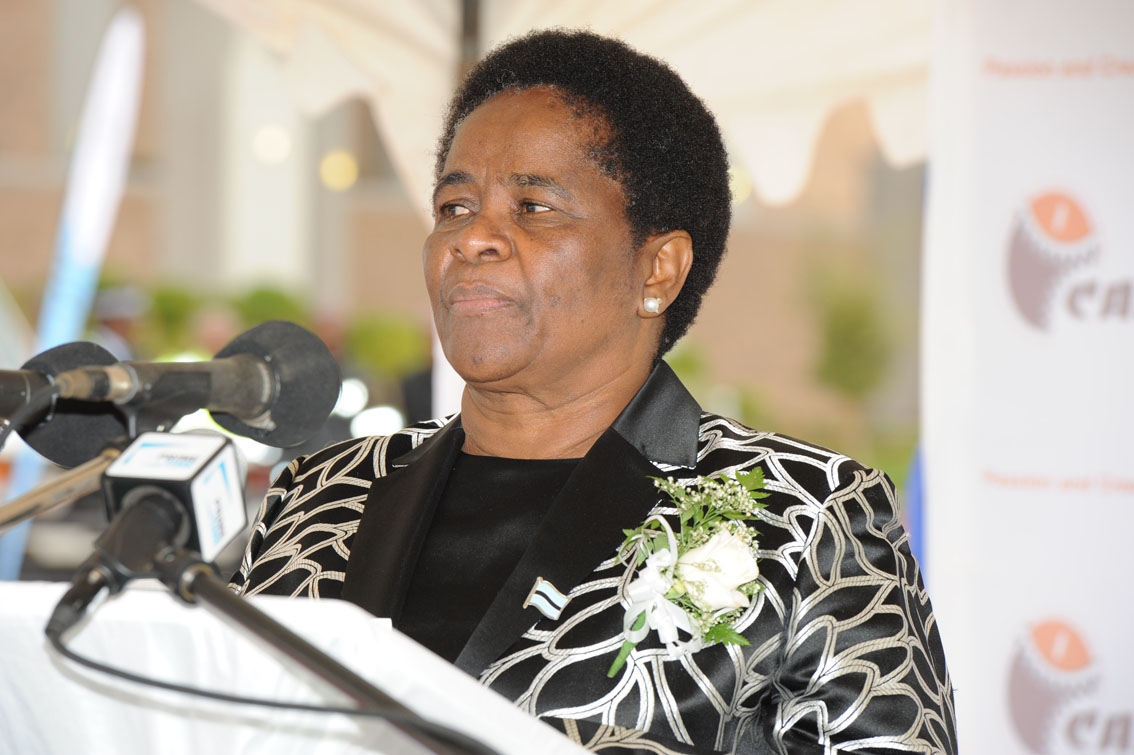
Partnership and collaboration with private sector and industries is paramount to the sustenance of research, says the Minister of Education and Skills Development, Dr Pelonomi Venson-Moitoi.
Officially opening the Africa Science Technology and Entrepreneurship Systems Support workshop hosted by Botswana International University of Science and Technology (BIUST) in Palapye this week, Dr Venson-Moitoi said a robust policy and regulatory environment was aided by a thriving scientific, research and entrepreneurship base.
She said therefore, Botswana was prepared to collaborate with various institutions to create a solid and sustainable scientific research base for advancement of its socio-economic development. “Botswana is eager to make its mark by meaningfully contributing to scientific research to both national and international technological advancement,” she said.
She said while very little was known about this country in the area of research in science and technology, the launching and running of this workshop in the country certainly marked the beginning of a new dawn.
She applauded BIUST for the initiative, adding that the initiative ushered a new era in the history of the country’s involvement in the global scientific research and technological activities. Furthermore, Dr Venson-Moitoi said education and skills development remained top priority for government as evidenced by the consistent allocation of about 20 per cent of the country’s national budget to the sector.
“Our priority as government is to build the required capacity in human capital and the skills needed to operate a modern society. We recognise the role of scientific research and technological advancement as we seek to position our country towards global competitiveness,” she said.
The current global competitiveness report ranked most of the Sub-Saharan African countries very low, the primary weaknesses related to the human resource base and technological uptake. Botswana, she said was ranked 120 out of 148 countries on the indicator of availability of scientists and engineers.
She noted that for an upper middle income country in transition from a factor-driven to an efficiency driven economy, human resource capacity was critical.
In addition, she said tertiary education served as the major driver of science and technology, as such a need to improvement teaching of science and mathematics subjects at primary and secondary levels.
The quality of science and mathematics in teaching, she said was determined by the competency and caliber of teachers developed. “We are therefore seeking solutions which will also bring about a paradigm shift in the attitudes of both students and parents,” she said. ENDS
Source : BOPA
Author : Kgotsofalang Botsang
Location : PALAPYE
Event : BIUST workshop
Date : 27 Nov 2013
Related News
10 Jun 2026

10 Jun 2026