

Drug addiction treatment specialists graduate
25 Jun 2023
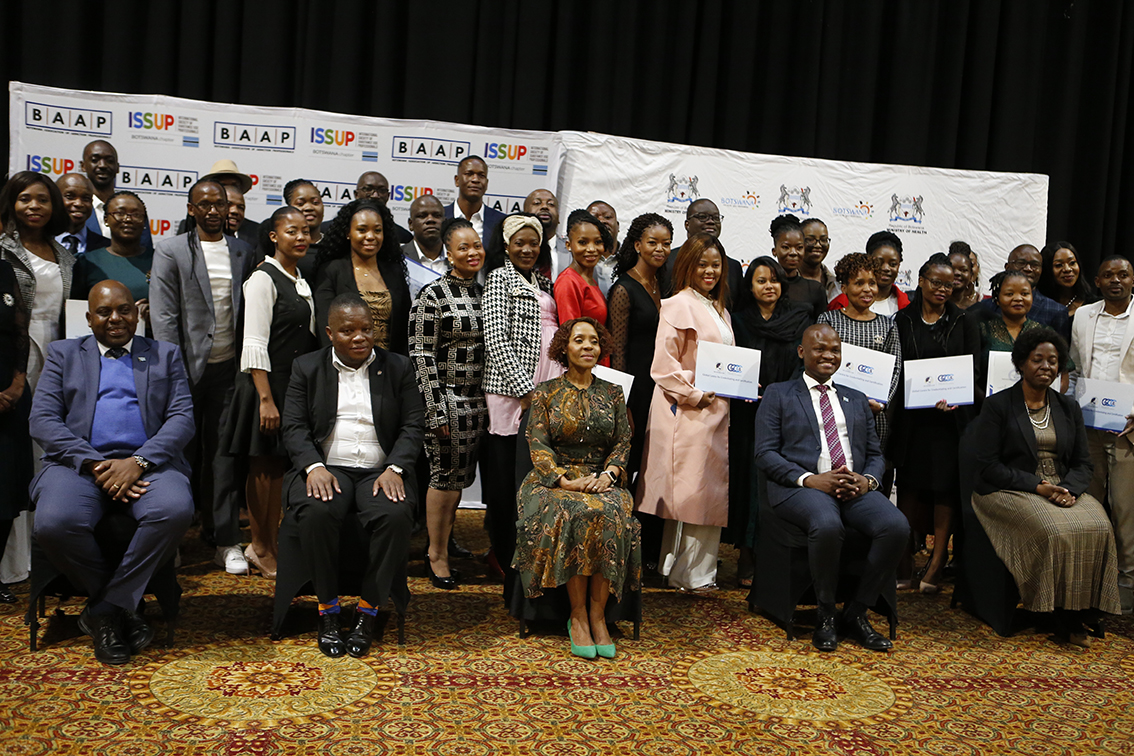
The newly graduated certified addiction treatment specialists, alias grandaunts, are expected to assist government in fighting drug and substance abuse that continues to grow, particularly among young people in the country.
In a keynote address at the Universal Treatment Curriculum (UTC) graduation ceremony on Wednesday, First Lady Ms Neo Masisi said Botswana, like other countries, continued to experience a growing and worrying scourge of drugs and substance abuse. She urged the 33 grandaunts to make a difference and lasting impact as they assisted individuals and communities and in turn curb drug addiction problem.
“We know that it is demanding to embark on training, while working, but we congratulate you for achieving this milestone. Consider this an important beginning as we consider you to be well equipped addiction professionals,” Ms Masisi said.
She applauded grandaunts for their determination and commitment in successfully completing the six-week UTC training on addiction treatment, which was funded by the Bureau of International Narcotics and Law Enforcement Affairs and facilitated by the Drug Advisory Programme of the Colombo Plan.
She also commended the Ministry of Health as well as the Ministry of Local Government and Rural Development for affording their staff opportunity to enrol in the UTC training.
For his part, Minister of Health, Dr Edwin Dikoloti said the ministry also took pride in the grandaunts’ achievement and was happy that they would help in addressing challenges of substance abuse in the country, as internationally accredited addiction professionals. Dr Dikoloti also thanked Ms Masisi for her keen interest and commendable mission in the fight against substance abuse in the country.
Giving a global perspective on the world drug problem, World Health Organisation (WHO) country representative, Dr Josephine Namboze explained that psychoactive drugs or substances such as alcohol and nicotine, belonged to a group of substances that affected mental process including perception, consciousness, cognition, mood or emotions.
For that reason, Dr Namboze said such substances were called habit forming drugs or substances, because they had the capacity to induce dependency or addiction. She expressed concern that such were often misused for their addictive properties ‘where or when they are used, including for medicinal purposes, they are strictly controlled and regulated by law.’ Globally, she said alcohol contributed to three million deaths per year and was responsible for 5.1 per cent of the global burden of disease.
She therefore warned that harmful use of alcohol as well as drugs, and addictive behaviours had devastating effects on individuals, families and their communities and also had enormous socio-economic impacts at national and global levels.
“Whereas we are used to dealing with issues around alcohol, nicotine and other substances, we are seeing an emergence of what is shaping up to be an opioid epidemic in parts of the world,” she added. To address the problem, she said WHO was working with the United Nations Office on Drug and Crime, partners, experts and member states to continually develop evidence-based strategies, plans, technical guidance, policy and regulatory options.
Additionally, she said there was a WHO expert committee on drug dependence which met annually to review the public health impact of psychoactive substances and make recommendations to guide usage, control and policy to protect society and public health.
On one hand, Botswana Association of Addiction Professionals (BAAP) acting chairperson, Mr David Mangwegape explained that their organisation aimed to professionalise the field of alcohol and substance use prevention and treatment by supporting the development of a professional workforce.
“The BAAP was formed to specifically host the International Society for Substance Use Professionals (ISSUP) Botswana Chapter, as it became a member of ISSUP in October 2021,” he said. Therefore, Mr Mangwegape said having well-trained and accredited professionals on addiction treatment would help achieve ISSUP and BAAP’s mandate as they would help to mitigate the harm caused by drugs and substance abuse within communities in the country. Mental health senior consultant, Dr Morrison Sinvula said addiction was a disease and its management required concerted efforts.
Dr Sinvula encouraged both the health and local government and rural development ministries to ensure that they worked together with community leadership, more especially Dikgosi, in addressing drugs and substance abuse to try nip the problem in the bud and root out the evil that had befallen the nation.
Meanwhile, the basic level UTC consists of eight courses that cover the broad spectrum of addiction treatment.
The content and methodology of the UTC training series is designed to ensure that addiction practitioners develop a balanced perspective of the principles relating to both the science and art of addiction treatment.
Each course is intended to enhance the knowledge, skills and competencies of addiction professionals, as well as promote evidence-based practice to enhance service delivery and treatment outcomes. Moreover, each course has been piloted to ensure outstanding quality of content and further identity and address existing gaps prior to its application by training. ENDS
Source : BOPA
Author : Lorato Gaofise
Location : Gaborone
Event : Graduation
Date : 25 Jun 2023
Related News
29 Jul 2026

29 Jul 2026
Artefacts repatriation drive paramount
29 Jul 2026