

Botswana privileged to be part of astronomy project
19 Jun 2023
Botswana is privileged to be an integral part of the largest ground-based astronomy project ever undertaken, the Square Kilometre Array (SKA), which will consist of a network of thousands of radio telescopes that will be spread across Africa and up to a million antennas in Australia with a collecting area of one square-kilometre.
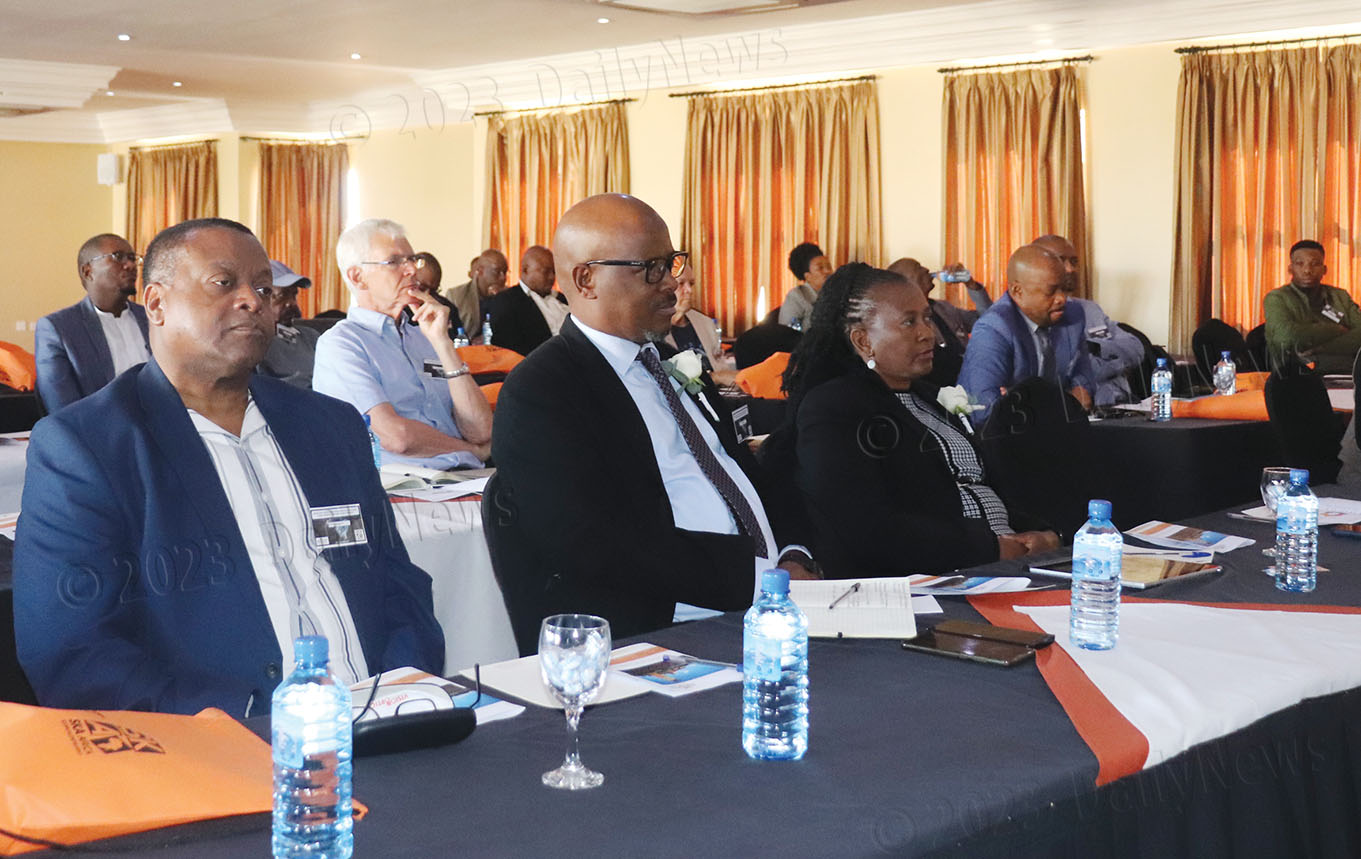
Deputy permanent Secretary in the Ministry of Communications, Science and Technology Ms Tshegofatso Zwikula said this on Friday in Palapye at the Botswana International University of Science and Technology (BIUST) stakeholder workshop to update on the national astronomy development plan African VLBI Network (AVN) and Square Kilometre Array (SKA).
Ms Zwikula said the Karoo region in South Africa will host the core of the high and mid frequency dishes, ultimately extending over the African continent (including Botswana), whereas Australia will host the low-frequency antennas.
The SKA represents the largest Earth-based science project ever undertaken by mankind and will enable astronomers to monitor the sky in unprecedented detail and answer some of the most pressing scientific questions of all time.
She said to develop human capital in Africa for the eventual construction, operation, and scientific deployment of the SKA, South Africa has initiated a partnership with eight African countries such as Botswana, Ghana, Kenya, Madagascar, Mauritius, Mozambique, Namibia and Zambia to build the African Very Long Baseline Interferometry Network (AVN) which involves the construction of a single large radio-telescope in each of the eight African SKA partner countries.
These radio telescopes will form part of a network which will collectively function as one single instrument via Very Long Baseline Interferometry (VLBI), while also allowing science to be performed by the individual telescopes, she said.
In 2010, the government represented by Mr Jonny Swartz (then Minister of Infrastructure Science and Technology) signed to be a partner country for the international SKA by ratification of an agreement in support of South Africa’s bid to be the host of the project as an African consortium.
“We have come a long way as a country in both Human Capital development and infrastructure development,” she said.
However, Ms Zwikula said the government has stayed true to the commitments made then and continues to provide funding support to the astronomy initiatives especially at BIUST as the national coordinator. This year alone, she said, P18 m has been set aside to support staff recruitment, power and fibre provision to site, and the necessary site related studies.
She said the government will soon announce the approval of the National Space Science and Technology Strategy, formation of the National Research Fund to augment the national astronomy development agenda.
Ms Zwikula said over the past 50 years, human activity in space has produced societal benefits that improve the quality of life on earth and the first satellites, designed to study the space environment and test initial capabilities on earth orbit, and contributed critical knowledge and capabilities for developing satellite telecommunications, global positioning, and advances in weather forecasting.
She said the benefits for any nation to pursue the space science and technology agenda are limitless.
“We hope as a government, to have generation of scientific knowledge, diffusion of innovation, improvement of our day-to-day lives, and sparking youth’s interest in the area of science, technology, engineering and mathematics (STEM) among others,” she said.
With President Dr Mokgweetsi Masisi’s reset agenda in mind, Botswana has a great astronomy potential opportunities that place it in an almost unique position at the start of the 2020s.
These include geographical and meteorological advantage for astronomy due to its exceptionally clear skies, low humidity, and high, flat, and very extensive plateau and the low population density means that Botswana has dark skies, largely free from light pollution, and in the radio, relatively sparse sources of radio interference from human activity.
Ms Zwikula also said that there was potential to build on the nation’s well-developed tourism industry to add high-value offerings in astro-tourism, taking advantage of exceptionally clear and dark skies and planetary analogue sites. She urged universities in the country, state- enterprises and all making the astronomy ecosystem to begin to take their place to drive the market and not be market driven.
‘Universities must undertake ground- breaking research in order to remain relevant and attractive to partnerships, to students and the market, the amount of knowledge and findings therein would lead to new economic pursuits and new markets,” she said.
The Vice Chancellor for BIUST Prof. Otlogetswe Totolo said space exploration initiated the economic development of countries that today, year after year, delivers high returns for invested funds in space.
He said the challenges of space exploration have sparked new scientific and technological knowledge of inherent value to humankind, leading to better understanding of the universe and the solar system in which one lives.
He gave examples of Chile and Thailand as countries who have given their economy a boost using astronomy.
Prof. Totolo said the government thus has the aspiration of building expertise, capacity, and infrastructure in order to harness space science and technology as one of her new engines of growth for the future as a significant part of its drive to move towards a knowledge-based economy in line with Pillar 1 of Vision 2036.
He said BIUST was established in 2006 as a transformative entity that was supposed to lead the country’s transition from a mineral-led to a knowledge-driven economy through undertaking cutting edge research in science, engineering, and technology. The 'BIUST Transformative Strategy Plan 2023-28' is a vehicle and pathway through which this transition is to be realised, he said. ends
Source : BOPA
Author : Portia Rapitsenyane
Location : Palapye
Event : Workshop
Date : 19 Jun 2023
Related News

29 Jul 2026


29 Jul 2026
Artefacts repatriation drive paramount
29 Jul 2026