


Lobatses diverse and bold proposals
09 Feb 2022
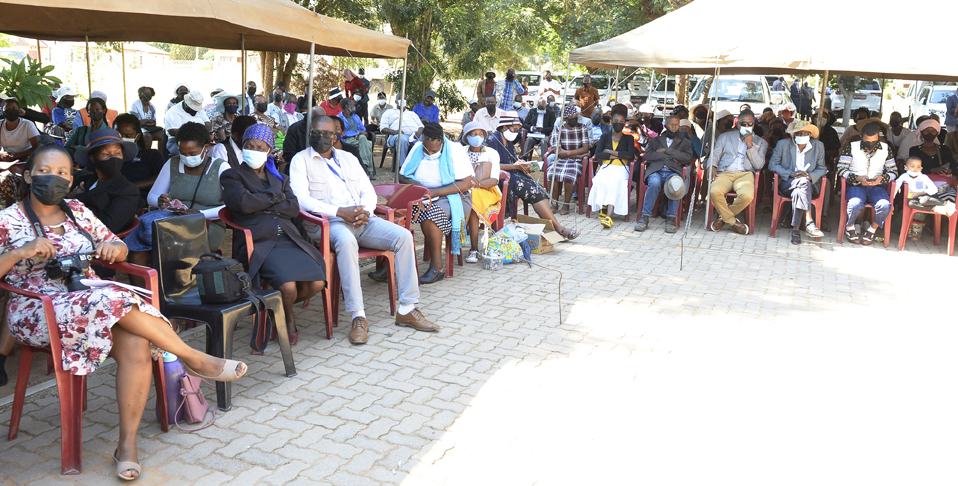
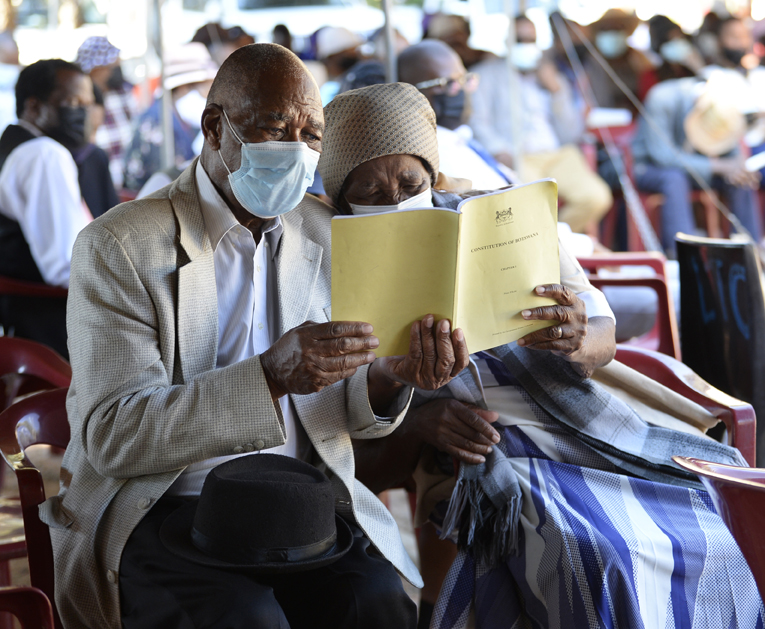
The Presidential Commission of Enquiry into the Review of the Constitution of Botswana took its public consultations to Lobatse on yesterday morning.
The community of Botswana’s oldest town turned up to Peleng Kgotla, initially in modest numbers, to express their views.
A complaint by Peleng Customary Court president Ms Tshegofatso Setumo that the turn-out was low despite the announcement having been made in time, seemed to have dispatched the fleet-footed messenger of the gods Hermes, to drag the ones still at home to the meeting. By the time the commission chairman, former Chief Justice Mr Maruping Dibotelo finished explaining the commission’s mandate, all the empty seats that the Kgosi had complained were unoccupied had been taken, with a few people standing.
And when it was their turn to have their say, the residents took to the podium with typical township gusto.
Ms Godiraone Mokgweetsi suggested that age-old pension qualification age should be lowered to 60 years instead of the current 65.
“A e re hela jaaka mogolo a chaisa mo tirong, e bo e re kgwedi e e latelang a ba a amogela tantabala,” she said, explaining that was necessary because the five years between 60 and 65 years meant some people became destitute as they had no means of livelihood.
She also proposed that the constitution should provide for children to inherit parent’s places in plot allocation waiting lists. She said failure to do so meant the same misery of being without a plot that dogged their parents would now be visited upon them, and the chain may remain unbroken for a long time.
A roar of applause went off as Mr Moatlhodi Baaitse called for direct election of the president
“A Tautona re mo itlhophele hela jaaka re itlhophela mapalamente,” he said.
Mr Baaitse also suggested specially elected Members of Parliament (MPs) should be at ratio 60:40 with the ruling party having more nominations.
He also recommended that magosi should be given the power to distribute land and the land board only endorse.
He said empowerment of dikgosi should extend to presiding over stock theft cases, as they understood Setswana law better.
“Batho ba re heleditse dikgomo, mme ha batho ba sena go re jela dikgomo, dikgosi ga di seke ditsheko tseo; di isiwa ko diagenteng; Agente o ya go go raya a re o lele jaaka kgomo ya gago, o bo o latlhegelwa ke kgang,” meaning rustlers often hired lawyers who played on technicalities to make livestock owners appear foolish thereby losing their cases.
Bringing the matters before dikgosi would allow the people opportunity to present their cases in a language they understood, and perpetrators would not go off scot-free, he argued.
Mr Gobusakgabo ‘Lobatse’ Baabina recommended that the constitution should be translated to Setswana for everyone to understand it.
“Constitution lo e bua jaana a kwadilwe ka Sekgoa, jaanong a ga lo kake lwa baakanya gore constitution e, e ye go nna le ya Setswana, gore Motswana mongwe le mongwe a e tlhaloganye?” he asked by way of proposal.
Mr Baabina also called for shutting down of land boards, which he said were failing to distribute land. They should be replaced with magosi who were doing a good job before their power was usurped by the same land boards, he said.
When talking about armed robbers and murderers, Mr Baabina said the constitution must prohit bail for suspects.
“Gore e re motho a mpolaetse mosadi kgotsa ngwana, ke bo ke mmona a tsamaya hale, go twe o hilwe bail, a go ye go khanselwa,” he said.
Mr Baabina dismissed suggestions that the president should be directly elected, saying it would be a waste of time. He also proposed that once a kgosi decided to join politics, then he should remain a politician and not try to go back to bogosi when it became convenient for him.
“Let politicians be politicians and dikgosi remain dikgosi,” he said.
Mr Olefilwe Kegakilwe expressed concern about the citizenship Act, which he said was the source of many people’s misery.“ We sojourn to other countries where we find wives who we bring home. Try and apply for citizenship, and you will – as it is the case currently – wait for more than 10 years. It is very expensive for someone coming from as far as Goodhope-Mabule to be travelling to immigration offices only for follow-up of their citizenship application for more than 10 years. Please let’s look at this issue as it may force those of us who are residents of border villages to cohabit,” he said.
Mr Zanthaz Diphoko proposed that boralekgotla in towns should be paid as they did a lot of administrative work on behalf of court presidents, so much so they did more work than their paid counterparts in villages.
“Ha gongwe kgosi o tswa Gammangwato, mme e re ka weekenda o ya gae, mme rona mo Lobatse re sale re tshwere mathata go baakanyetsa phitlho,” he said.
Mr Gatogang ‘Matlhola-adi-bona’ Pandor proposed that retiring presidents should not be given too many benefits as they would have retired and become ordinary citizens.
He spoke against ‘recycling’ of retired civil servants through renewal of their contracts or hiring them elsewhere within the public service, saying instead young people should be hired into those positions.
“ Mebereko ga e yo, a go neelwe banana. Ha a heditse a ye go lema kgotsa a ye go itirela matshelo,” he said.
He further proposed that retirees should be given their entire retirement package and not only a fraction as a lump sum.
“A neelwe madi otlhe a ye go itirela matshelo,” he said.
He suggested, amid applause, that presiding officers in matters of corruption be contracted from other countries as local judicial officers tended to free many accused people, “even where it is clear” that they were corrupt. Besides also calling for direct election of the President, Mr Abdul Kader Badat, popularly known as Rapula, complained about the Citizenship Act, which he said discriminated against Botswana-born children of expatriate parents.
“Let children born in Botswana be citizens of Botswana without being discriminated against,” he said, adding such discrimination was apparent in the National identity card where those born to foreign parents had the letter ‘F’ for ‘foreigner’ inscribed on it while those born to Batswana parents had a ‘D’ to show their were ‘domestic’.
Like other speakers before him, Mr Badat said the constitution should prescribe direct election of the President. He further said the constitution should allow for recall of MPs and councillors who performed poorly in their assignments.
“Political representatives who fail to deliver should have their terms cut short. If the MPs or councillors are not working, we should go for elections again because we want service delivery. We need efficiency in service delivery,” he said, amid a roll of applause.
For his part, Mr Bafo Monakwe called for the constitution to prescribe establishment of a panel responsible for appointment of heads of oversight institutions. Mr Monakwe further called for removal of section 41 that proscribes prosecution of a sitting president.
He said a President was human, and should be taken to court where there were indications he or she had broken the law. He suggested that council elections should be the responsibility of the Independent Electoral Commission, including issuing of the writ, and not the minister of Local Government.
In fact, council positions should be removed altogether from the ministry of Local Government, he said. Mr Monakwe also called for establishment of a constitutional court.
In supporting the call for direct election of the President, Mr Andrew Gondo suggested that the person who became head of state should have 51 percent of the popular vote. Further, that person must be supported by at least 10,000 people to qualify as a candidate.
Mr Gondo said the constitution should stipulate that Parliament must approve nominations of cabinet ministers. As for specially nominated MPs he said the practice should be maintained, but they should “be chosen from disadvantaged groups such as people with disabilities, women and youth,” he said.
Mr Gondo added that all indigenous languages should be designated official tongues by the Constitution. Furthermore, he said, access to information should be a right under the constitution. He also argued access to housing should be recognised as an inalienable right under the constitution.
Ms Caroline Lesang called for the Constitution to prescribe appointment of cabinet ministers outside Parliament.
Ms Lesang also proposed that the new constitution should provide for a recall of the president. Moreover, it should recognise Local Government Authorities, she said.
“The President has unlimited powers at the moment and cannot be shaken by anyone,” Mr Bobby Raphala as he proposed that there be a limit to presidential powers.
However, Mr Gobusakgabo Baabina said the status quo regarding election of the President should be maintained. He said political parties would waste a lot of time and resources in the process of finding candidates. Mr Baabina was also of the view that the constitution should give dikgosi powers to allocate land. He also said the Constitution should forbid bail for murder suspects. Further, he said, the law must force dikgosi to relinquish their chieftaincy if they wanted to join politics.
Mr Ephraim Mathambo called for the constitution to establish an industrial court of appeal.
He proposed that counting and releasing of general election results should be done at polling stations and not at aselected central place, as anything could happen along the way.
While she wanted direct election of the President, Ms Mmopiemang Selabe suggested that the constitution must do away with automatic succession.
Mr Percy Masimolole called for repeal of Tribal Territories Act, which he said failed to treat citizens as equals.
“No tribe should be treated as senior to the other,” he said.
Mr Molao Kenapuo proposed that the law should allow for children aged 18 to be given plots, adding it was not healthy for a parent to have several grown children all staying in the same house. He also called for retirement age to be wound down to 60 years. Mr Elias Rantleru called for development of all languages.
“While we did well to have a language that united us as a nation, the time has come for us to encourage everyone to learn at least two other languages,” he said.
Mr Rantleru also called for the constitution to treat all citizens as equals. “Our constitution should remove any suggestion that one tribe is subordinate to another. Let each tribe have its own kgosikgolo so its dignity is not questionable,” he said.
When thanking residents for their contributions, Vice Chairman of the Commission Mr Johnson Motshwarakgole assured residents that their views would be submitted to President Dr Mokgweetsi Masisi. The Commission will continue holding consultations in different parts of the country until September, he said. ENDS
Source : BOPA
Author : Jeremiah Sejabosigo
Location : LOBATSE
Event : Constitutional review Commission
Date : 09 Feb 2022
Related News

07 Aug 2026
Xiplomacy Hosting the world building the future
07 Aug 2026
Xiplomacy Pursuing the greater good for all
06 Aug 2026
Gaolathe inspires learners to aim high
06 Aug 2026