


Batlokwa want special status for Bogosi
06 Feb 2022
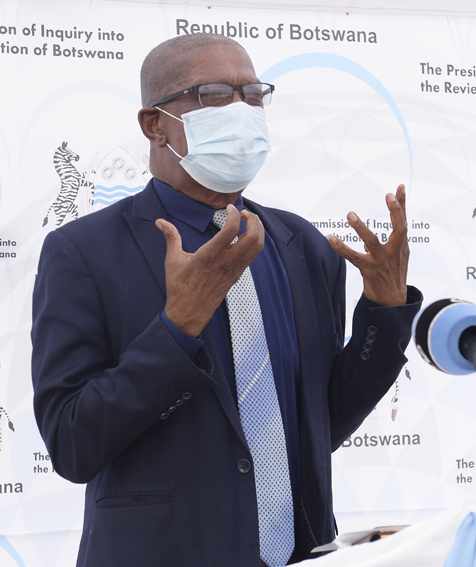
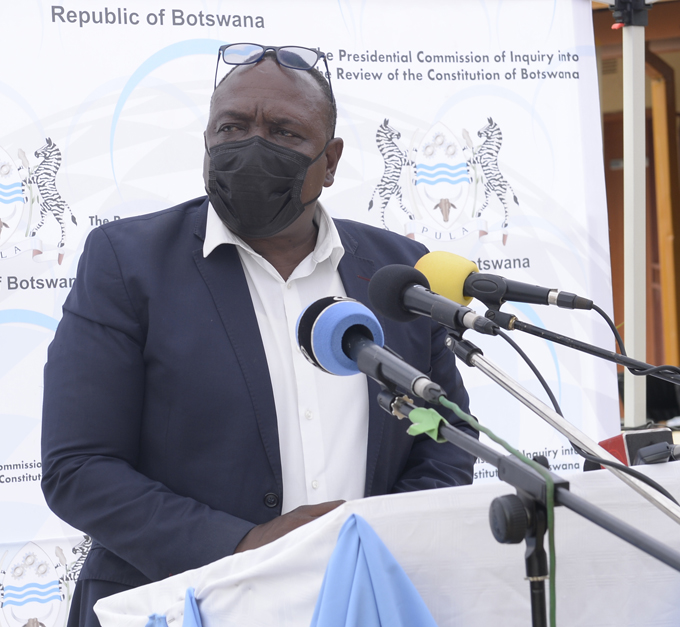
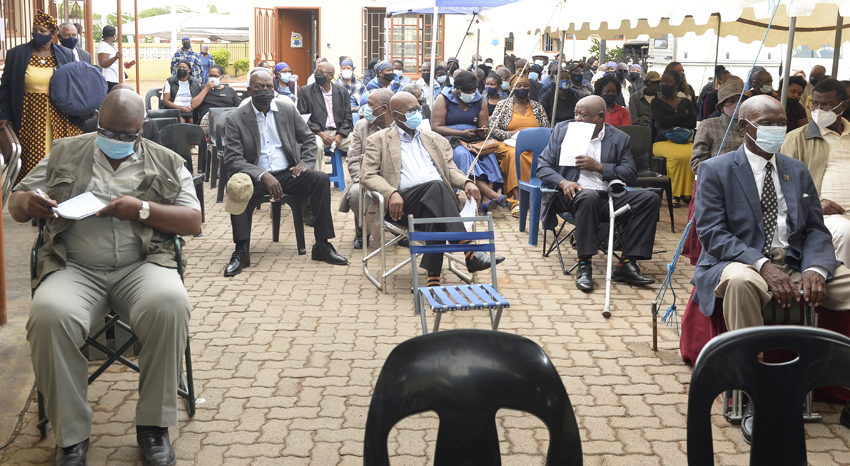
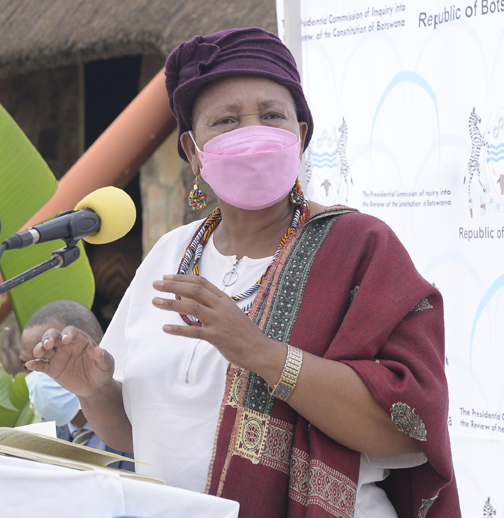
The bogosi/land issue once again came up as the Presidential Commission of Enquiry on the Constitution of Botswana met with Batlokwa on Friday.
To get the ball rolling was Batlokwa deputy chief Kgosi Michael Gaborone, who in his welcome remarks complained that magosi had been dispossessed of powers to deal with land issues.
“Lefatshe le e kare ke kwa mmapereko. Ga re na boitsetsepelo mo go lone ka dithata di tserwe mo dikgosing. Ka nako ya Mmamosadinyana, lefatshe le ne le abiwa ke kgosi le morafe wa yone. Gompieno ke kwa mmapereko, go a phakiwa,” he said, meaning the current land allocation system under land boards had brought about a lot of confusion, where there was even hoarding of land, which did not happen under protectorate government, when magosi and the tribe were responsible for land distribution.
Kgosi Gaborone said the land board system failure was so bad that people aged while they waited to be allocated plots.
“Batlokwa ba bangwe ba gaufi le go swa; ba na le dingwaga di le bo 59, ga ba na plot e ba ka e bitsang ya bone,” he said.
He argued the only solution was to give the land back to the tribe for its administration, design and distribution. That way, there would be no ambiguity about who to blame in the event things went wrong.
Kgosi Gaborone also complained about the diminished standing of dikgosi who he said were treated like servants.
Such was the confusion that the institutions of culture and bogosi could be found scattered across government.
“Re kgaogantswe makgamukgamu…ba bangwe ba ko culture, ba bangwe ba ko Office of the President, ba bangwe ba ko local government,” he said in relation to the fact that magosi and cultural issues were housed in various ministries across government, which created a lot of uncertainty and incoherence.
To that end he called for creation of “a ministry of Ntlo ya Dikgosi”.
Kgosi Gaborone also complained about the selection of members of Ntlo ya Dikgosi. The complaint has come up in all the meetings addressed by the commission so far.
“Ntlo ya dikgosi e a re losa. Go tserwe bomonnaarona ba tsentswe mo ntlong e,” he complained and challenged the constitution’s failure to appreciate that in the same way a councillor could not sit in Parliament, magosana should not sit in Ntlo ya Dikgosi ahead of their seniors. He suggested the particular provision should be scrapped so as to allow only appropriate magosi to sit in Ntlo ya Dikgosi.
Lending weight to Kgosi Gaborone’s concerns, former council secretary, Ms Bontle Mmokele said the greatest weakness of the constitution was its failure to recognise and entrench the bogosi institution.
Ms Mmokele said this was an issue of concern that had dogged government for too long, as there was reluctance on the part of authorities to rectify it as they felt the status quo had not presented any problems.
“But the truth is that damage has been done already. We have had delegations coming to Botswana to benchmark their systems against ours and they have gone on to do better than us, as they fixed their local government while we remained behind,” she said.
Giving an example of South Africa, she said when designing its local government structure, the country enlisted Botswana’s own former legislator and minister, Ms Pelonomi Venson-Moitoi, as lead consultant.
“They went and improved on our shortcomings and perfected their own. Their local government is constitutionally entrenched and can be found at Chapter 7,” she said.
Ms Mmokele added that as a government among the people, bogosi must be explicitly provided for in the constitution, with Ntlo ya Dikgosi being subsumed under it.
Moreover, she argued that magosi should not be under the direction of a minister. She contended that, this particular aspect would continue to blight the relationship between bogosi and government, unless it was resolved.
Ms Mmokele also suggested that section 79 of the constitution, which prescribes that a person can only become a kgosi from age 21, be aligned with the current age of majority, which is 18.
She also suggested that Members of Parliament should not merely be people with a reading knowledge and understanding of English language as prescribed by Section 6, but should ‘be someone who is educated enough and empowered to be a future leader’.
Another speaker, Ms Masego Kewagamang suggested that the word ‘Kgosikgolo’ should be constitutionally recognised and a clear hierarchy comprising the kgosikgolo, kgosi and kgosana be clearly expressed.
Mr Masego Segokgo called for the constitution to recognise all tribes, and not only the eight ‘major tribes’.
This, he said, would help Batswana to maintain the peace that they had so far enjoyed.
On another issue, in which several other speakers supported him, Mr Segokgo, said the time had come for Botswana to allow dual citizenship.
Children born to a parent who was originally not a Motswana often faced challenges when their identity cards expired, as they were often rendered stateless, which disadvantaged them in many ways.
“Bana ba, ba hiwa Omang ba le dingwaga tse 16, mme ha ba ntshafatsa gatwe ga se Batswana, mme bone ba sa itse masika a a ko ntle ga lefatshe leno. Gape go dira jaana go dira gore batho ba latlhane le masika a bone, ” he said, meaning children born to such parents were treated as non-Batswana even though they would not know anyone outside the country, and were often alienated from relatives.
Botswana’s fixation with single citizenship had caused the country to lose out on talent and expertise, he said.
“Allowing dual citizenship would allow us to retain people of value to this country,” he said.
He warned the commission should be prepared to hear more of this issue from Botswana’s border villages.
Not only was dual citizenship good for the country because it would help Botswana to attract talent and expertise, it was also good because Botswana’s very small population needed to grow, said Mr Meshack Letlhare in support of Mr Segokgo. BOPA
Source : BOPA
Author : BOPA
Location : GABORONE
Event : Constitutional review Commission
Date : 06 Feb 2022
Related News

07 Aug 2026
Xiplomacy Hosting the world building the future
07 Aug 2026
Xiplomacy Pursuing the greater good for all

06 Aug 2026