


Matshediso to be laid to rest in Mochudi Friday
18 Aug 2020
More than 50 years ago when the country was preparing to attain independence, a group of energetic young men were recruited, given appropriate training and dispatched to different places throughout the country to educate Batswana on voting procedure.
They addressed kgotla meetings and showed a film on voting processes. The film depicted a character called Mosupi and his wife voting and it became popularly known among the voting community as Mosupi le mogatse.
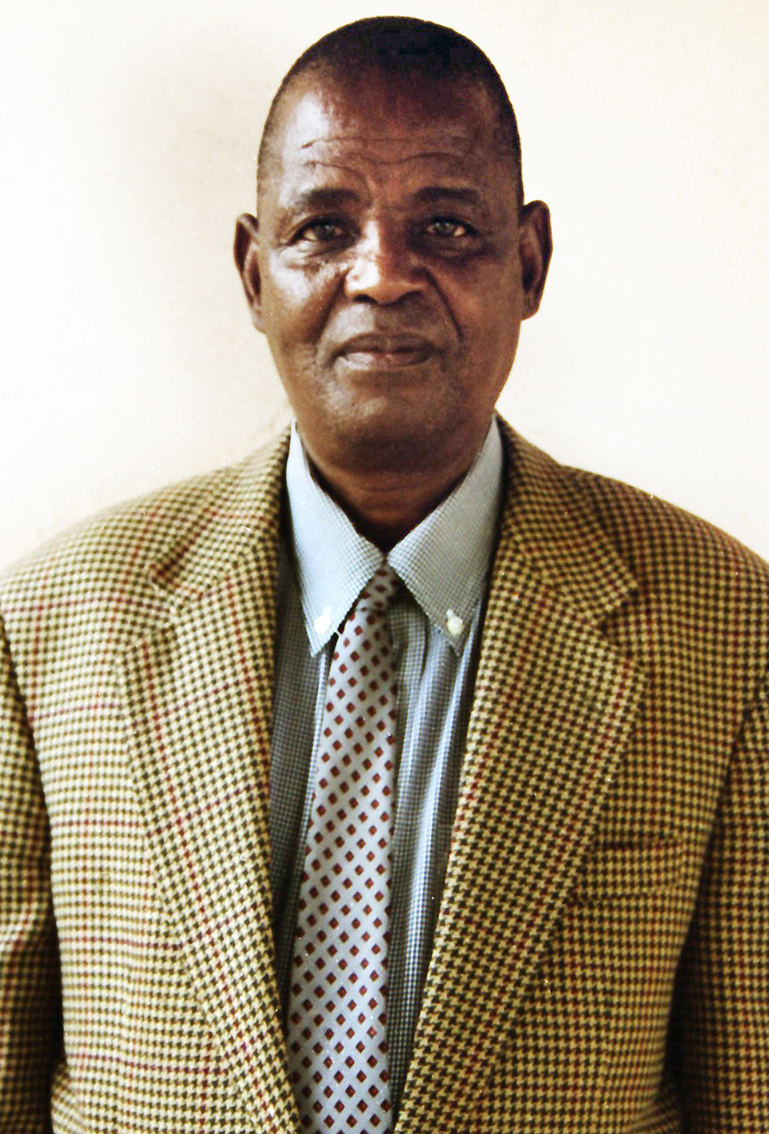
David Mothunye Matshediso, who died at the age of 78 at the Deborah Retief Memorial Hospital in Mochudi on Sunday, was one of them.
The others were Anthony Mabeo, Sehularo Tawana, Mmolotsi Sekgoma and Solomon Lotshe.
Their recruitment followed the coming into effect of the Bechuanaland Constitution Order, which was approved by the House of Commons in London on January 30, 1965.
According to the Bechuanaland Daily News of February 1, 1965, one of the important effects of the coming into force of that Order was that it made possible the issue of Writs of Election by Her Majesty’s commissioner in Bechuanaland, Sir Peter Fawcus.
That culminated with the country attaining self-governance. It was decided that since illiteracy in the country was too high and Batswana had never voted before, let alone seen voting in progress elsewhere, people be enlightened by film shows prior to the election date.
Matshediso, who was born on Christmas Day in 1942, was aged 23 then. When recruitment started, he was at the right place at the right time.
Following the election, five of them were offered permanent employment in the public service. Matshediso was posted to the Radio Botswana’s engineering section. He was later redeployed to the press section of the Department of Information Services as a reporter.
One of the people who worked with Matshediso for a long time at the department was Phagane Tladi, who rose through the ladder to become head of photography. He recalls that Matshediso joined the department when the Daily News was still printed from a stencil.
He said Matshediso and others used to travel to Lobatse, where the printing was done via cyclostyle. They were joined later at the department by the late Johannes Pilane.
Matshediso has worked at various places in the country notably Maun, Serowe, Molepolole Mochudi and Kanye, where he became a household name because he was heard on Radio Botswana’s Tatediso ya Dikgang almost every week day and also because of his good public relations exercise. As a result of that, Matshediso was loved by everybody where ever he has worked.
That public relation, which he so much used for the benefit of the department, occasionally made it difficult for his successors to adapt to his management style. When he was transferred from Maun to Mochudi in 1975, the people of Ngamiland expressed dissatisfaction about his transfer, fearing that they would not get a workaholic like him.
Indeed soon, the Member of Parliament, Motsamai Mpho complained in Parliament that ever since the departure of Matshediso, there was a news blackout on events in their area. He explained that very newsworthy events by the opposition or the ruling party were no longer covered.
When he was transferred from Mochudi to Molepolole in 1976, Bakgatla did not openly complain because they feared that they could be misconstrued because he was one of them, but there were murmurings.
After some years in Molepolole, a vacancy opened in Serowe and for a while, the department was in a dilemma about who could feel the vacuum.
The problem was that Serowe was a volatile place like Mochudi and Kanye. Serowe was volatile because that was the time when the issue of bogosi was a hot potato as most of them were opposed to being led by Mokgacha Mokgadi.
The other reason was that it was the home village for the first President, Sir Seretse Khama. Out of the many names suggested, Matshediso was the favourite.
He was a tried and tested individual. When he was approached, he immediately accepted, saying he had been to Molepolole for too long and therefore he needed a change of scene.
In Serowe, he made friends with many people across the political divide. He was unmatched. People who were more qualified than him had been sent to Serowe to take charge of the station, but they failed because they were unacceptable to Bangwato.
High profile people like Gabothuse Dijeng and Tapologo Moepeng often found it difficult to work with anybody from the Department of Information other than Matshediso.
When he retired from the service around 2002, items presented to honour him were a pile. Two vehicles had to be brought in to collect them. Dijeng gave him a Simmental bull and a horse.
However, it seemed he felt that presentation of one bull and a horse was not enough as he added more when he was in the middle of his farewell speech. He said in addition to the Simmental, Matshediso should feel free to choose other breeds from the kraal.
“If you want Brahman bull, it is available, if you want to add Beef Master it is there for you,” said Dijeng.
As a reporter, he had ‘a nose for news’, said his former colleague at work and long time family friend, Keboeletse Nkarabang. Nkarabang is correct. This is what many who worked with Matshediso can attest to.
He was good at human interest stories. It was him who in the 80s wrote a story about the survival of the fittest between people and baboons struggling for mmupudu (wild berries) at a cattlepost in the Kweneng District.
The other human interest story that comes to mind was about a huge snake killed in the river at Kumakwane after terrorising villagers for months. Nkarabang recalls a human interest story that Matshediso wrote the other day at Leshibitse in the Kgatleng District.
It was about a man who tried to grab an ostrich chick from the others accompanying the mother. The mother was so furious that she fought with anything she could to protect the chick.
The man was forced to climb a tree for his own safety. Matshediso’s stories were always detailed. No editor would call him back to say something was missing from his stories.
The editors’ duties always involved condensing the story and checking grammatical mistakes as well as ensuring that it was not a libel only.
Nkarabang says Matshediso commanded a strong personality.
He received training in journalism In Lesotho in 1973.
The course was sponsored by Thompson Foundation of Wales in the United Kingdom.
They were nearly caught up in crossfire as their arrival coincided with Prime Minister Leabua Jonathan annulling the general election and it was chaotic.
Leabua Jonathan annulled the elections when it became apparent that the Basotholand Congress Party led by Ntsu Mokhehle was winning. Several opposition leaders were arrested while others fled the country. From Botswana, the group attending included Matshediso, Nkarabang, Moeng Pheto, Johannes Pilane and Tarcisius Modongo.
In the 80s, he went to Tanzania for further training.
Things did not work well for him while there. He contracted malaria and was returned home in a critical condition.
He was in the company of Moreri Gabakgore, Esther Kanaimba and Monica Mphusu.
Once bitten twice shy, ever since the failure to complete training in Tanzania, Matshediso never took another attempt elsewhere.
Besides work environment, Matshediso was a football fanatic. He was a staunch supporter of Notwane Football Club. In fact he played school football in the 60s, where he played on the left side of the pitch because he was left-footed.
He is survived by seven children and 17 grandchildren. He will be buried in Mochudi on Friday. BOPA
Source : BOPA
Author : Kwapeng Modikwe
Location : MOCHUDI
Event : Obituary
Date : 18 Aug 2020
Related News
12 Aug 2026
12 Aug 2026
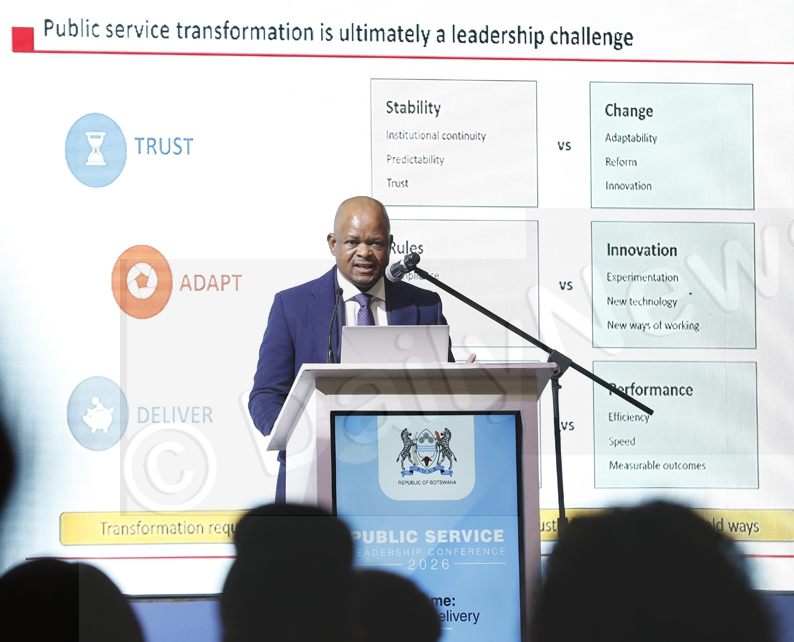
Adopt modern and flexible public service
12 Aug 2026
Ministry and De Beers partnership yields fruit

12 Aug 2026
Tsabong adopts China model to fight poverty

12 Aug 2026