Facilators appreciate significance of teaching Setswana
13 Aug 2020
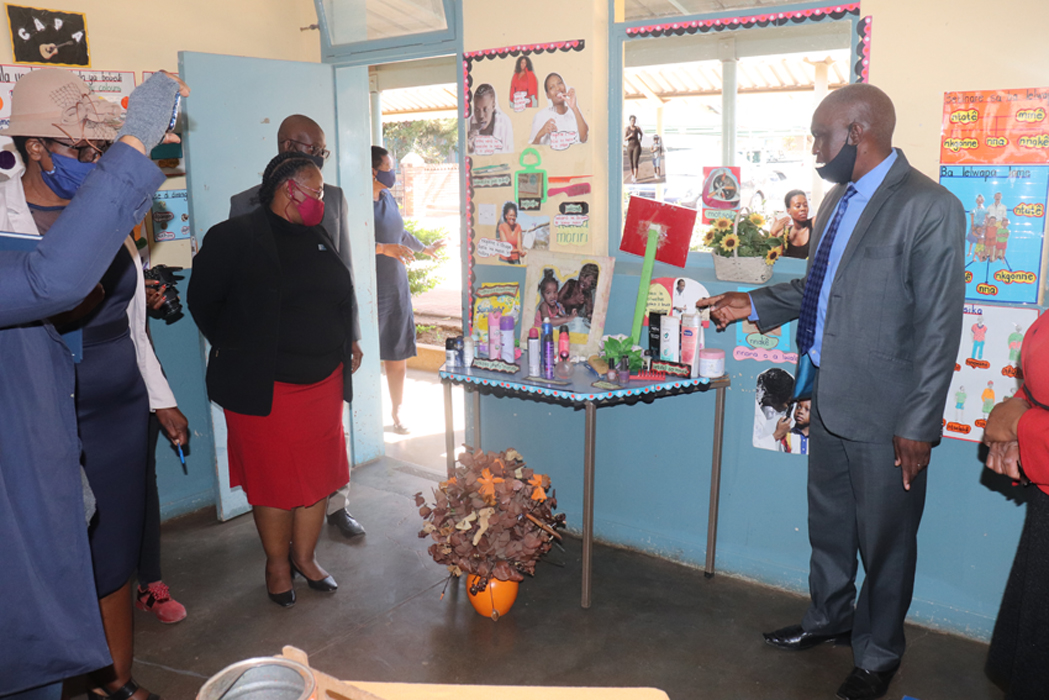
A methodology for teaching Setswana should be based on the communicative approach than teaching it as a language, says principal education officer, Ms Kgalalelo Phuthego. Speaking during a week-long regional breakthrough workshop in Serowe on August 11, Ms Phuthego said teaching pupils how to speak would make it more explicable when taught.
The workshop was attended by education officers from all sub-regions in Central District.
The Breakthrough to Setswana programme was meant for lower primary school children, thus enabling them to learn how to read and write Setswana fluently and confidently.
Ms Phuthego stated that Setswana grammar was taught in a more contextualized way where meaning was highlighted.
Setswana, she said, was not only a subject but also a language through which all subjects at standard one were taught.
She said although language skills were isolated and dealt with in the syllabus, there was need to integrate them when teaching for coherence.Ms Phuthego indicated that Setswana syllabus was designed to cater for all ability levels, adding that these included learners who had been to pre-school and those did not.
She added that topics had been designed to allow a teacher to develop them as the situation dictated. The level of complexity would therefore differ according to the learner’s background.
“The readiness skills should be addressed within the first four or five weeks of the year of standard one. The objectives for these have not been written separately as the learners enter standard one at different levels,’’ she noted.
However, another facilitator, education officer, Mr Joshua Gareanna said a significant amount of the content was based on Setswana culture, which was by design, descriptive than prescriptive.
He said the syllabus was centred on key learning areas of knowledge, skills and attitudes.
Knowledge included the understanding and application of the forms and structures of language in different situations.
Mr Gareanna said the attitudes in the syllabus aimed at helping learners to view themselves as effective and purposeful users of the language.
“Culture taught in a diversified way to ensure inclusion and coexistence of all within the country,” he said.
Learners, Mr Gareanna said, were taught to understand and discriminate letter sounds and letter combinations that represented them and those within their environment, appreciate rhymes and songs, listen actively to oral stories and carry out instructions and directions and many more at their ages. Abother facilitator, Ms Margret Kgathi, said in the early 1980s, the Breakthrough to Setswana programme for lower primary school children was developed in South Africa.
She said the programme was adapted from the British Breakthrough to Literacy programme of the 1970s. Breakthrough to Setswana was initiated in 1983 funded by the Ministry of Education.
In 1995 a programme valuation was carried out, at the request of the ministry of education and with funding from the British Council. ENDS
Source : BOPA
Author : Tshiamiso Mosetlha
Location : SEROWE
Event : workshop
Date : 13 Aug 2020
Related News
11 Aug 2026
Boko calls for radical reforms in public service
11 Aug 2026
Botswana and US commit to global peace

11 Aug 2026
Chobe district receives malaria drugs
11 Aug 2026